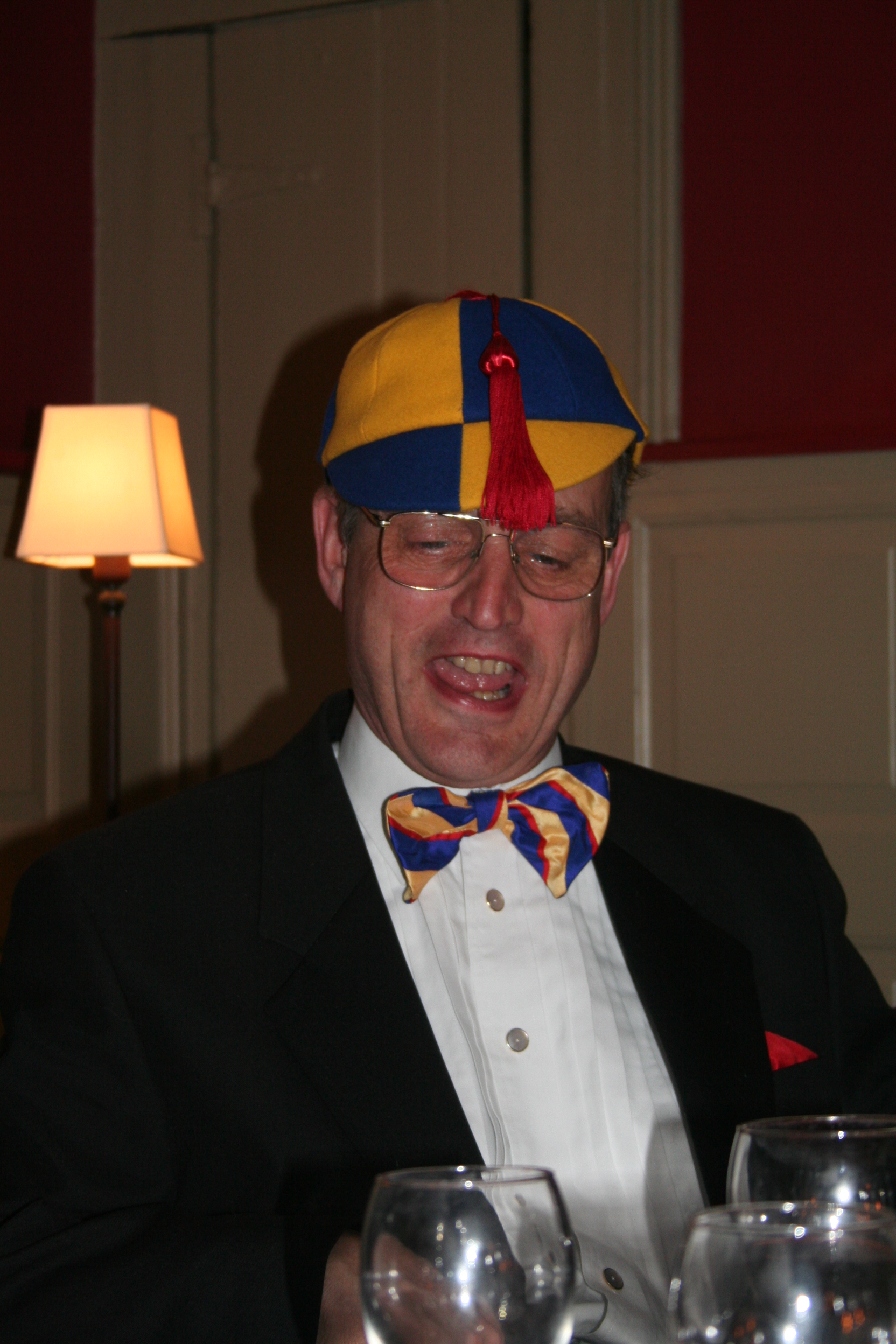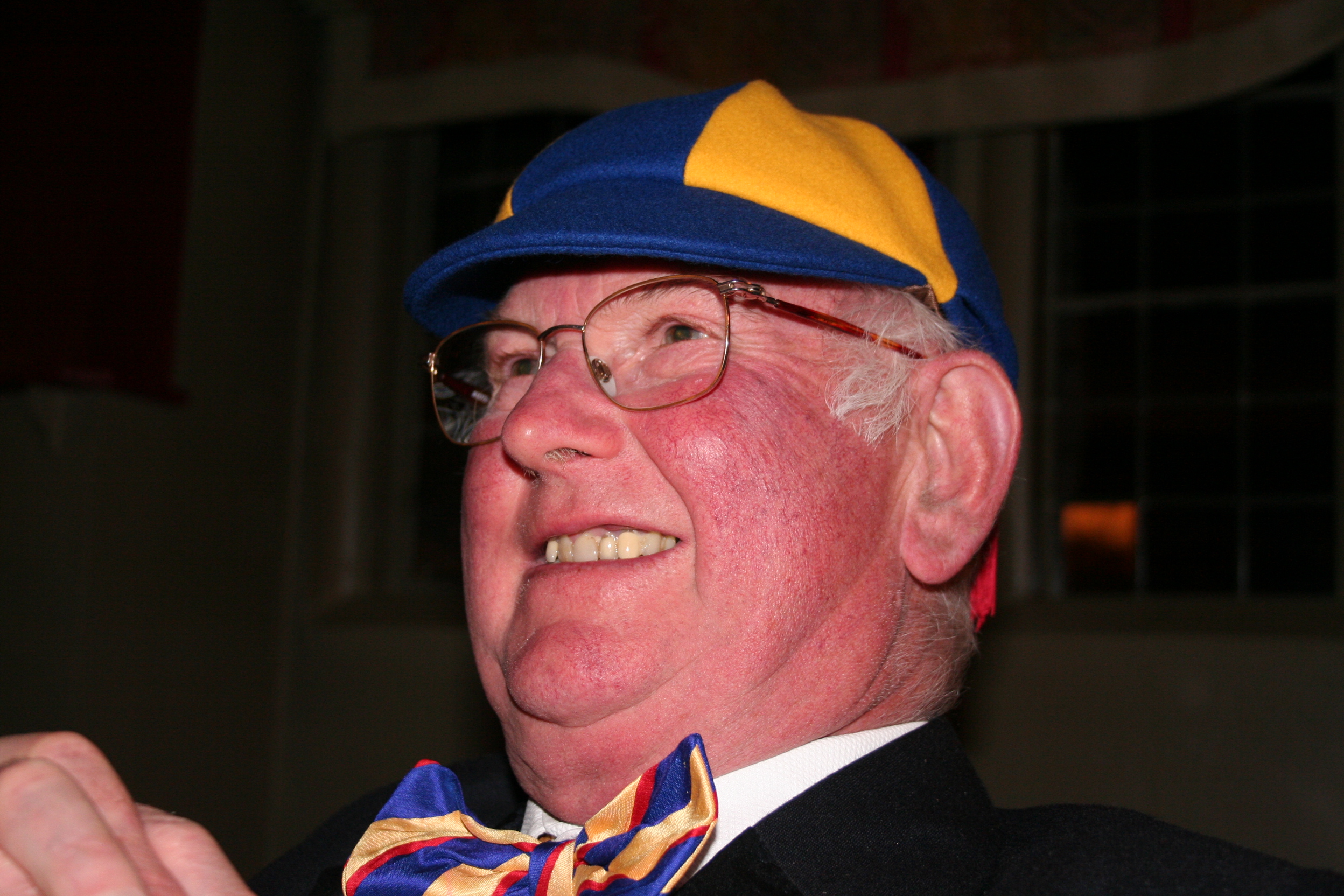

Introduction & Rules
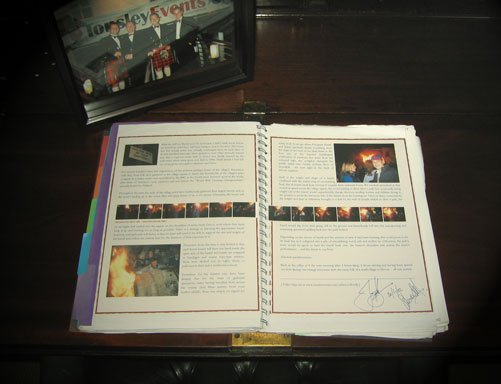
In the original “Operation Yelsnot”, the challenge was laid down by the four Tonsley Events crew to attend the weirdest sporting event they could find over the course of a year from March to March in the year 2002/3. The judging of this was to be done by each of the individual’s fathers at the Tonsley Day of Reckoning.
The results of this, the First Chapter, can be seen here. But, this section deals with the Second Chapter… the one where we turned it back on them! Yes, here the Tonsley fathers were set the challenge and the boys were to judge it! The Second Chapter: 6th March 2005 – 5th March 2006.
Let the madness continue…
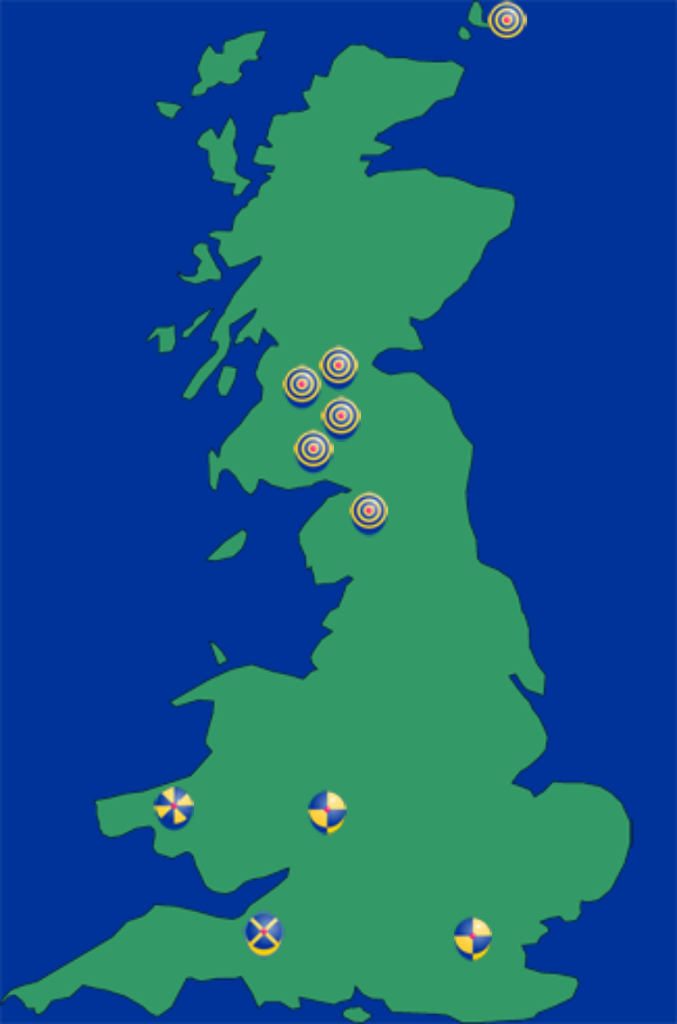
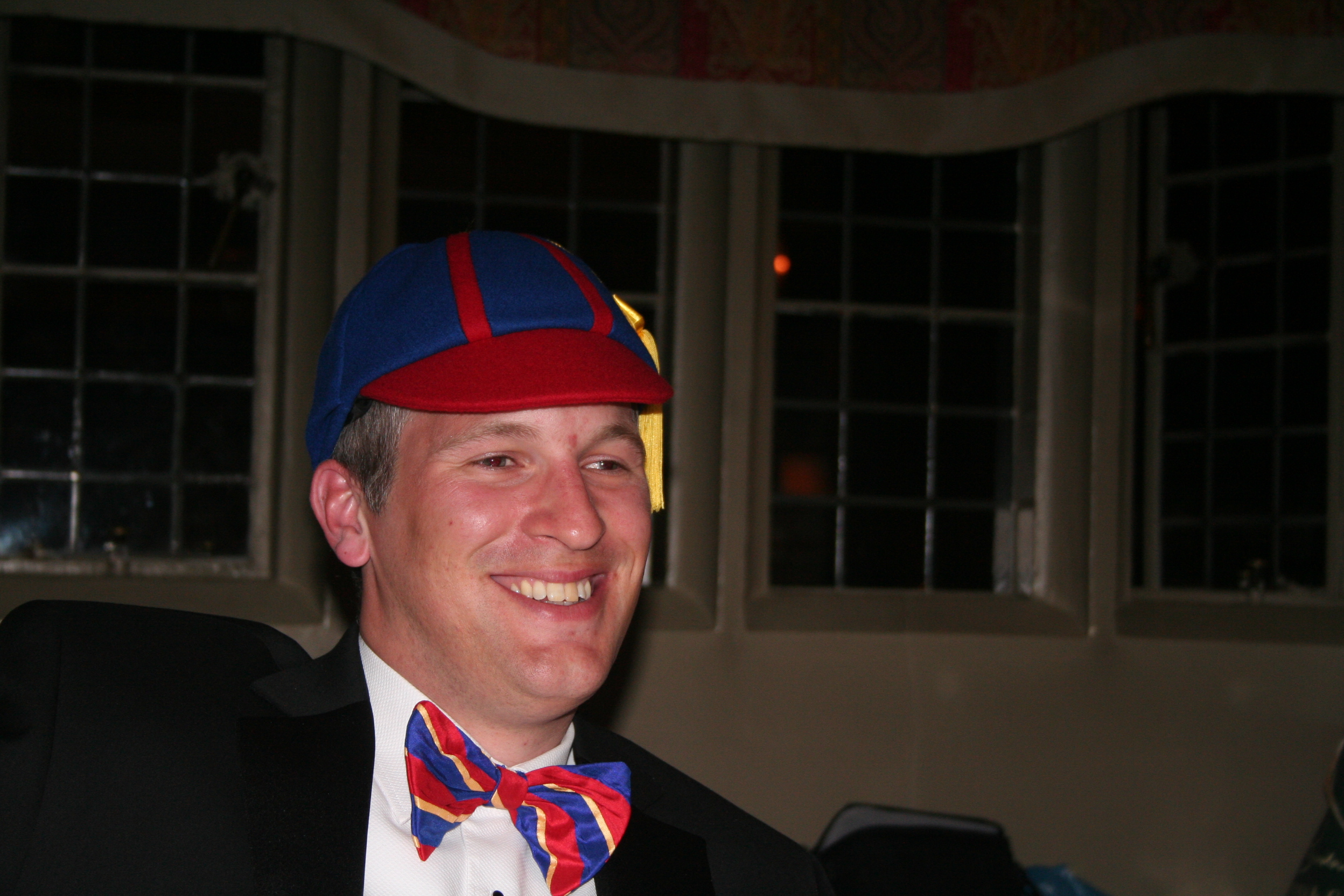
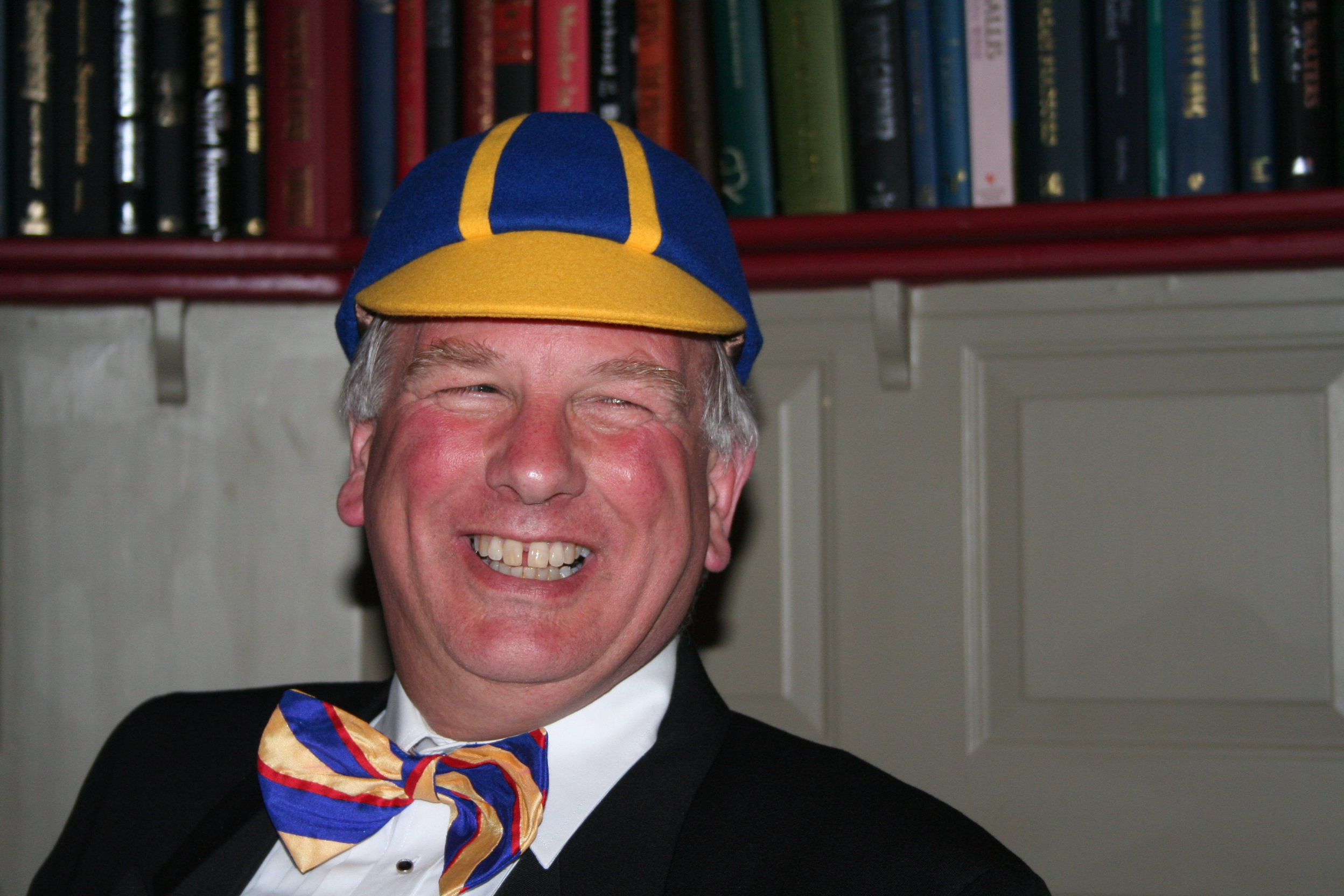
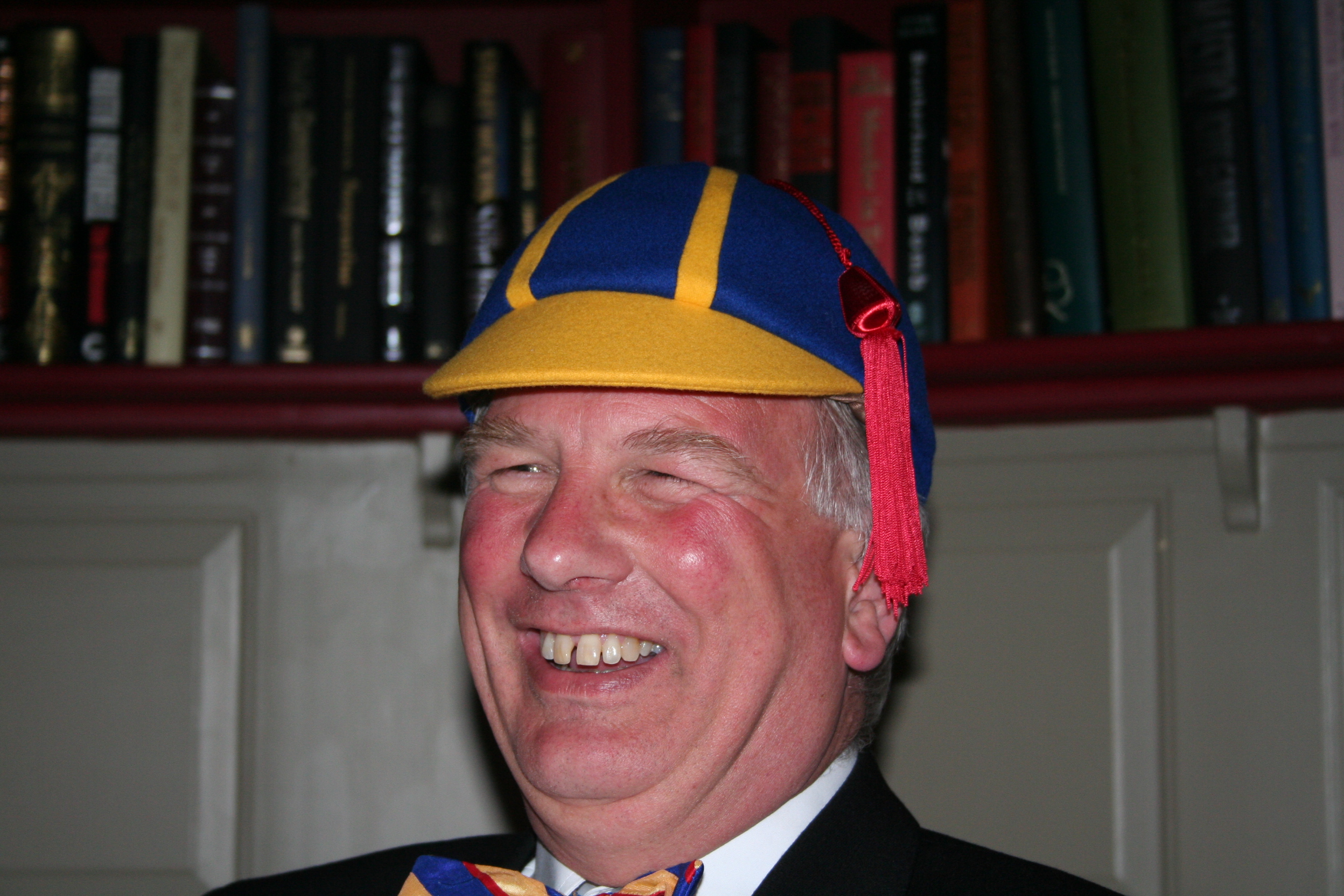
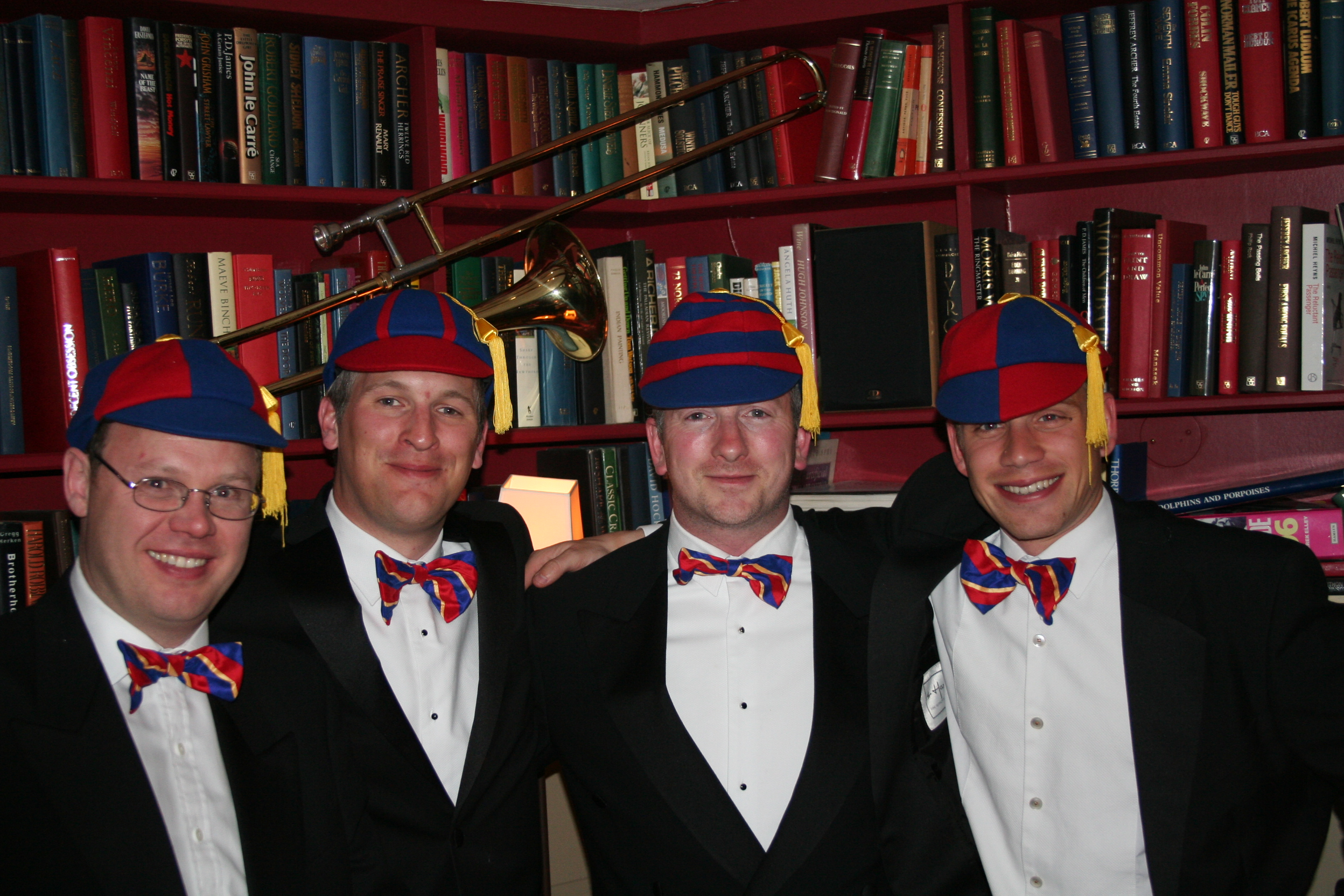
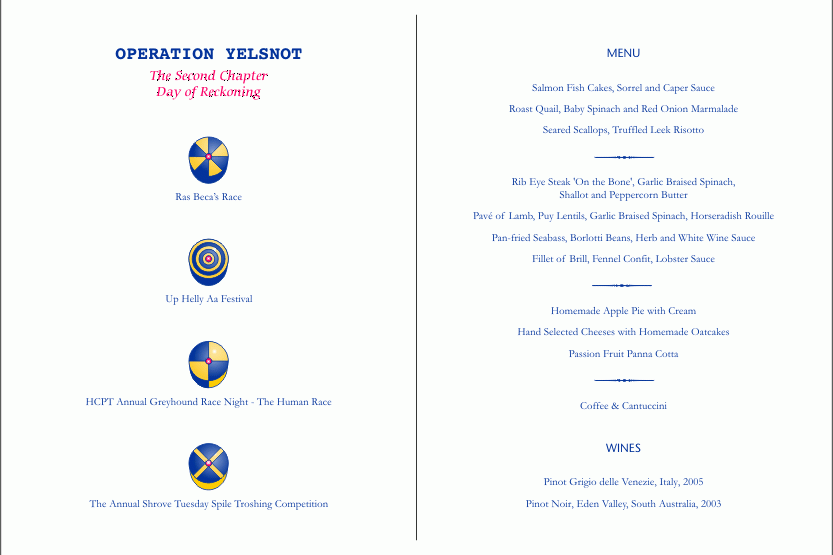
^ Click over the caps to jump to the event ^
Rules of Operation Yelsnot
The Second Chapter
General Rules
- The entrants to this competition shall be the Judges of Operation Yelsnot – The First Chapter, namely the fathers of the members of the Tonsley Events Committee.
- The winner shall be decided by the Panel of Judges, namely the members of the Tonsley Events Committee as the sons of the participants, on the “Tonsley Day of Reckoning” to be arranged by the Committee after the closing date.
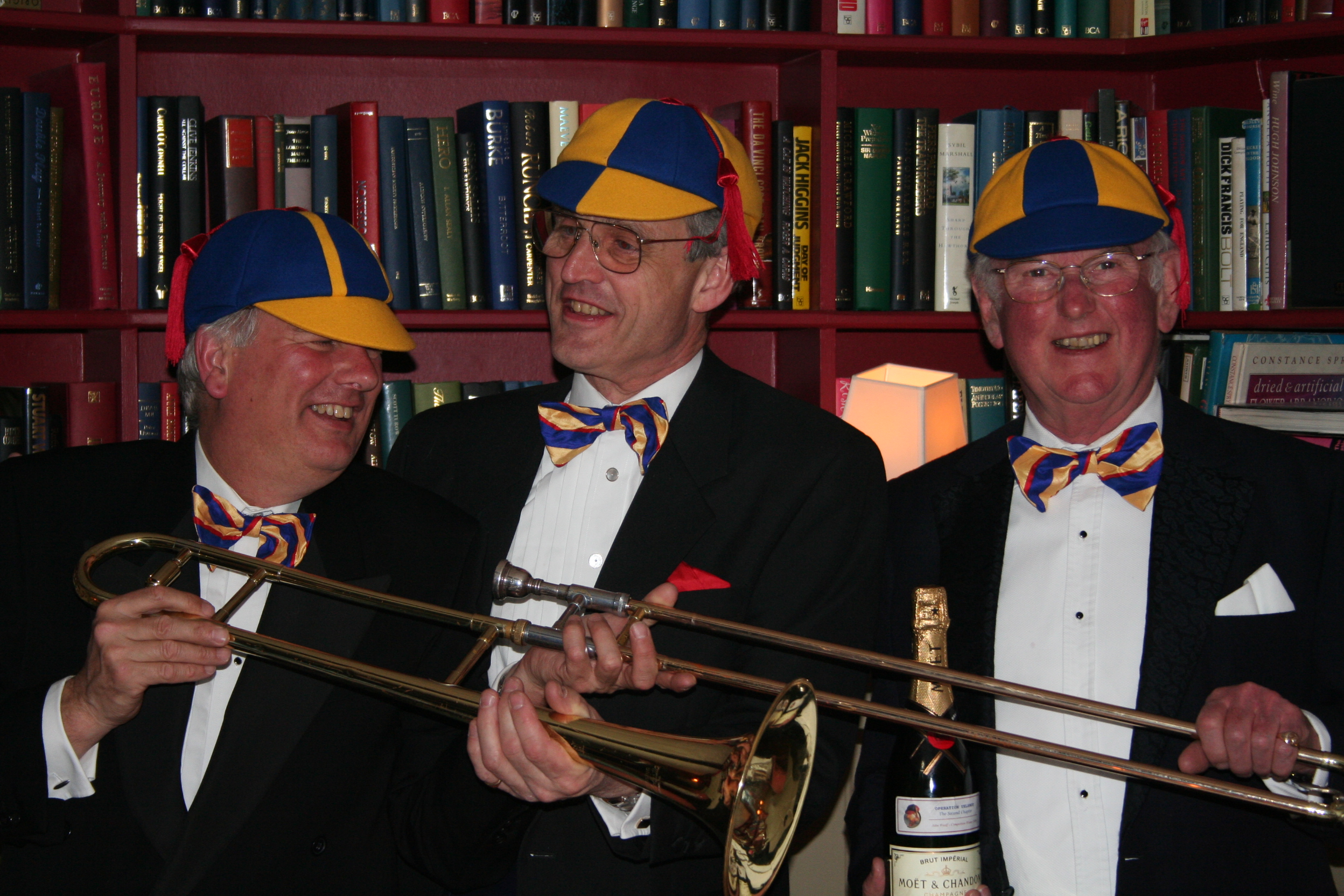
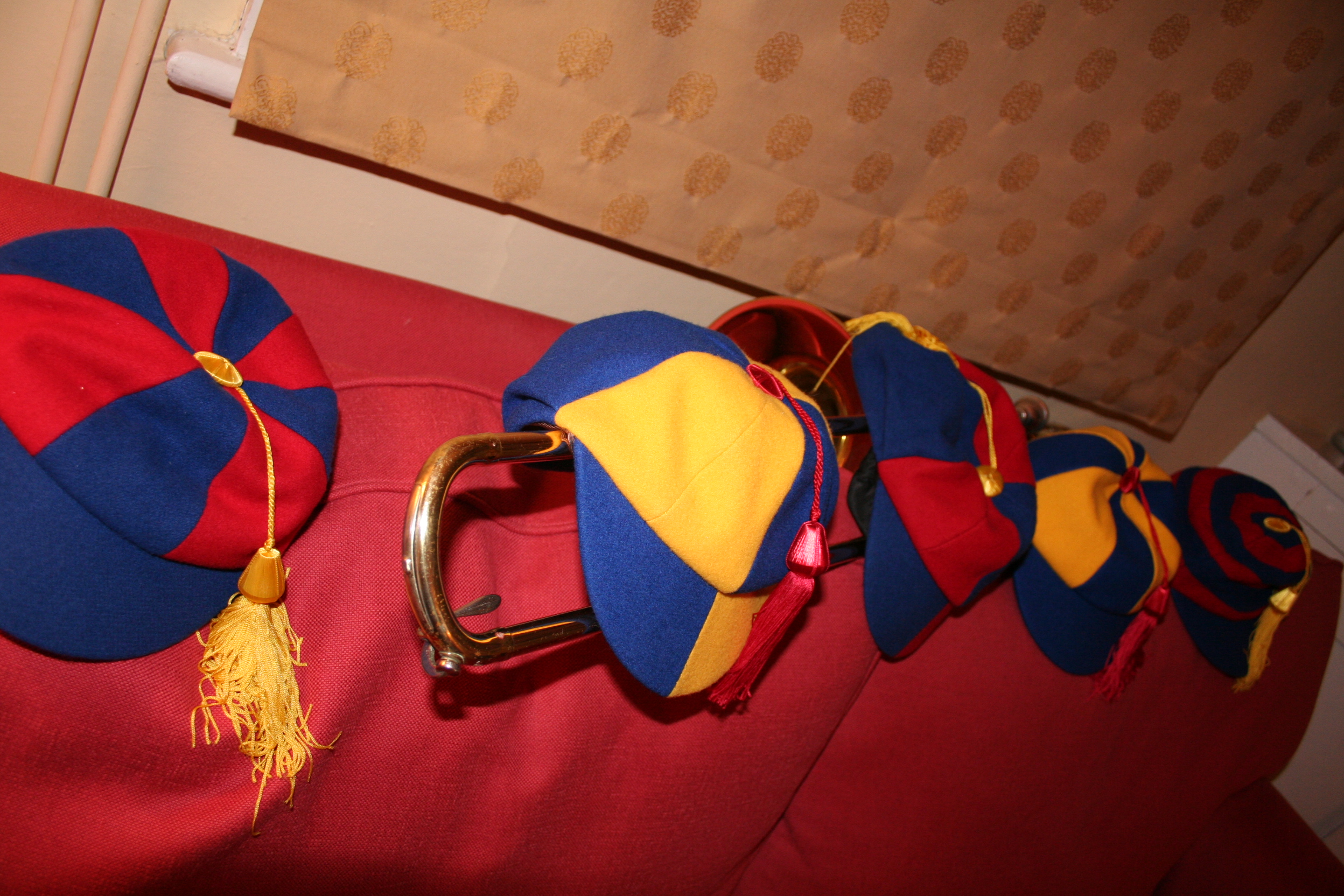
- The competition shall commence on the Sixth Day of March in the Year of Our Lord, Two Thousand and Five, following the Opening Dinner of Operation Yelsnot – The Second Chapter at which the participants shall receive their Tonsley Colours.
- The competition shall run over the course of one year, closing at midnight on the Fifth Day of March in the Year of Our Lord, Two Thousand and Six.
- The Judges reserve the right to amend the rules of the competition at any time over its course if they deem any such amendment to aid the modus operandi and general success of the competition as a whole. No participant shall be prejudiced by any such amendment and all entries submitted within one month of any such change will be considered under the rules existing at the time of the attendance at the event.
Submissions
- All entries must be submitted by post to the Judges within one month of attendance of the event. Entries failing to comply with this rule will be disregarded. The address for such submissions is: Tonsley Events, 9 Swan Hill Cottages, Aylesbury Road, Cuddington, Buckinghamshire, HP18 0BE. Participants are encouraged to retain a copy of their submissions.
- The final date for any entry to be submitted is the Eleventh Day of March in the Year of Our Lord, Two Thousand and Six. Entries failing to comply with this rule will be disregarded.
- An entry may take any format but, at the very least, must contain an event’s title, its location, the date of attendance and a descriptive report. The report should be supported by evidence of the participant’s attendance of the event and any further evidence the participant deems will assist his case to the Panel.
- The report should be accompanied by at least one photograph of the participant at the event wearing his Tonsley Colours.
- An entry must be signed and dated by the participant.
- An entry cannot be altered in any way once it has been submitted.
- In the unlikely case that an event is attended by more than one participant in a competing capacity (i.e. attending in Tonsley Colours) and subsequently receives multiple entries by the parties concerned, all entries from that specific sporting event will be deemed invalid and void. The only exception to the rule is if the event is held outside the United Kingdom. In such cases, two participants may submit the event.
- There is no limit to the number of events a participant may submit to the Judges. However, each participant must select one of their submitted events to be put to the Panel of Judges for judgement at the “Tonsley Day of Reckoning”. The Judges must receive written notice of the selected event by the Eleventh Day of March in the Year of Our Lord, Two Thousand and Six.
Judgement
- The winner of the competition is the participant that the Judges deem to have visited, or taken part in, the “weirdest sporting event” during the year of the competition.
- An event should fall under the Collin’s Dictionary definition of “sporting” as “an activity for exercise, pleasure or competition”. It is at the discretion of the Panel that an entry’s validity under this definition is to be determined.
- Participants should note that, further to Rule 15 above, the “sporting event” must also fulfil the requirement of being of a scale that is open to competitors from a geographical area which is the equivalent of a parish or larger.
- Subject to compliance with Rules 15 and 16 above, an event will be judged solely on its “weirdness”. The Panel will not prejudice an entry based on its geographical location (i.e. an entry for an event in Honolulu will not be considered favourably over that of the same event held in England).
- A prize will be presented to the winning participant on the “Tonsley Day of Reckoning”.
- Participants shall be present at the “Tonsley Day of Reckoning” in correct attire, namely black tie and Tonsley Colours.
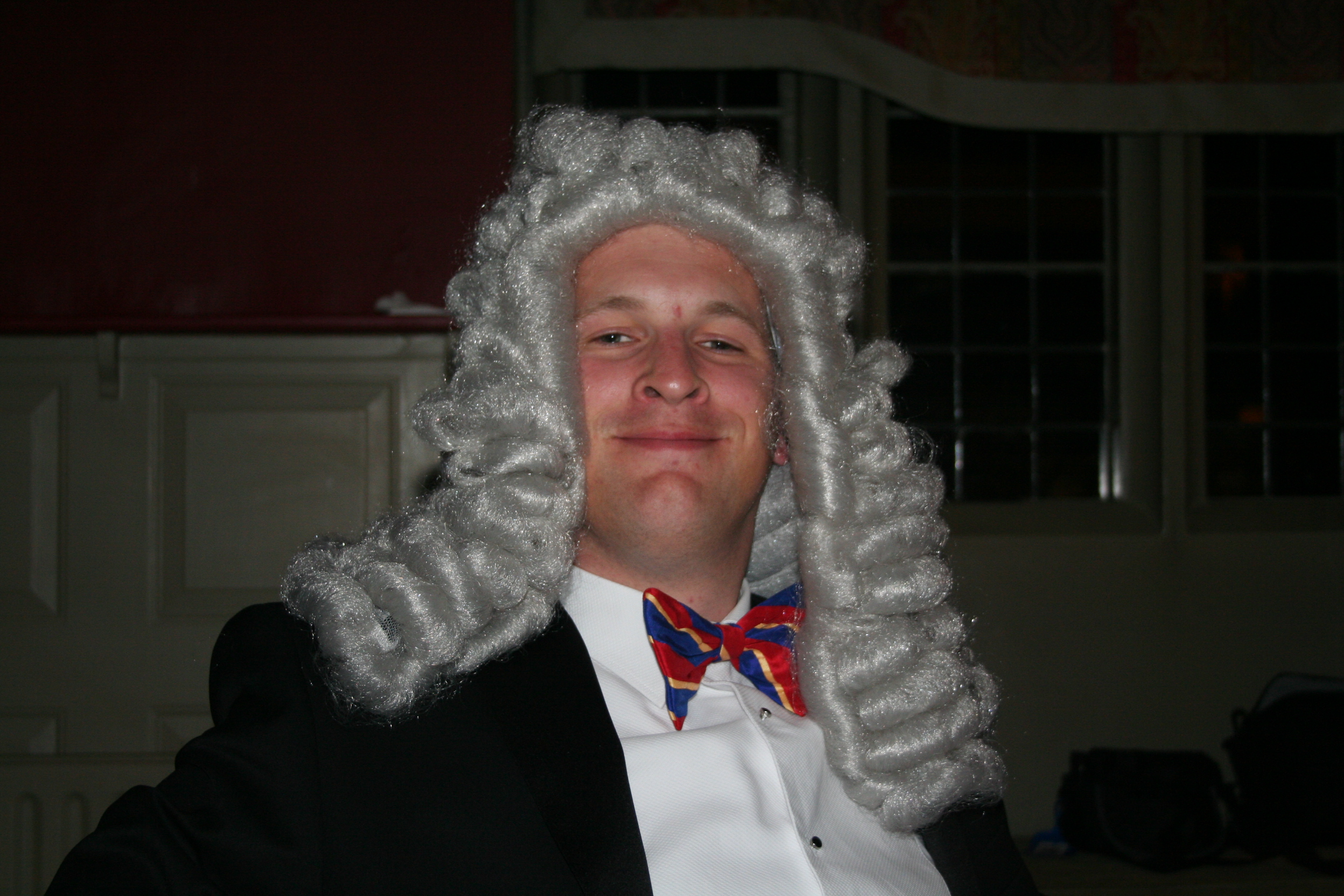
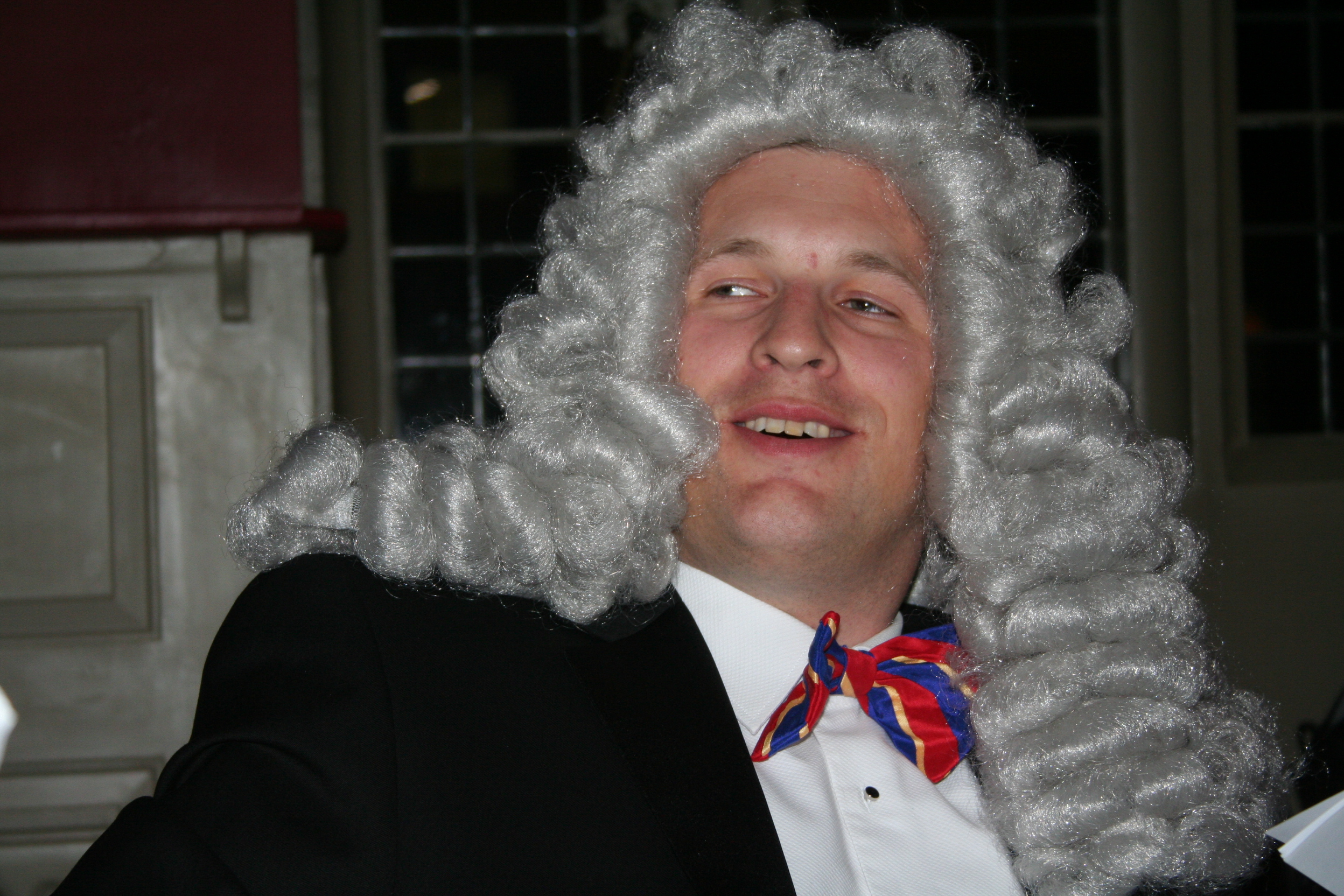
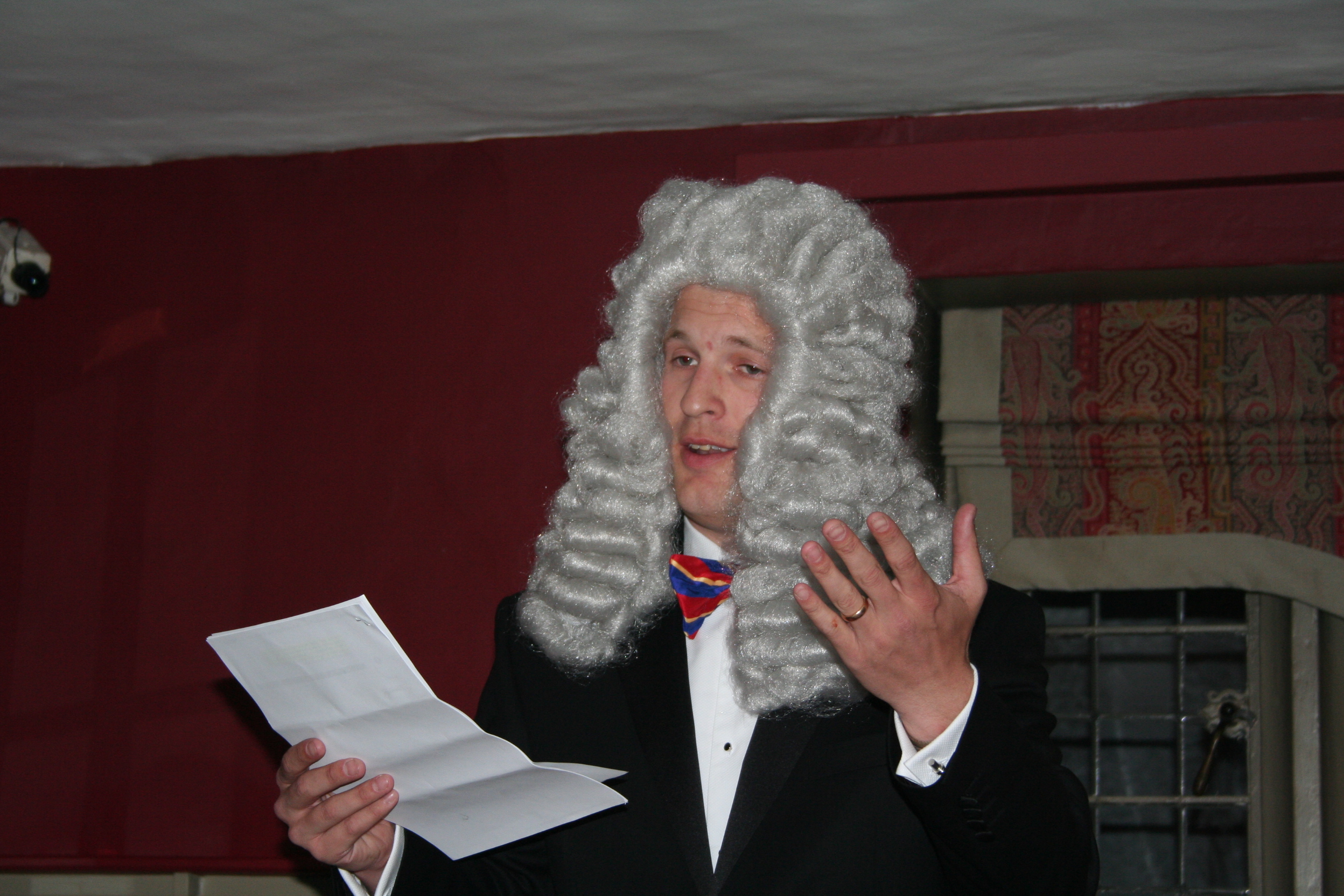
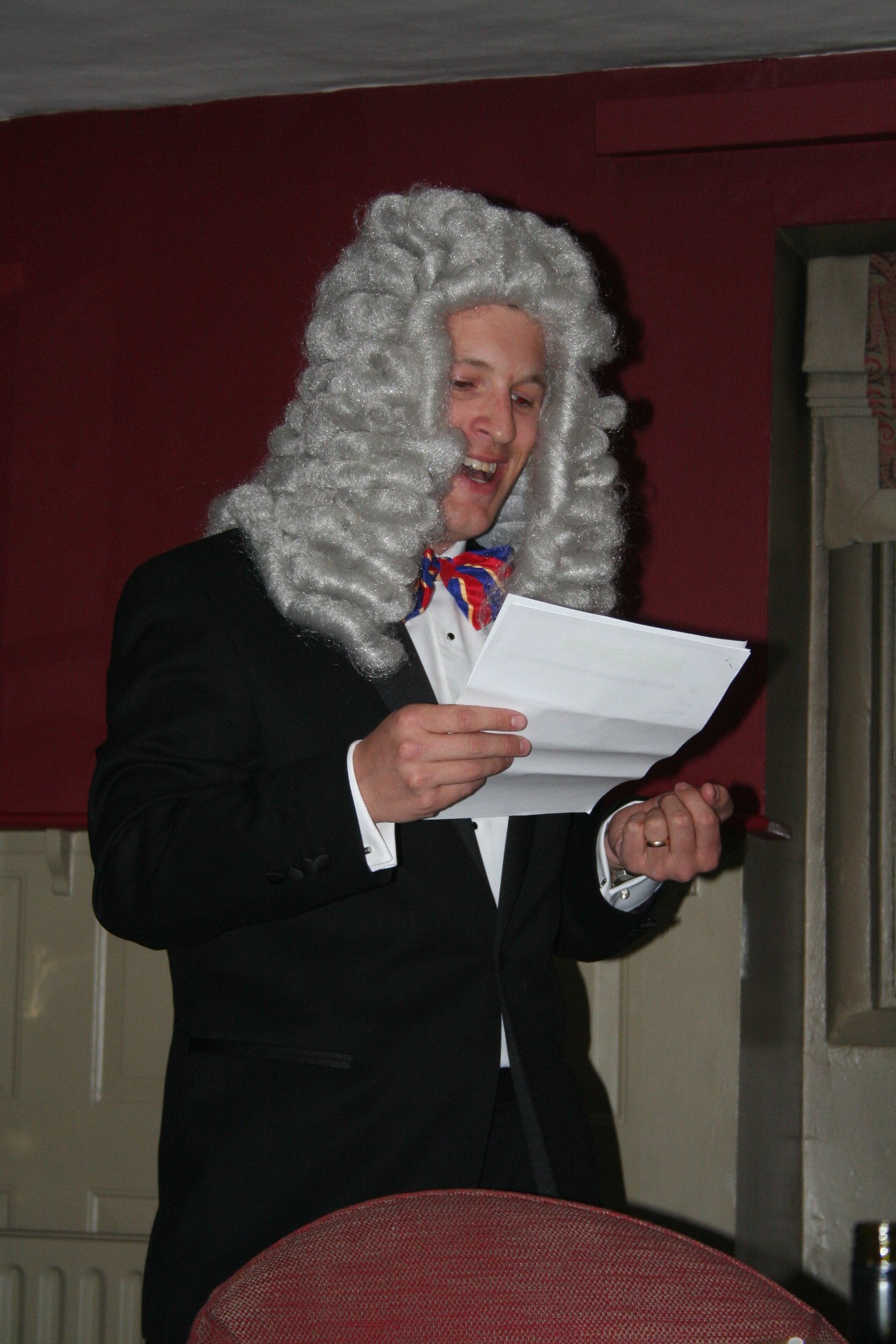
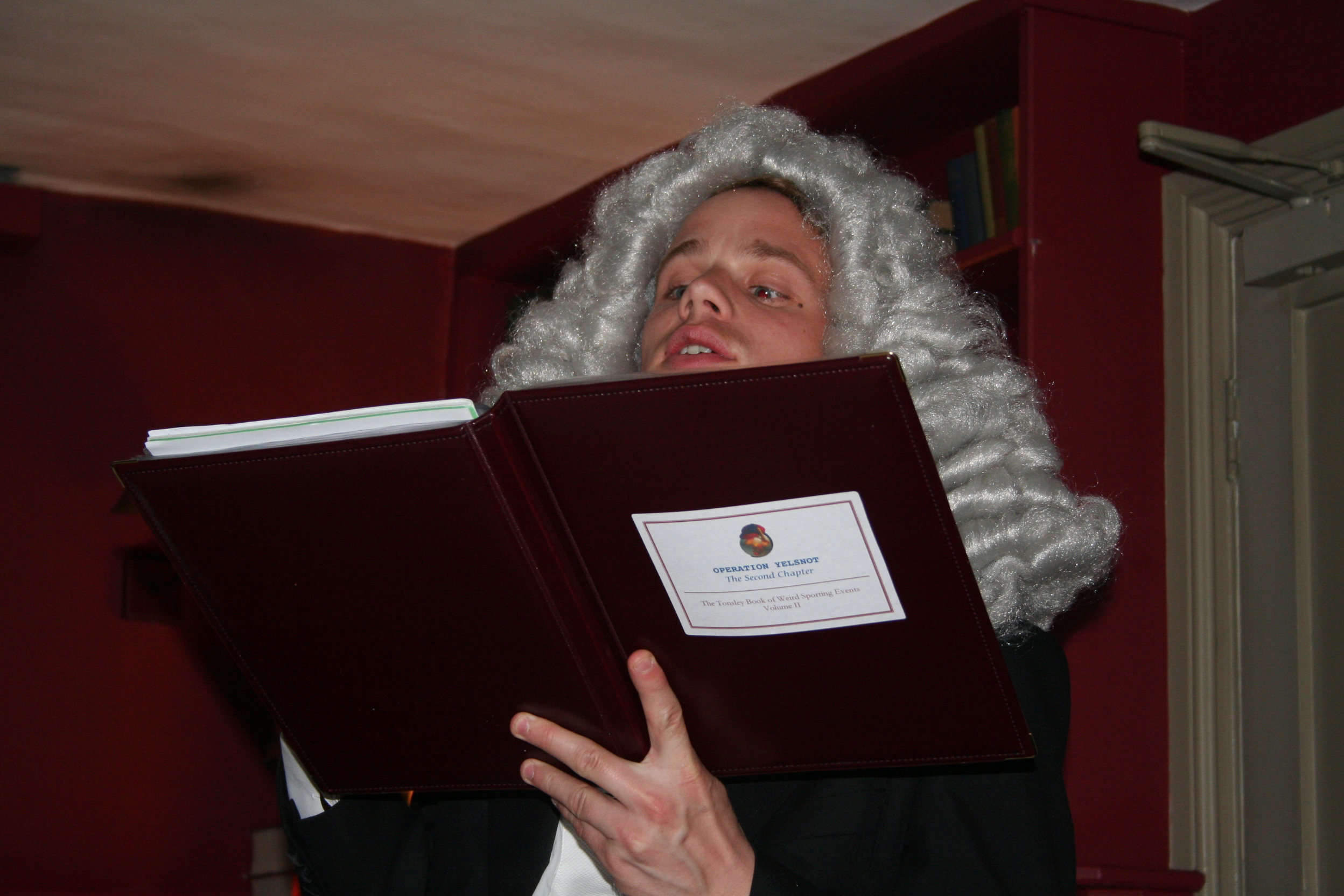
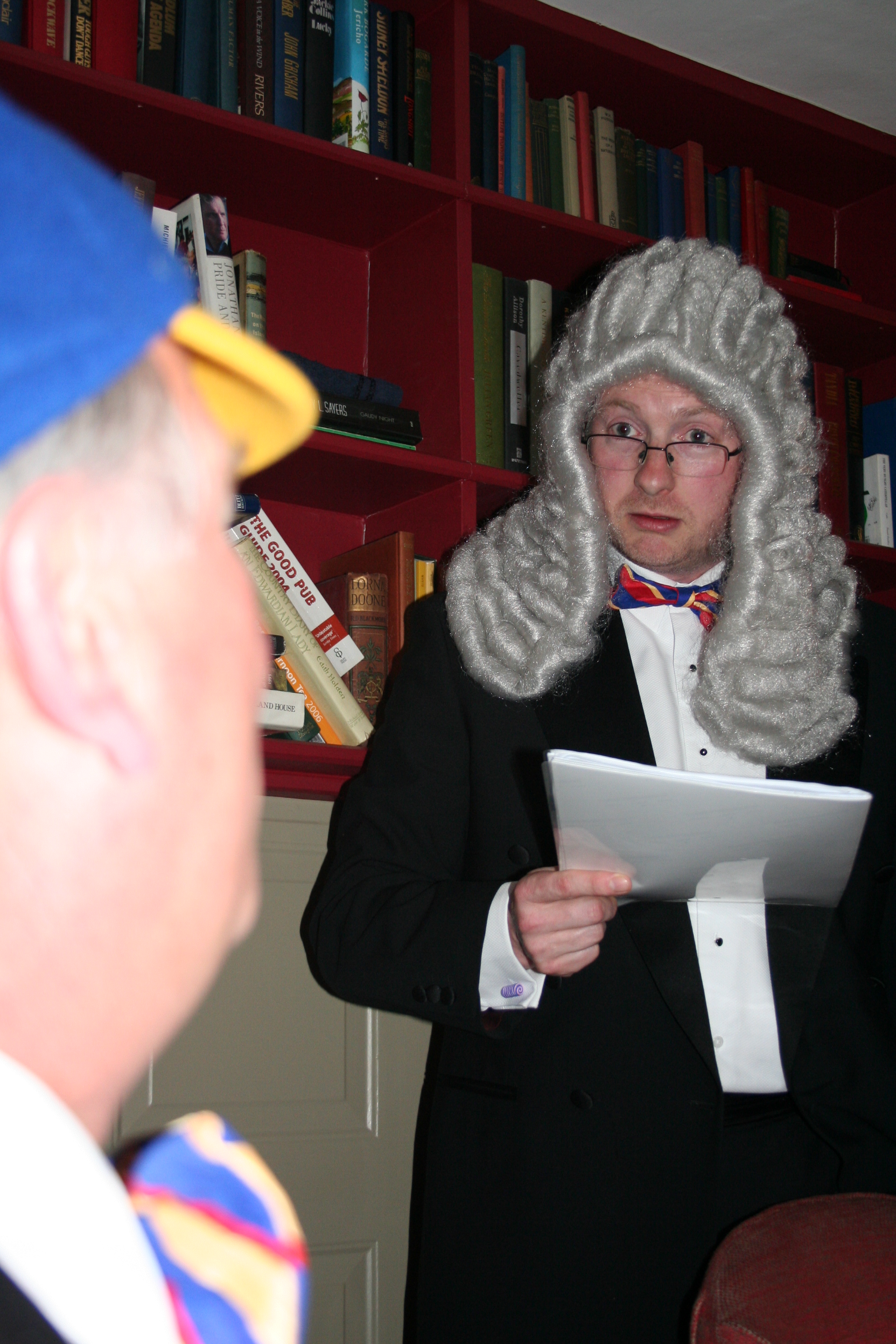
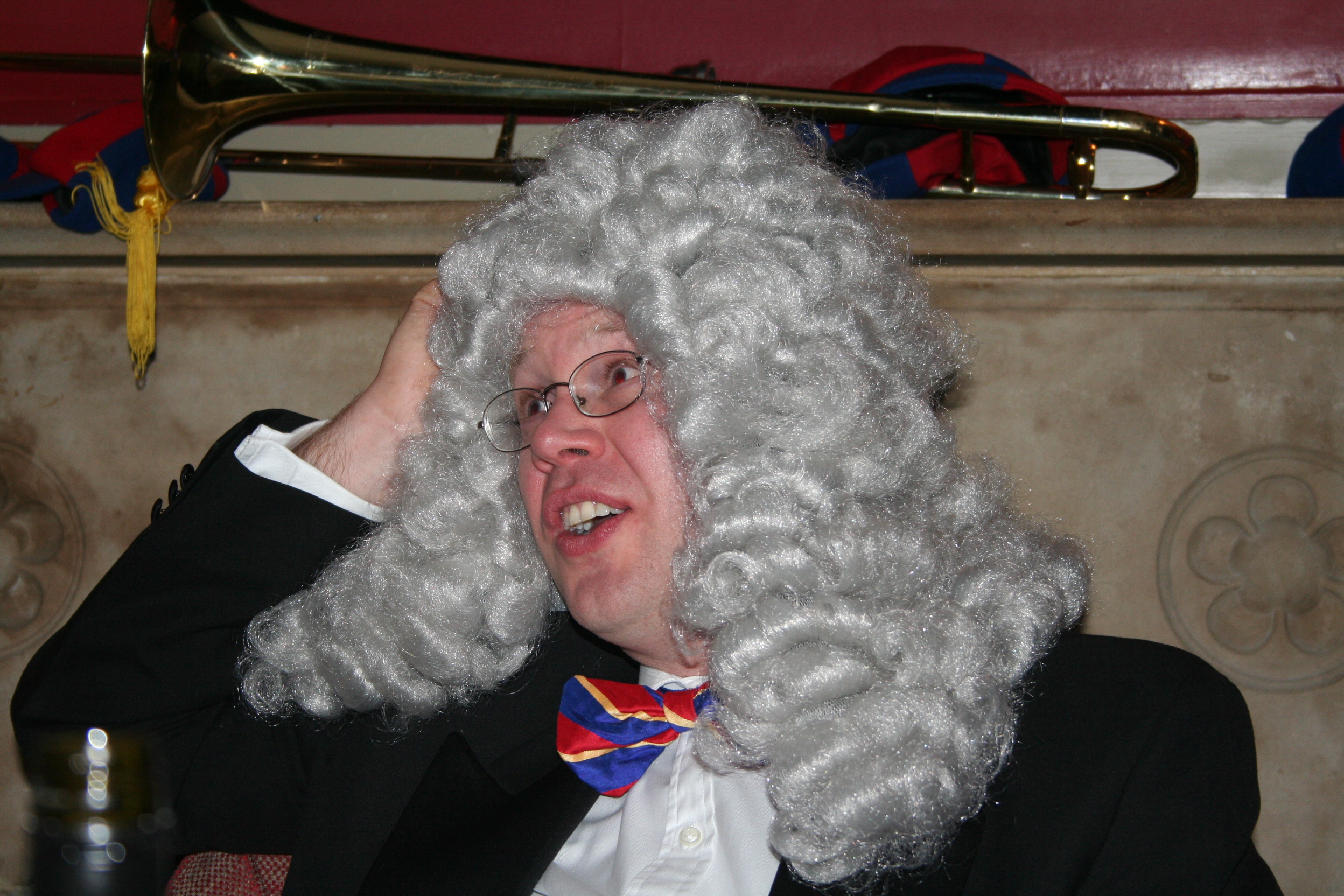
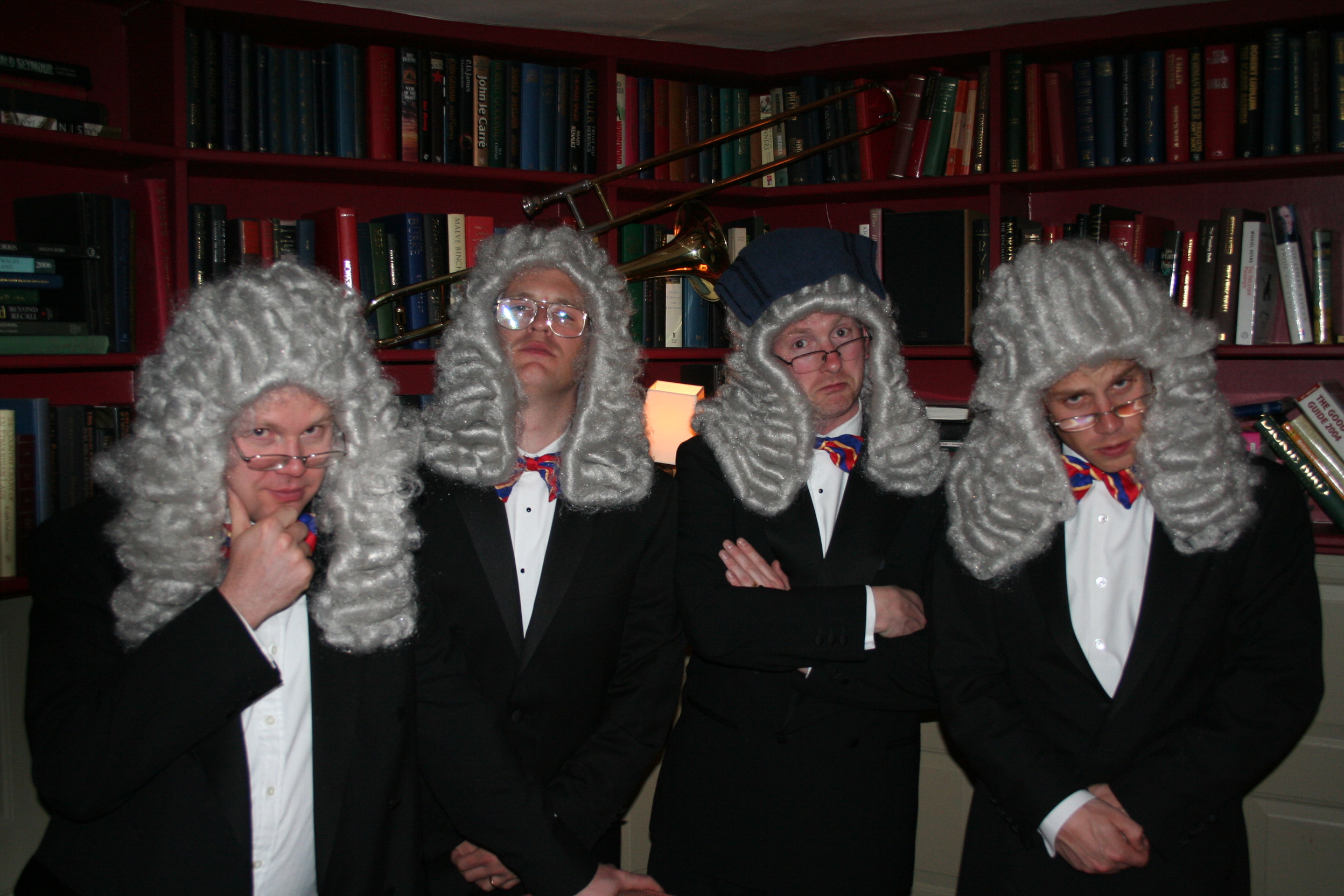
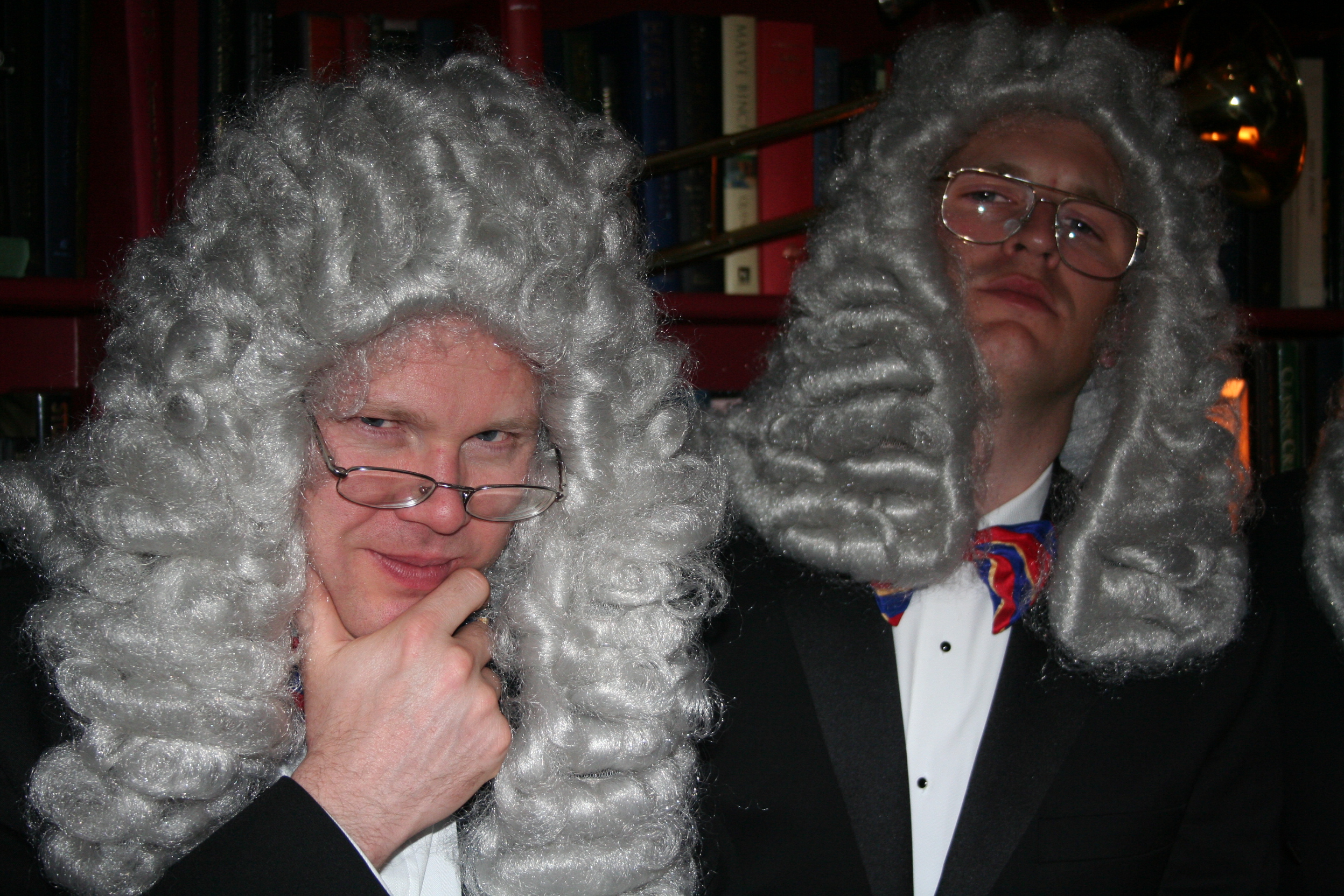
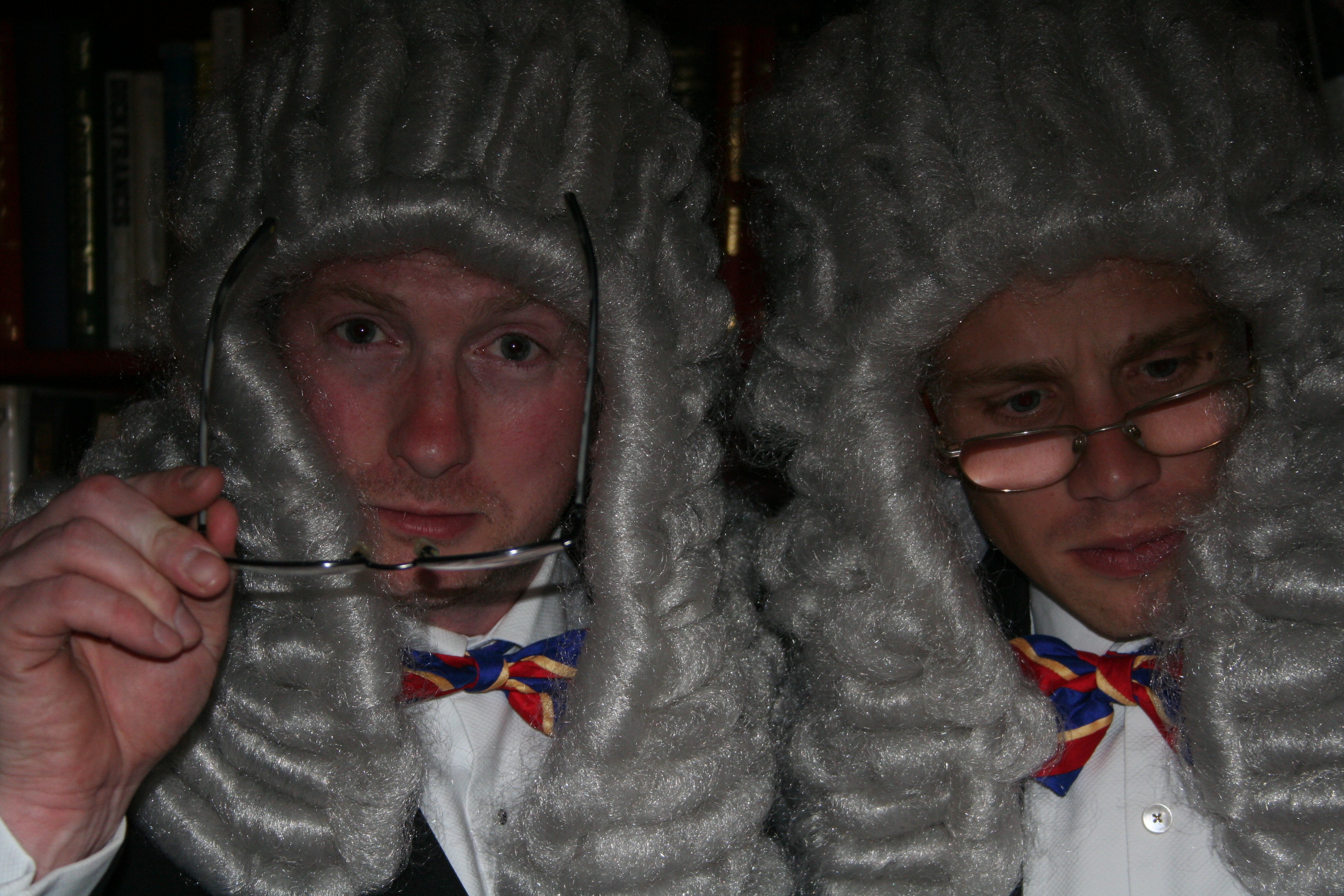
- Judges shall be present at the “Tonsley Day of Reckoning” in correct attire, namely black tie and the famous Tonsley Judges’ Wigs.
- In addition to the principal competition, kudos will be attributed and, at the discretion of the Judges, a separate award may be made to the participant who has made the most significant contribution to promoting the competition through either local or national media. Examples of such promotional activity might include being interviewed for television whilst at the event or submitting a report of the event to a local newspaper. Evidence of any such coverage should be submitted to the Panel at the address outlined in Rule 6 above by the Eleventh Day of March in the Year of Our Lord, Two Thousand and Six.
- The Judges’ decision is final.
Opening Dinner
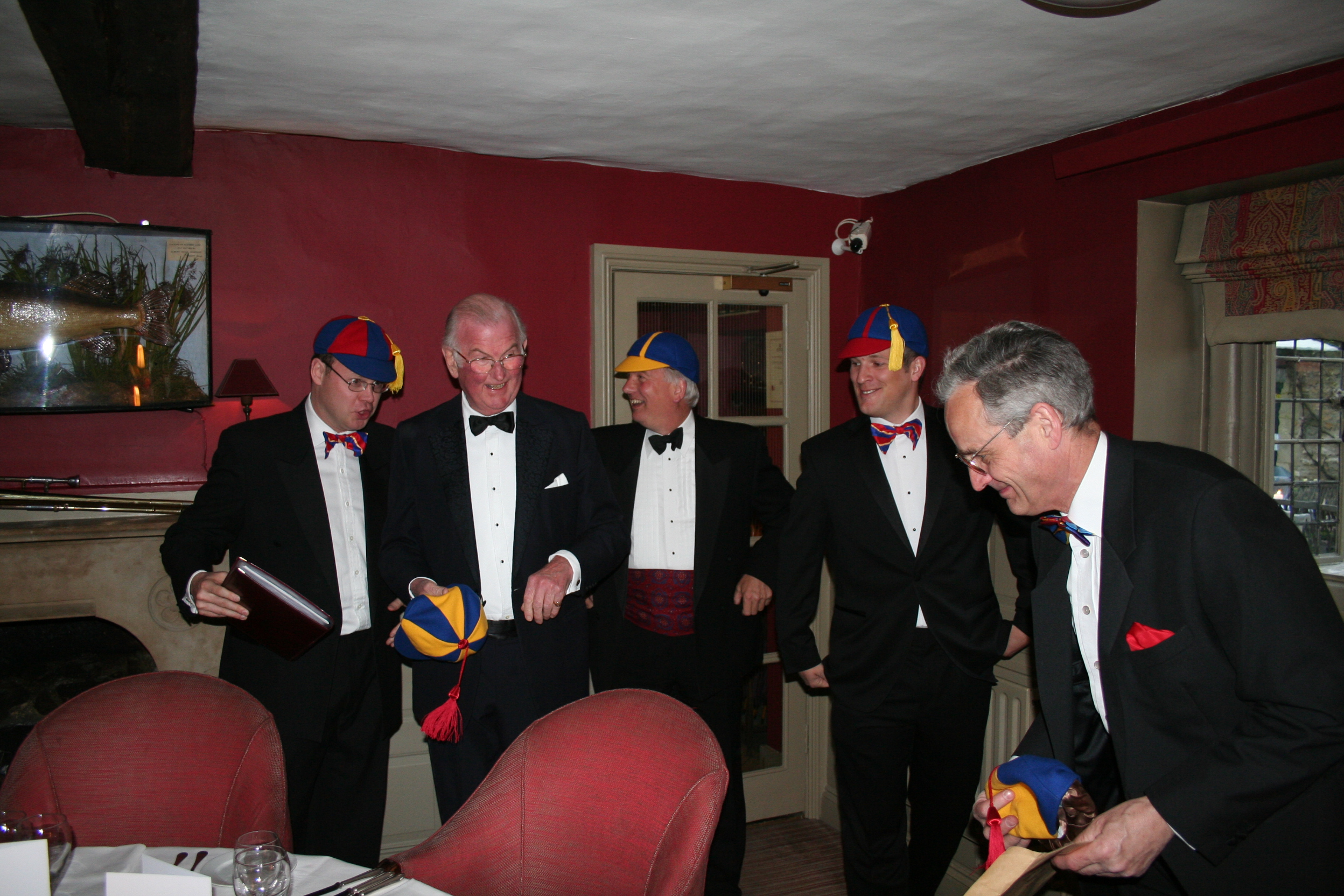
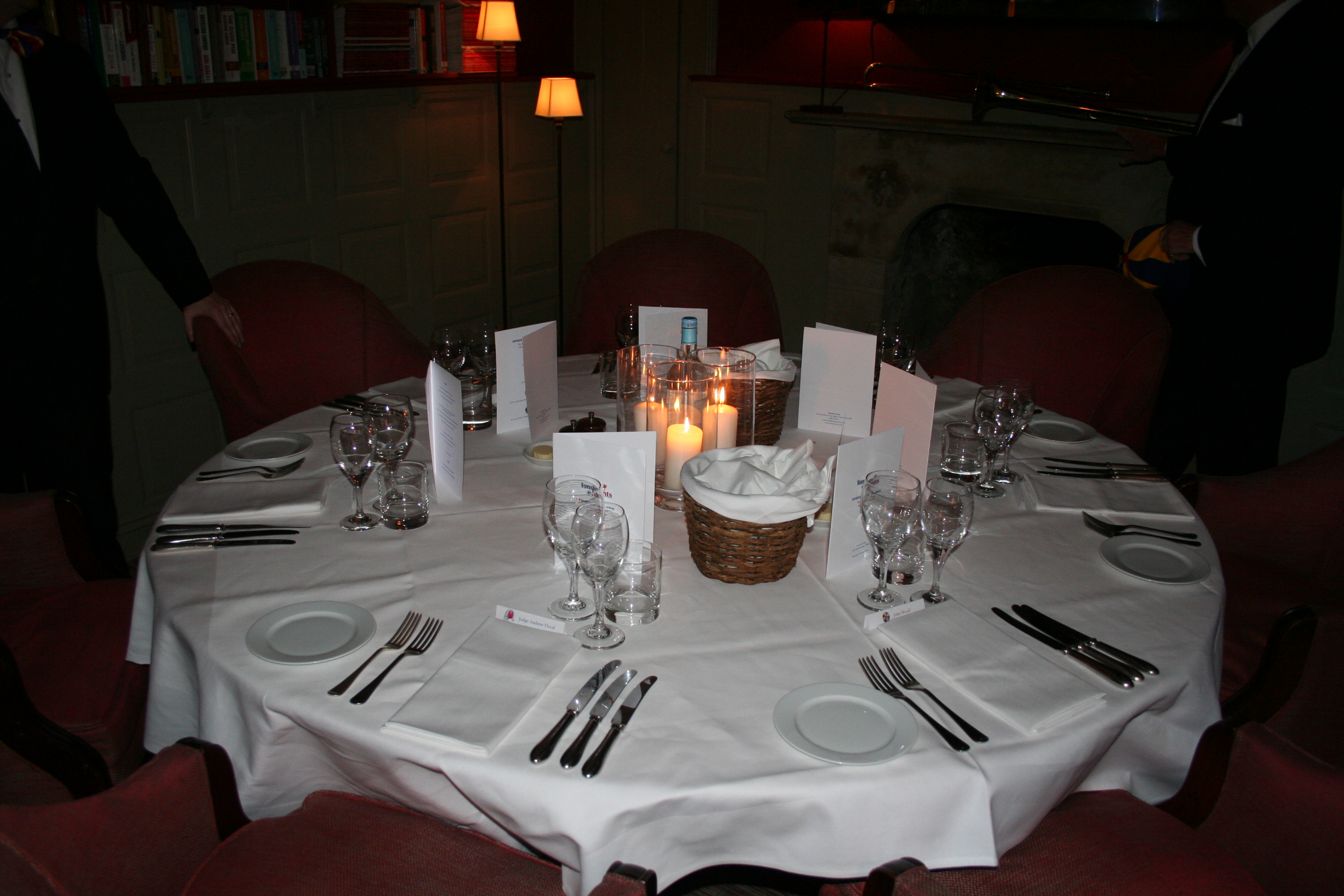
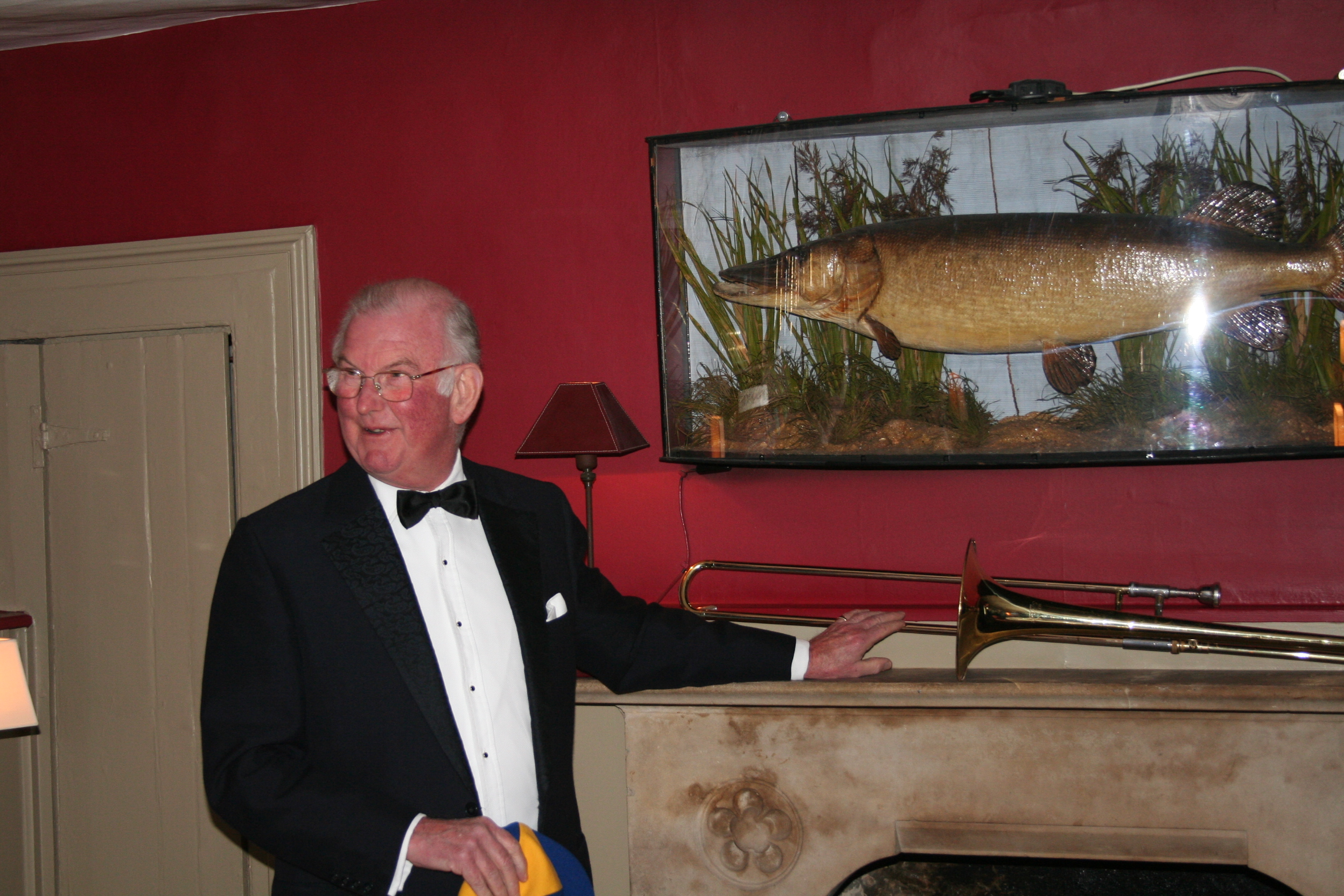
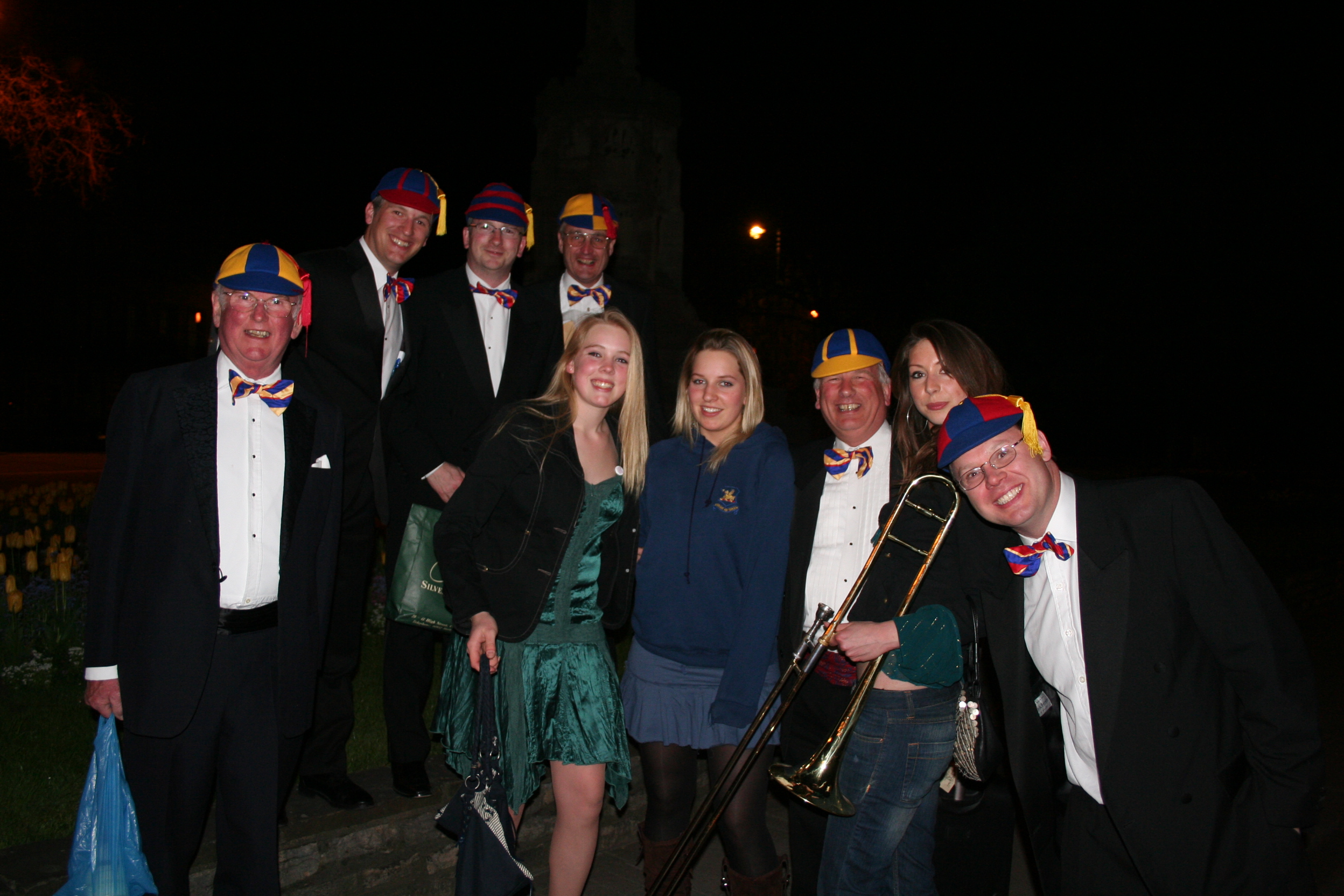
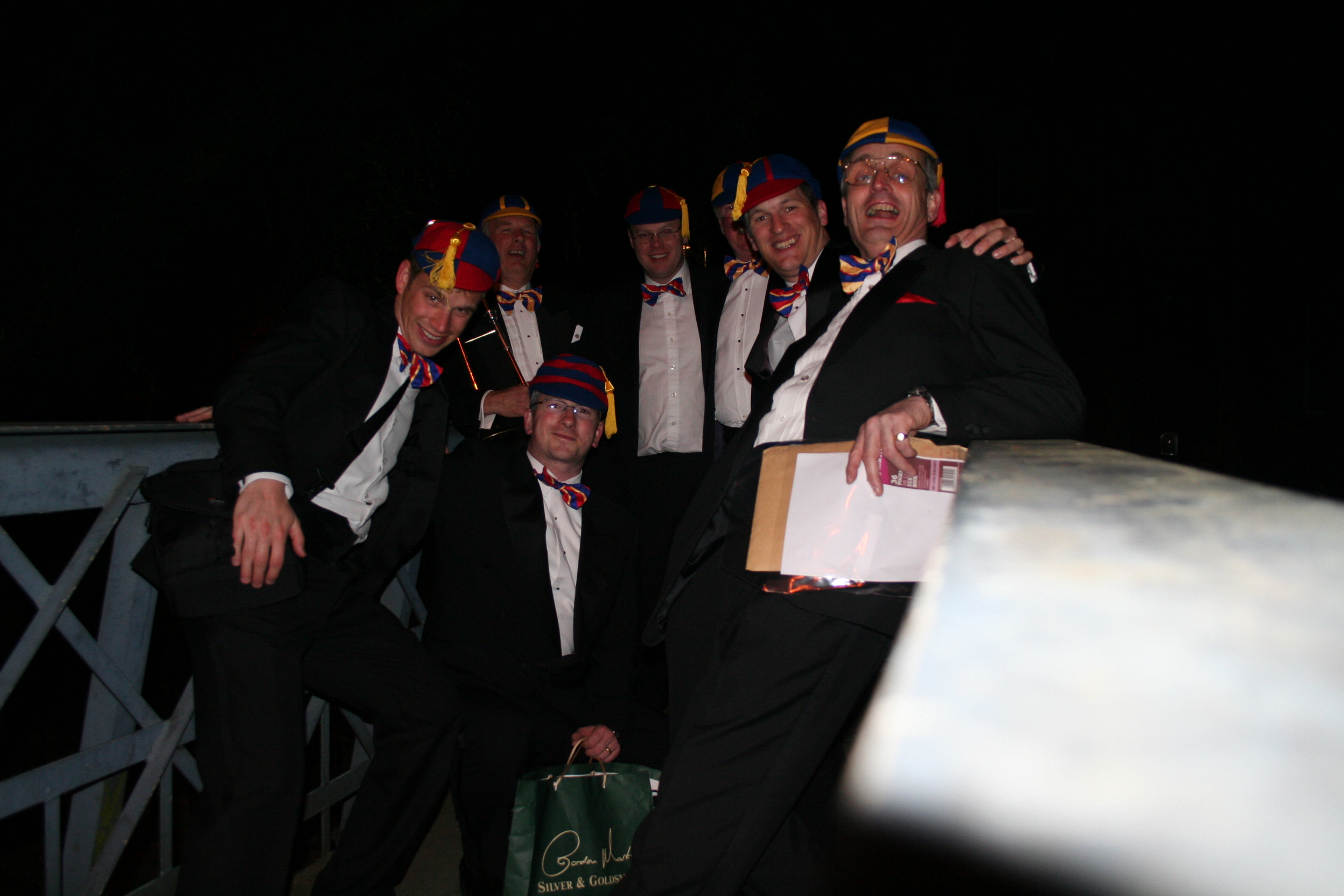
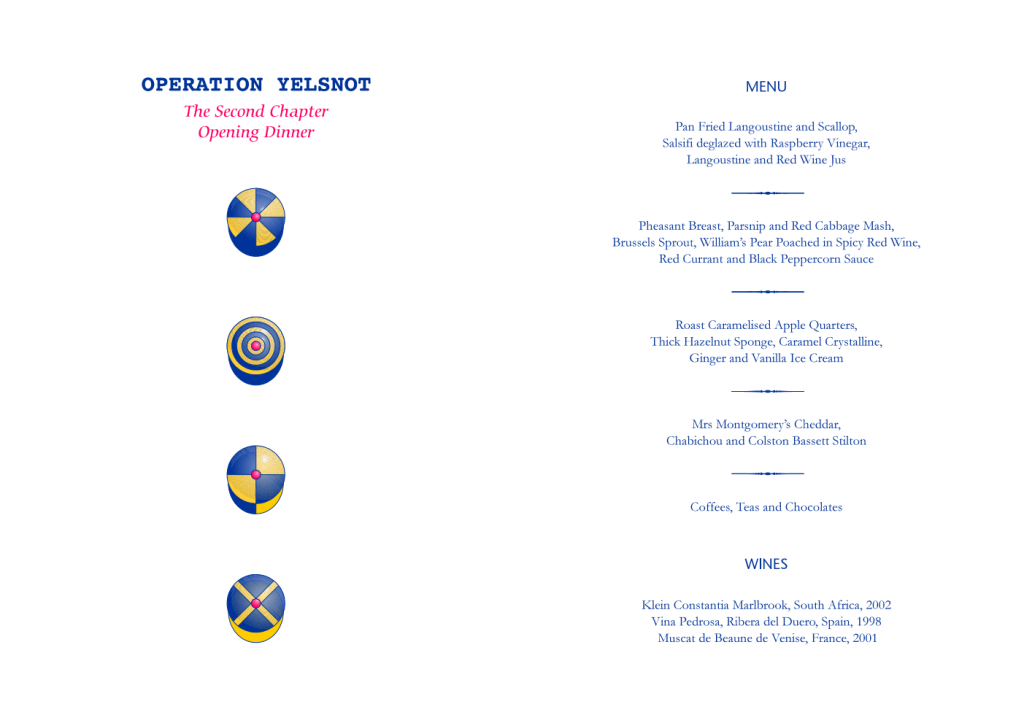
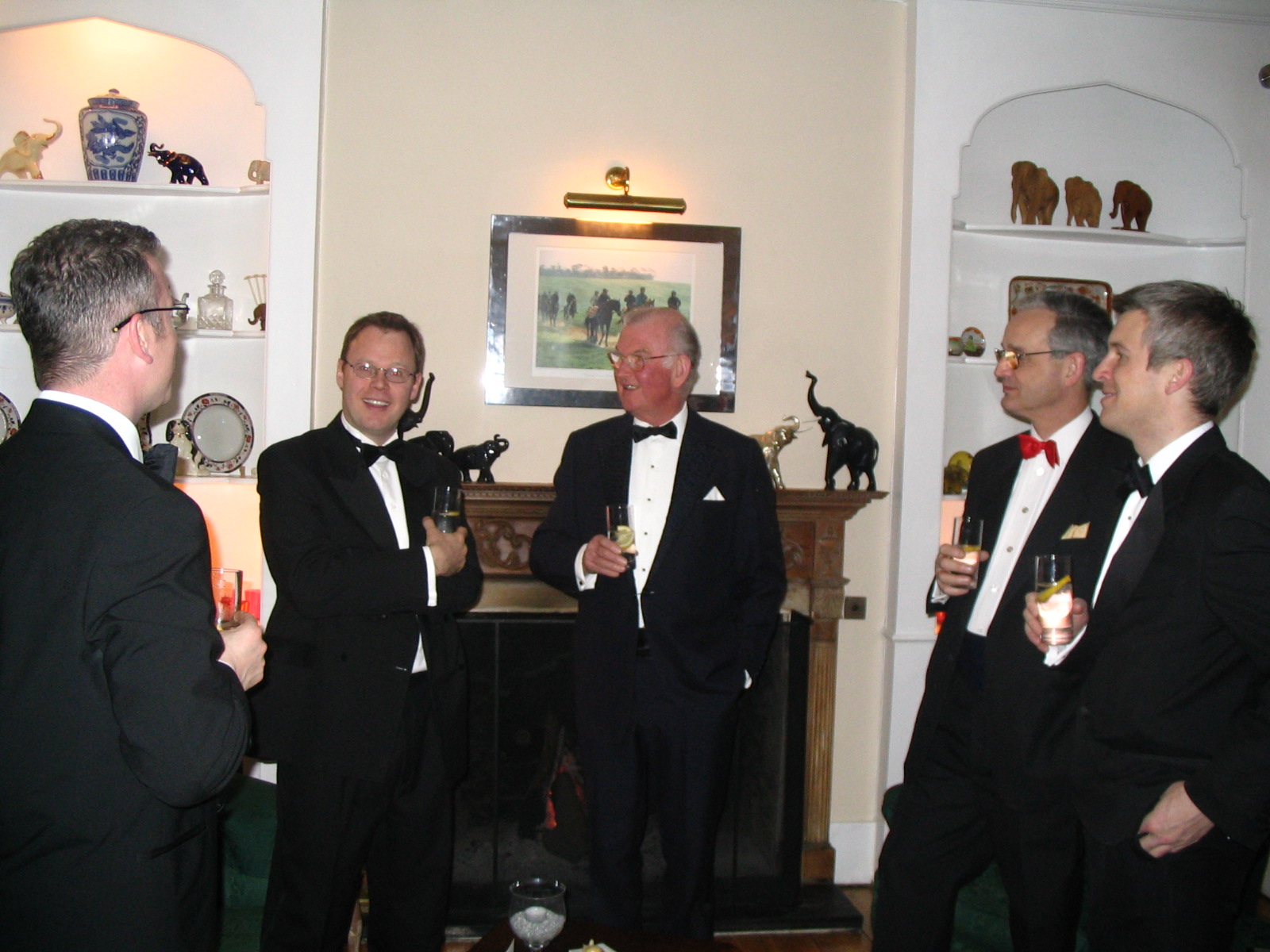
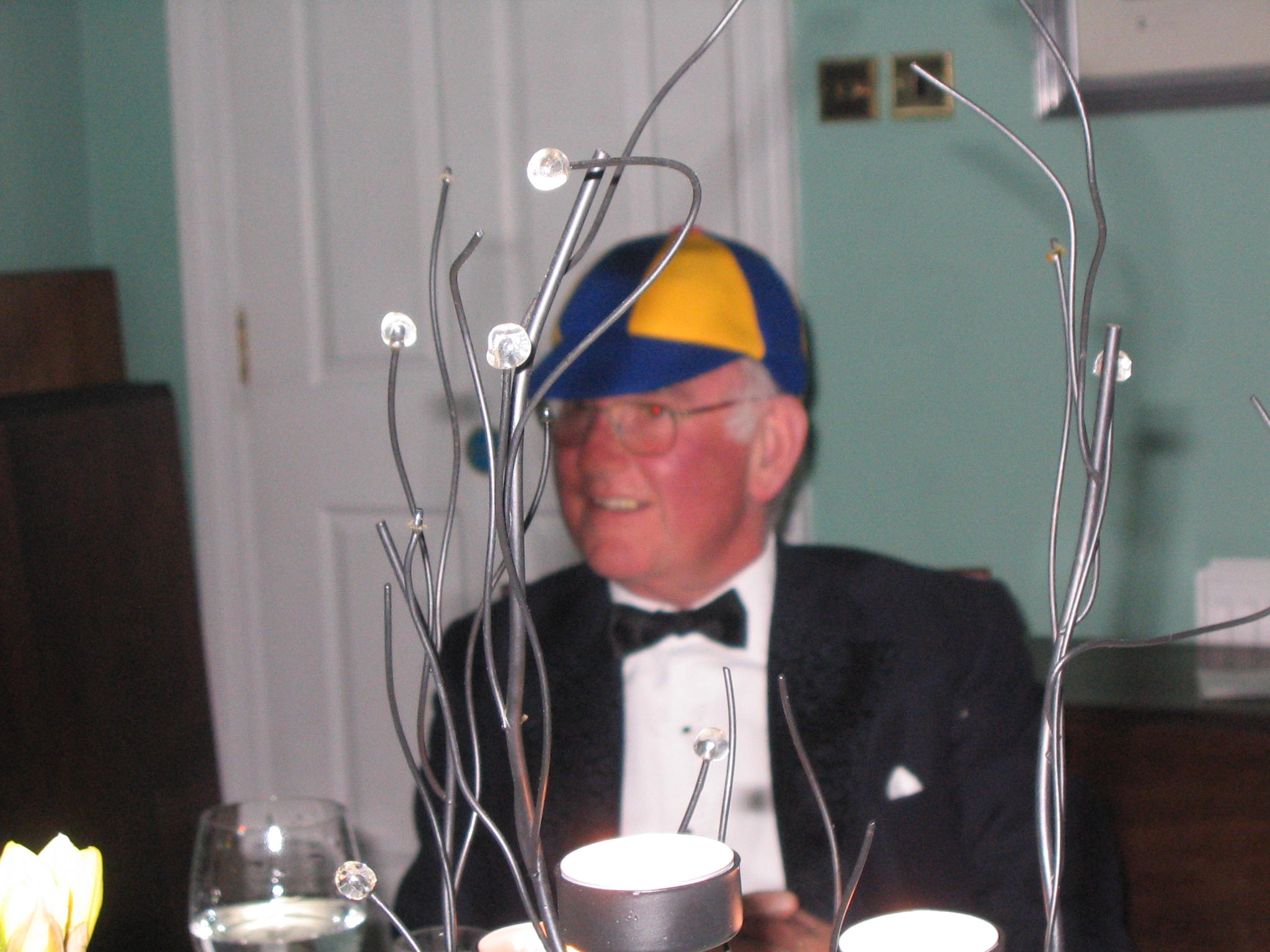
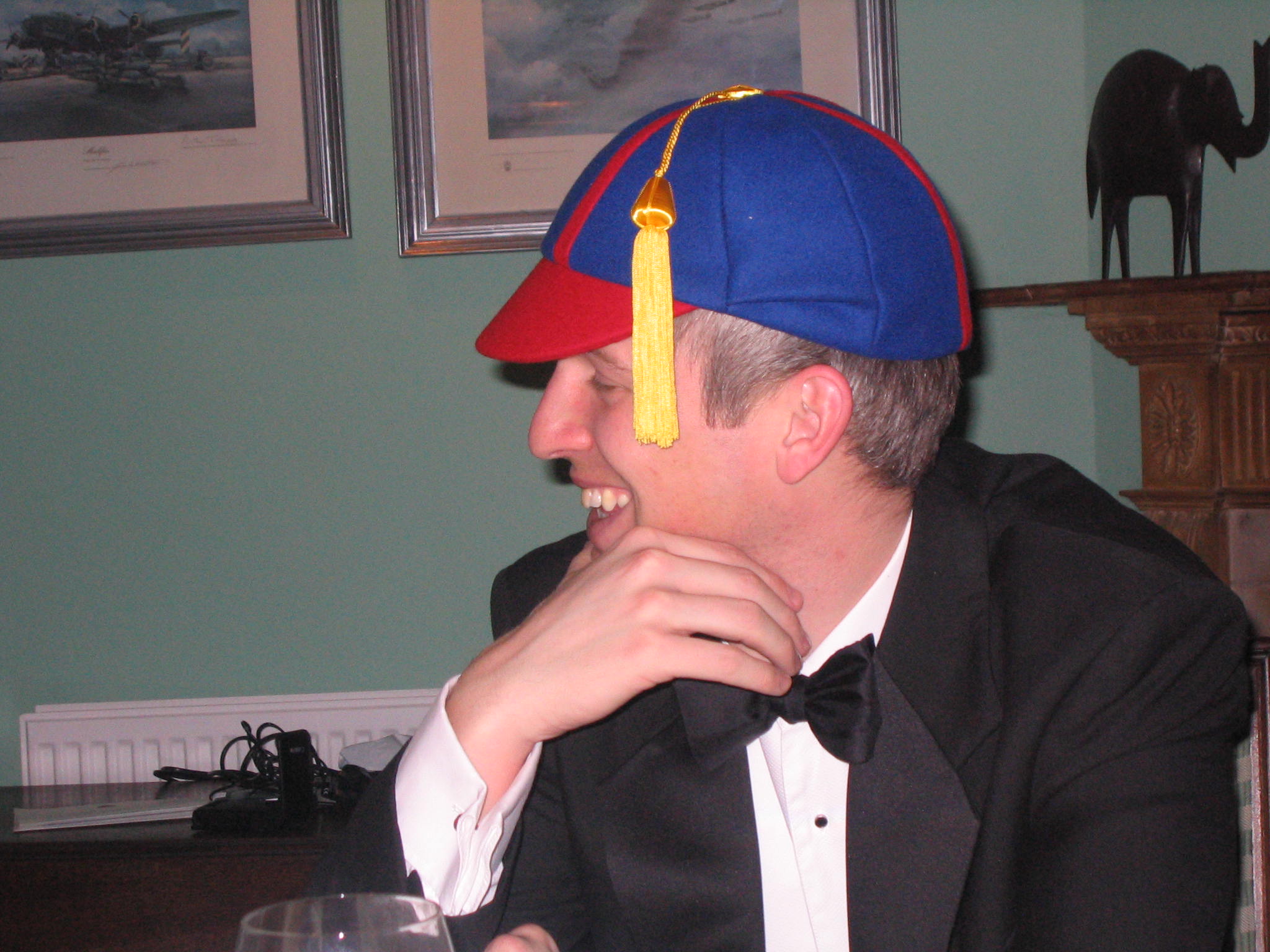
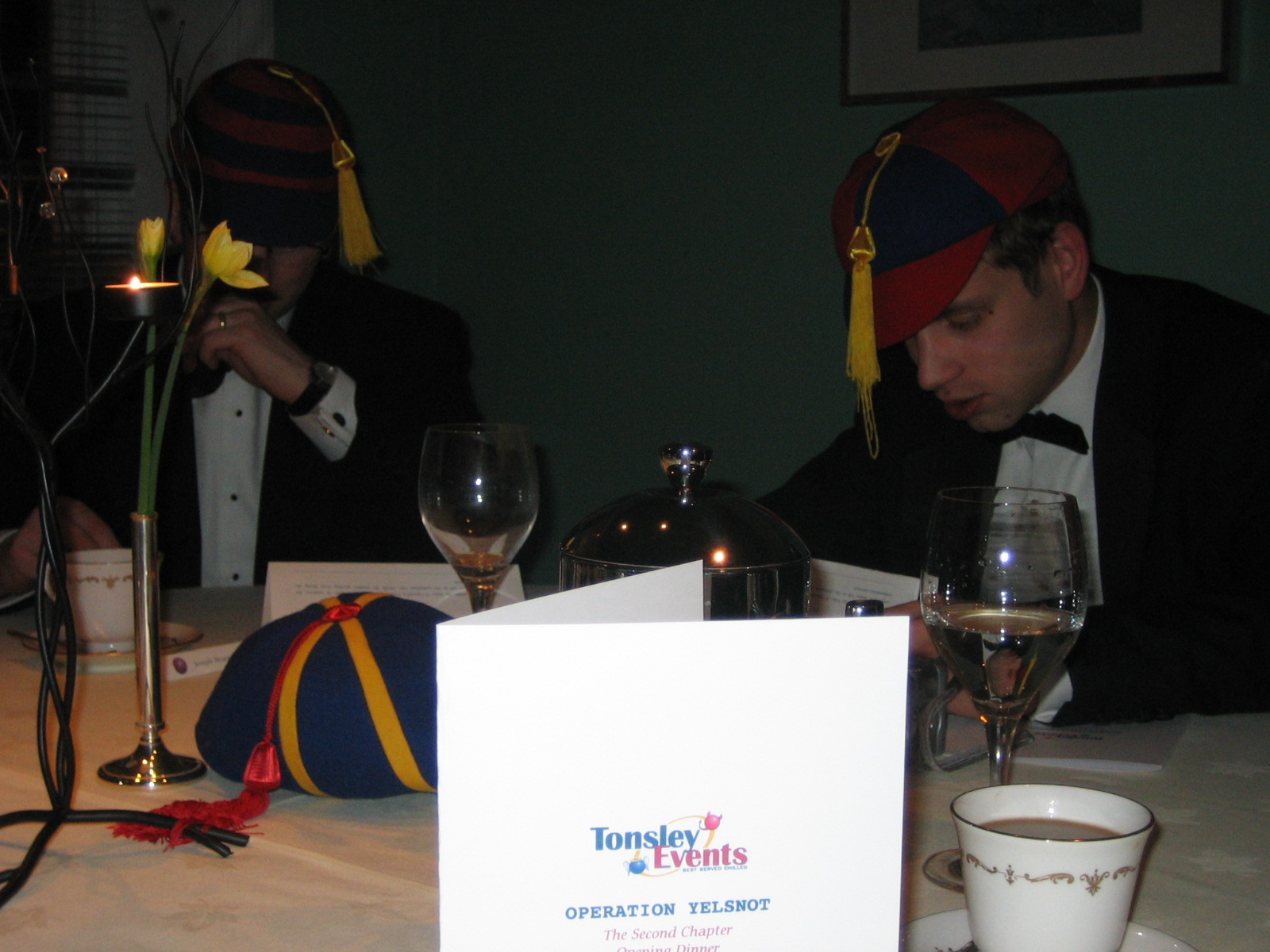
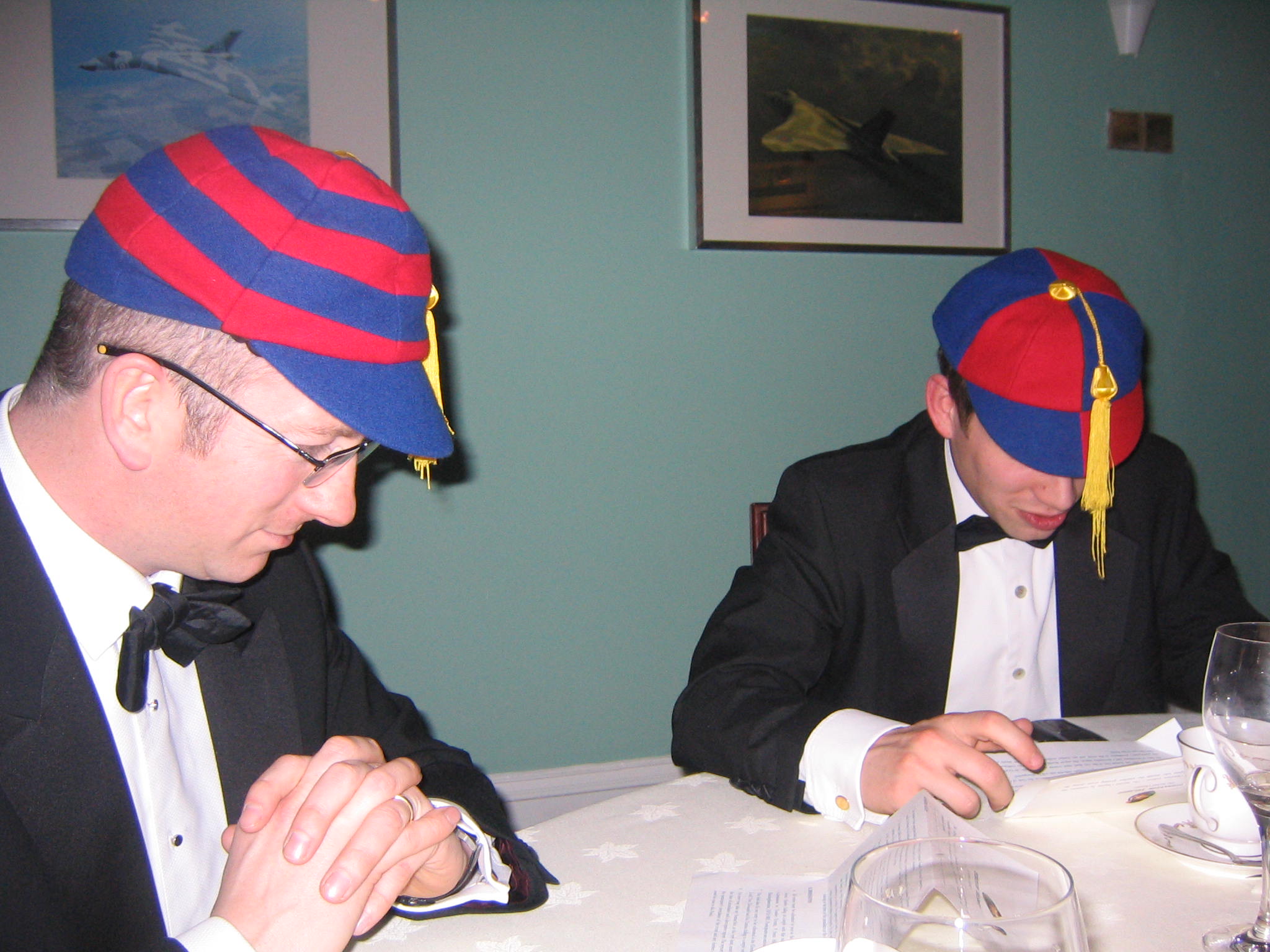
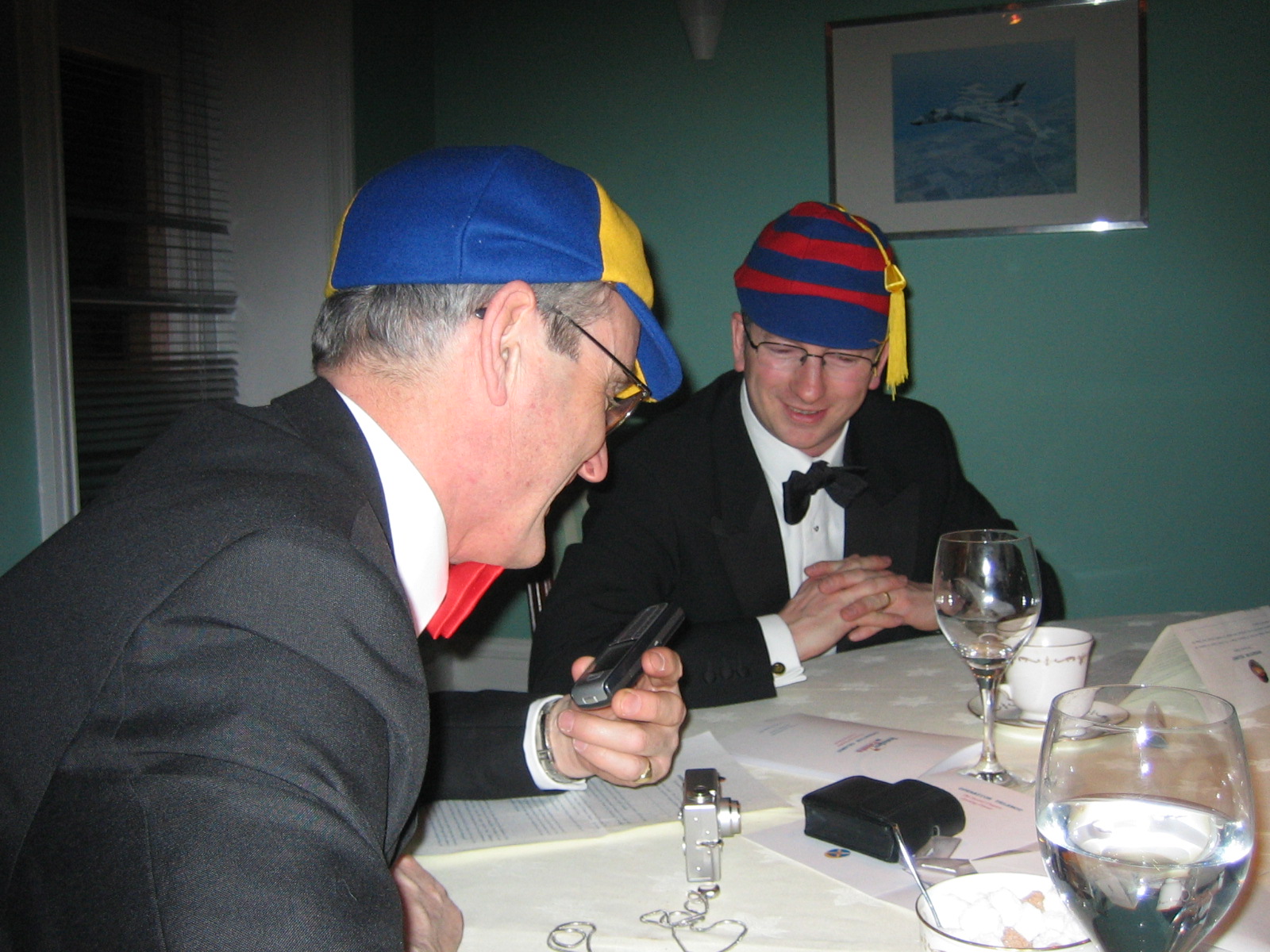
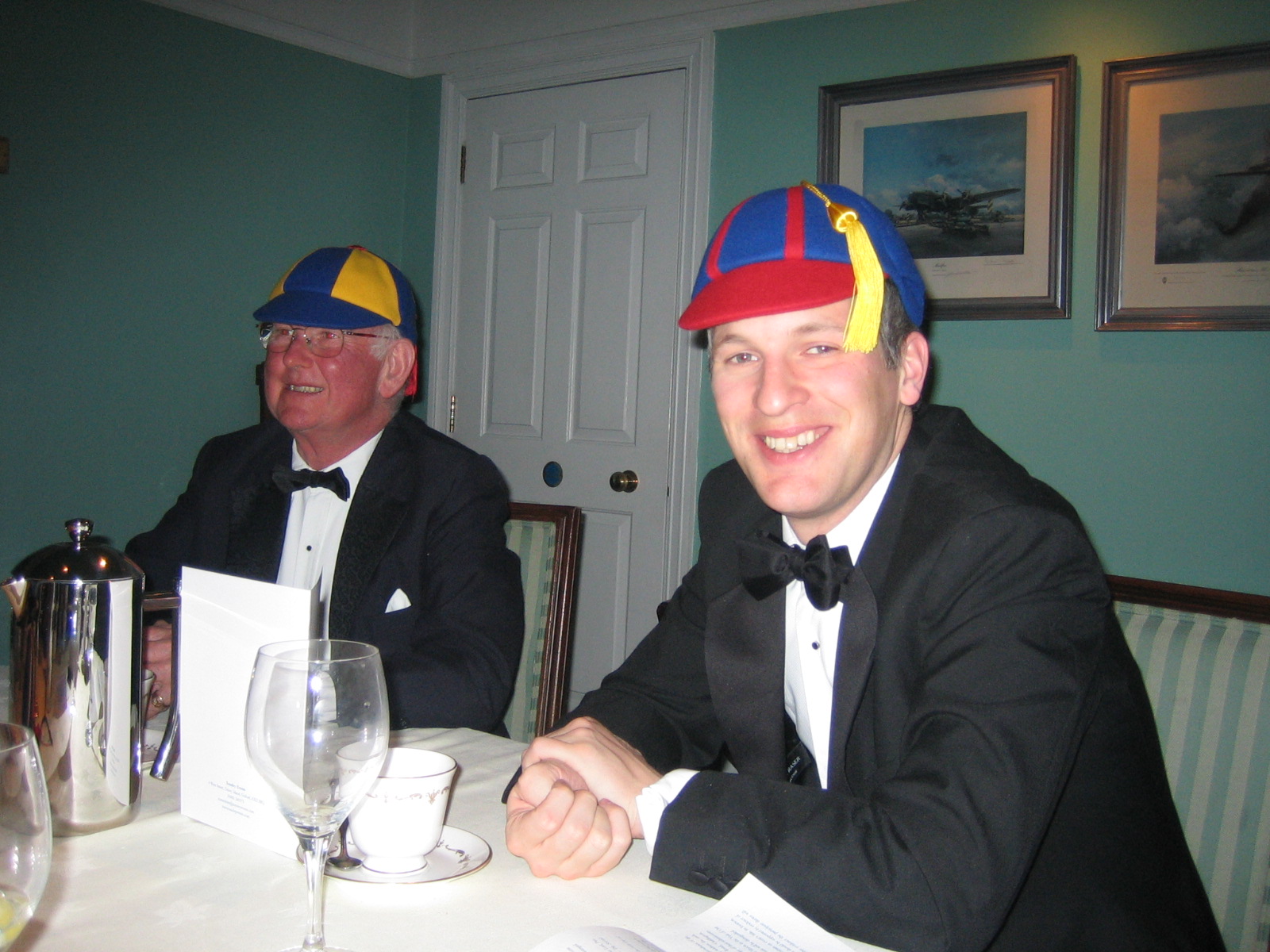
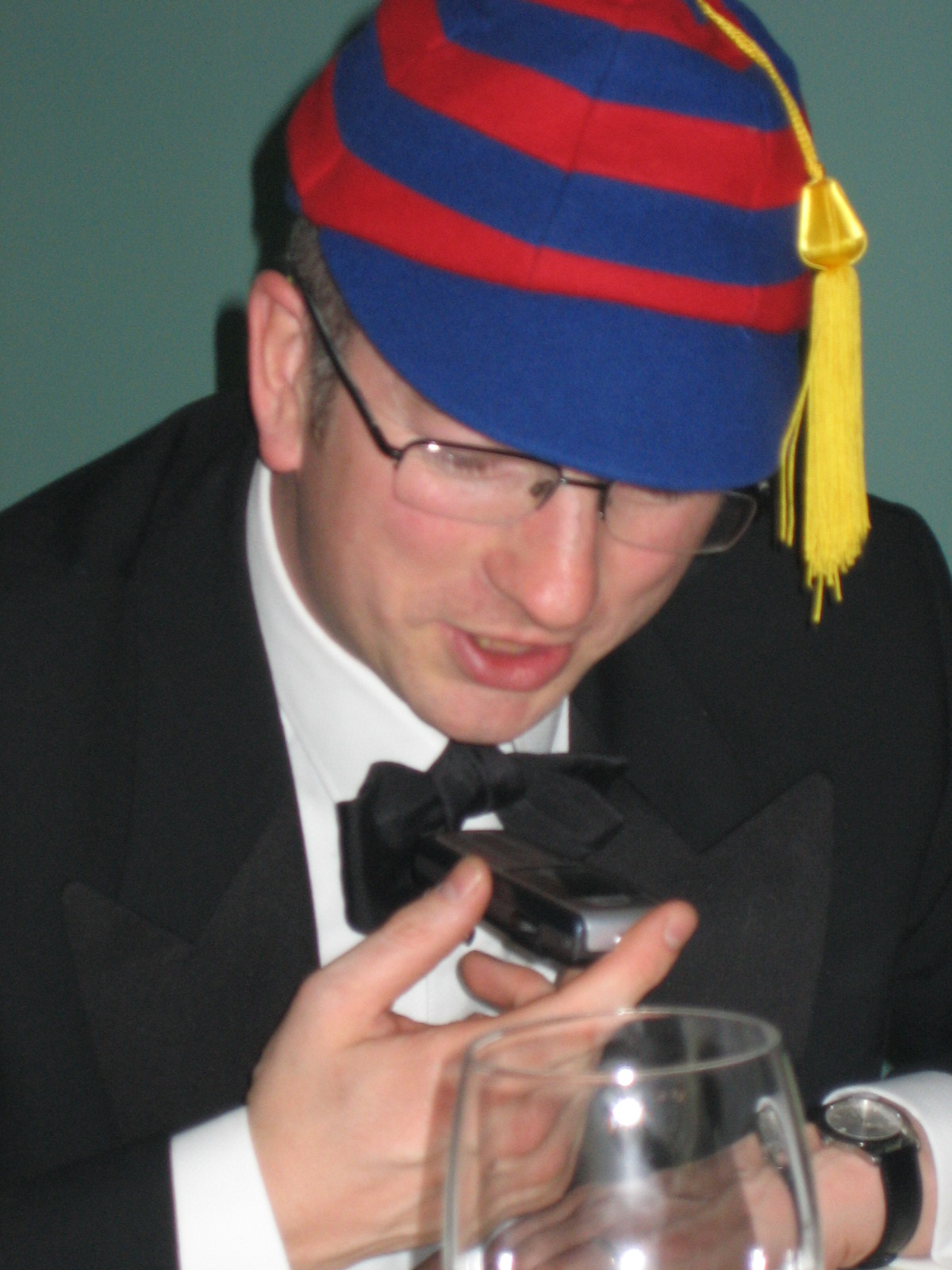
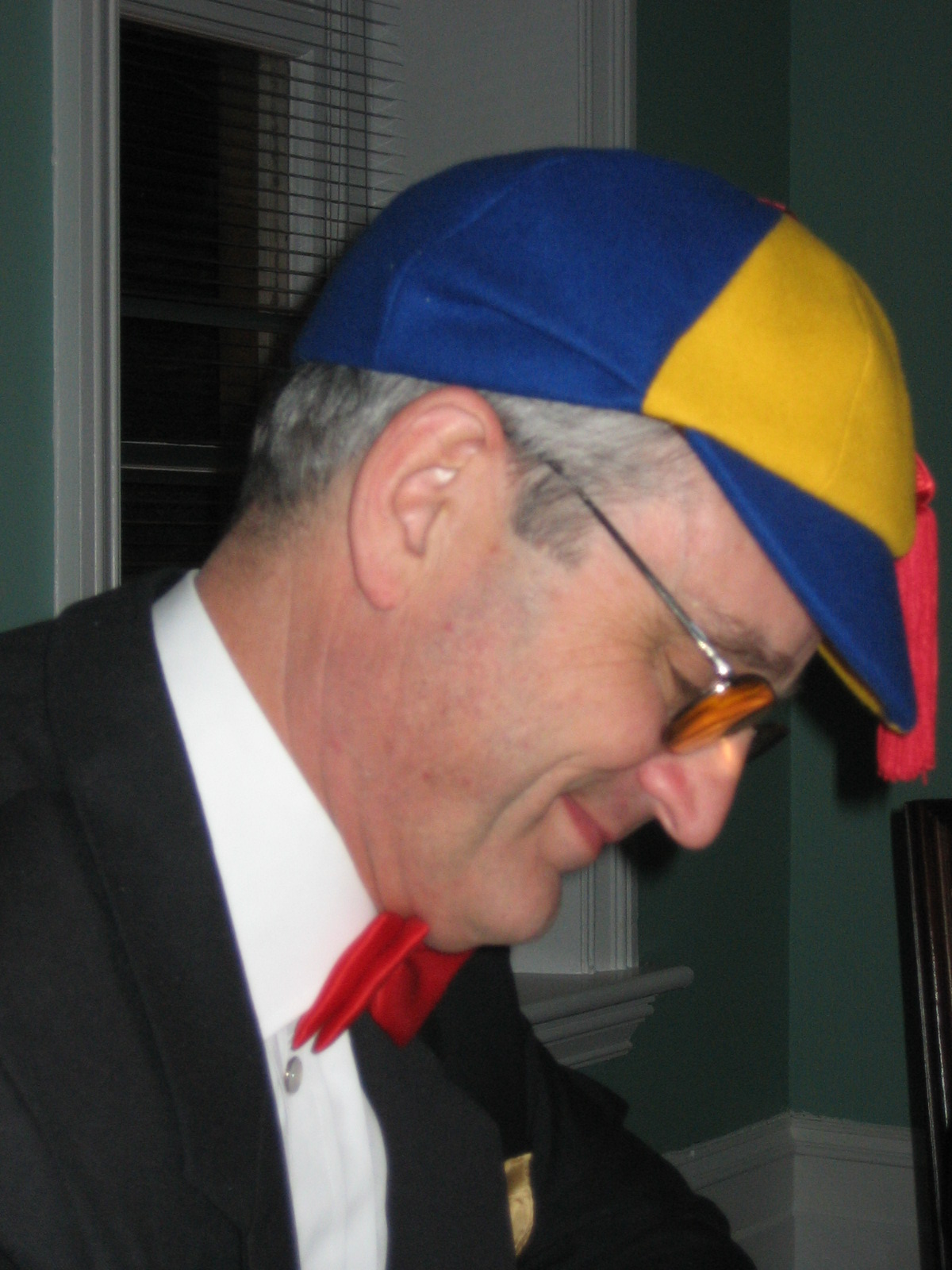
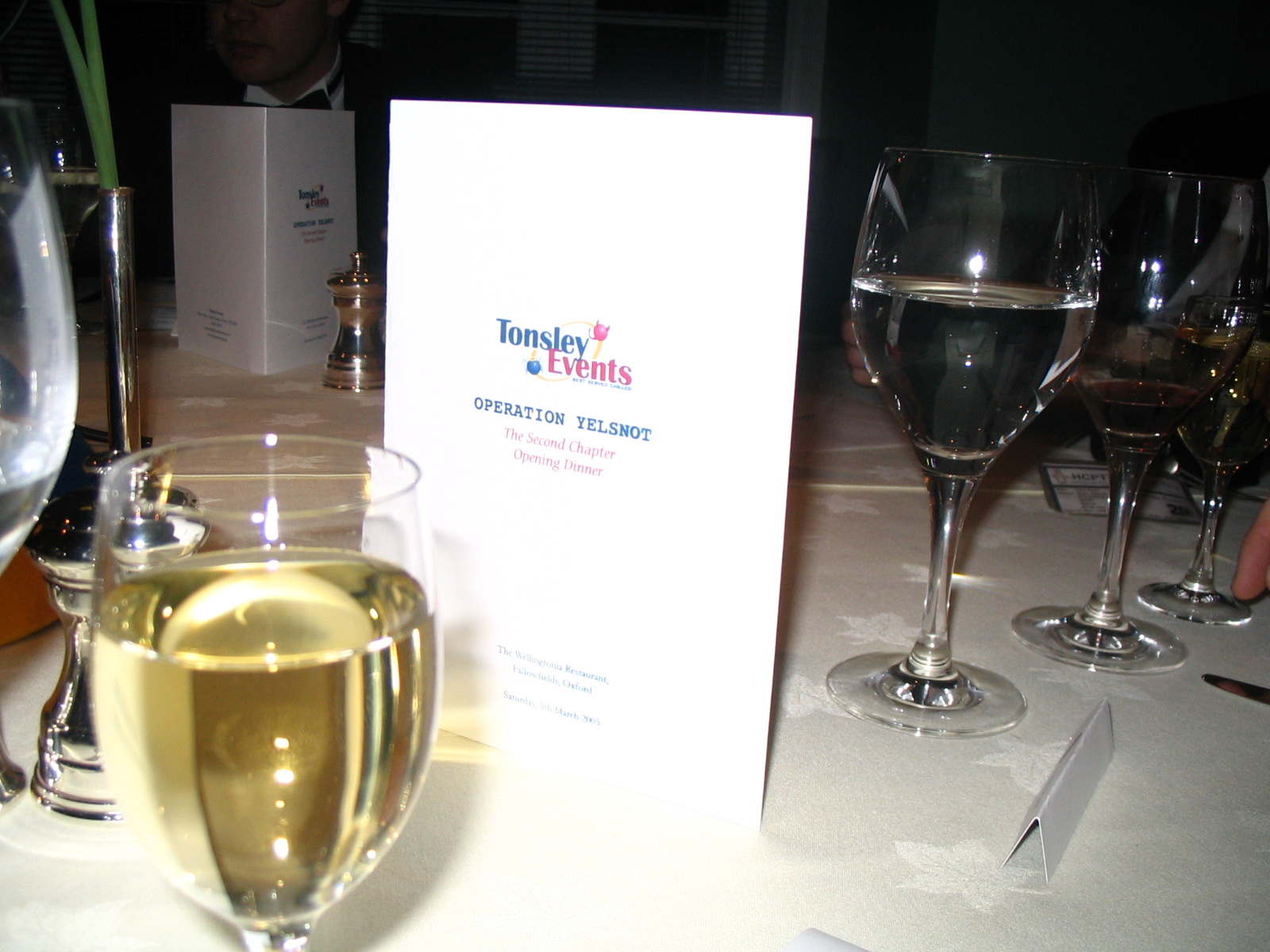
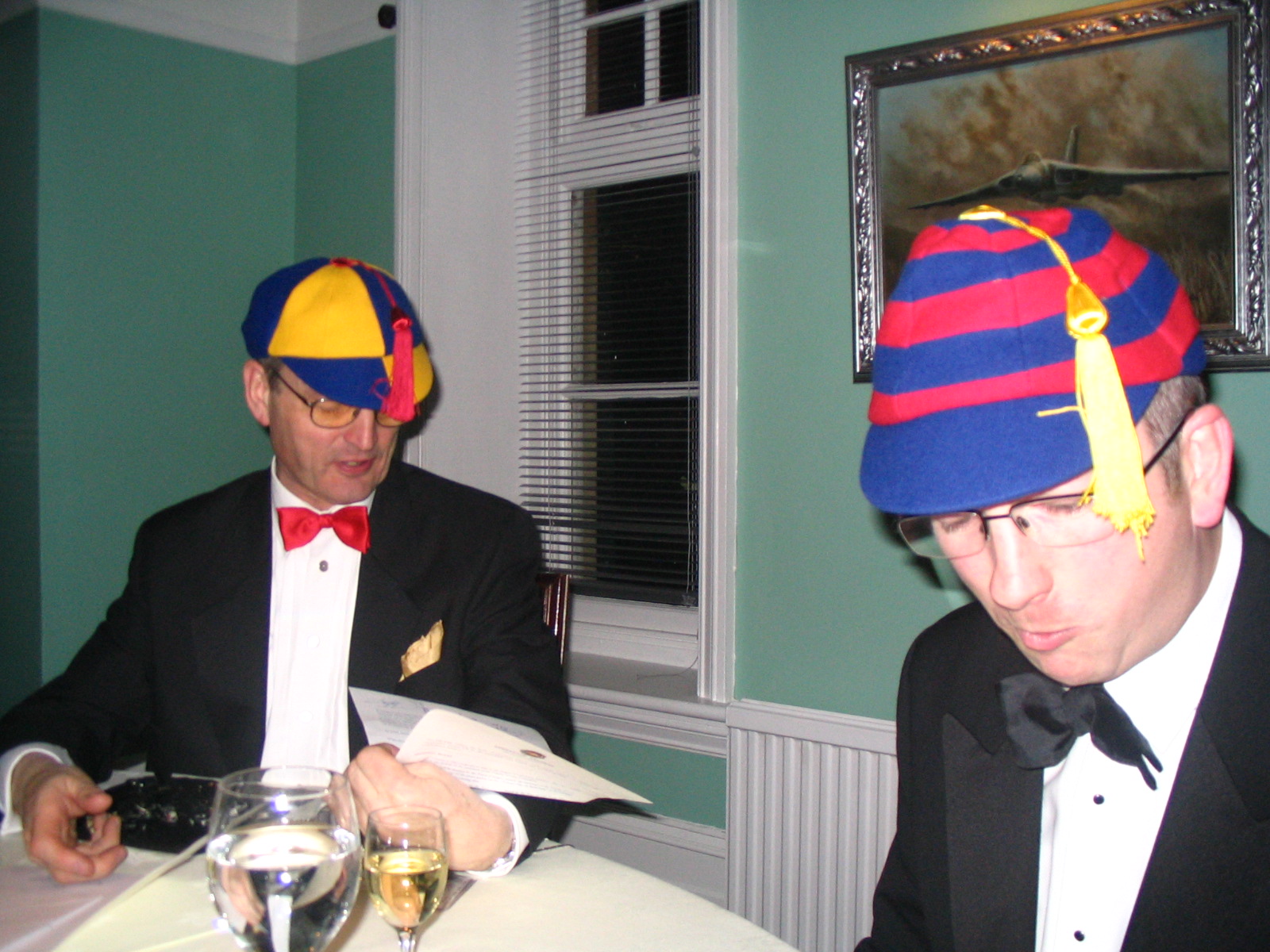
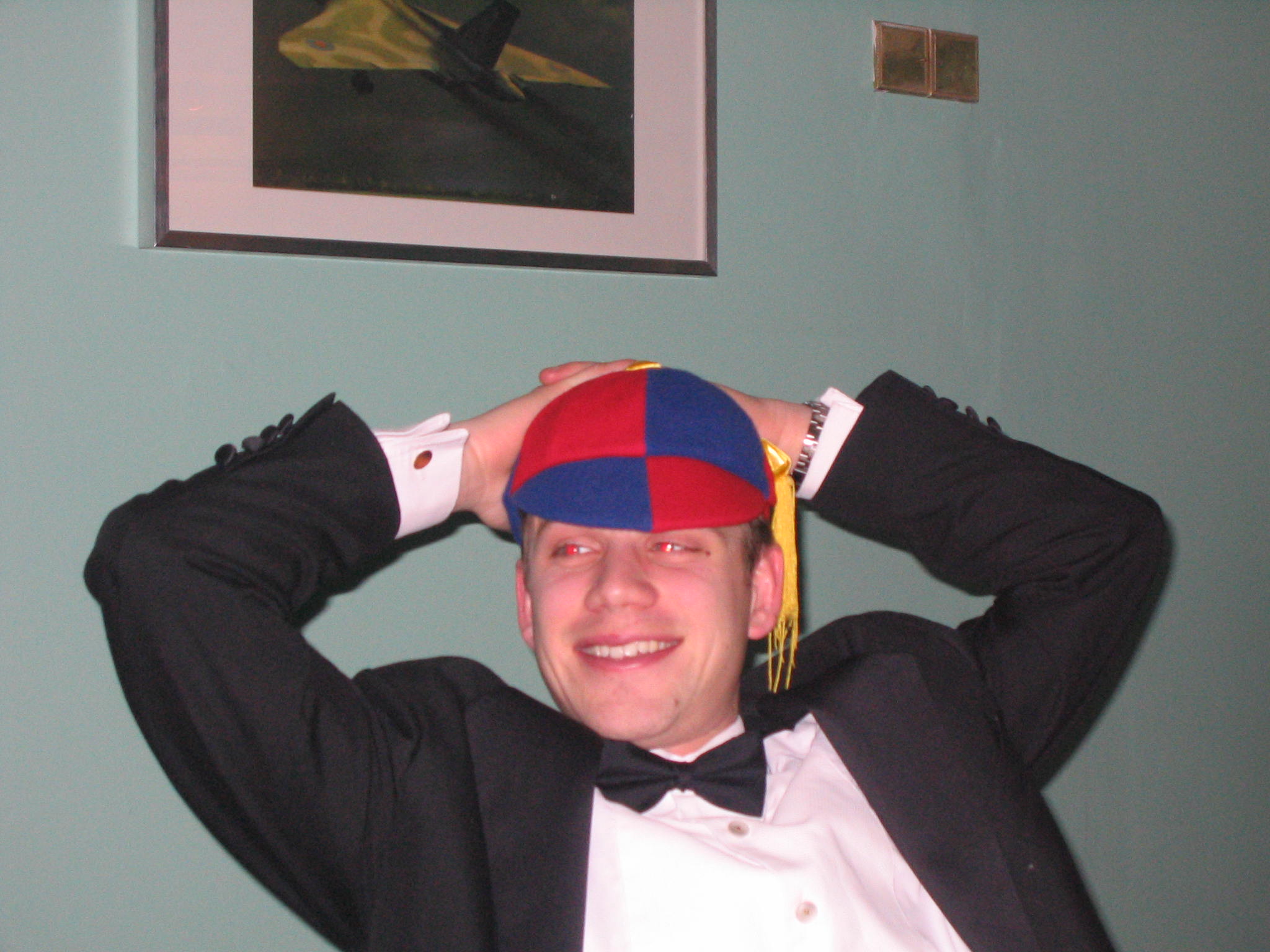
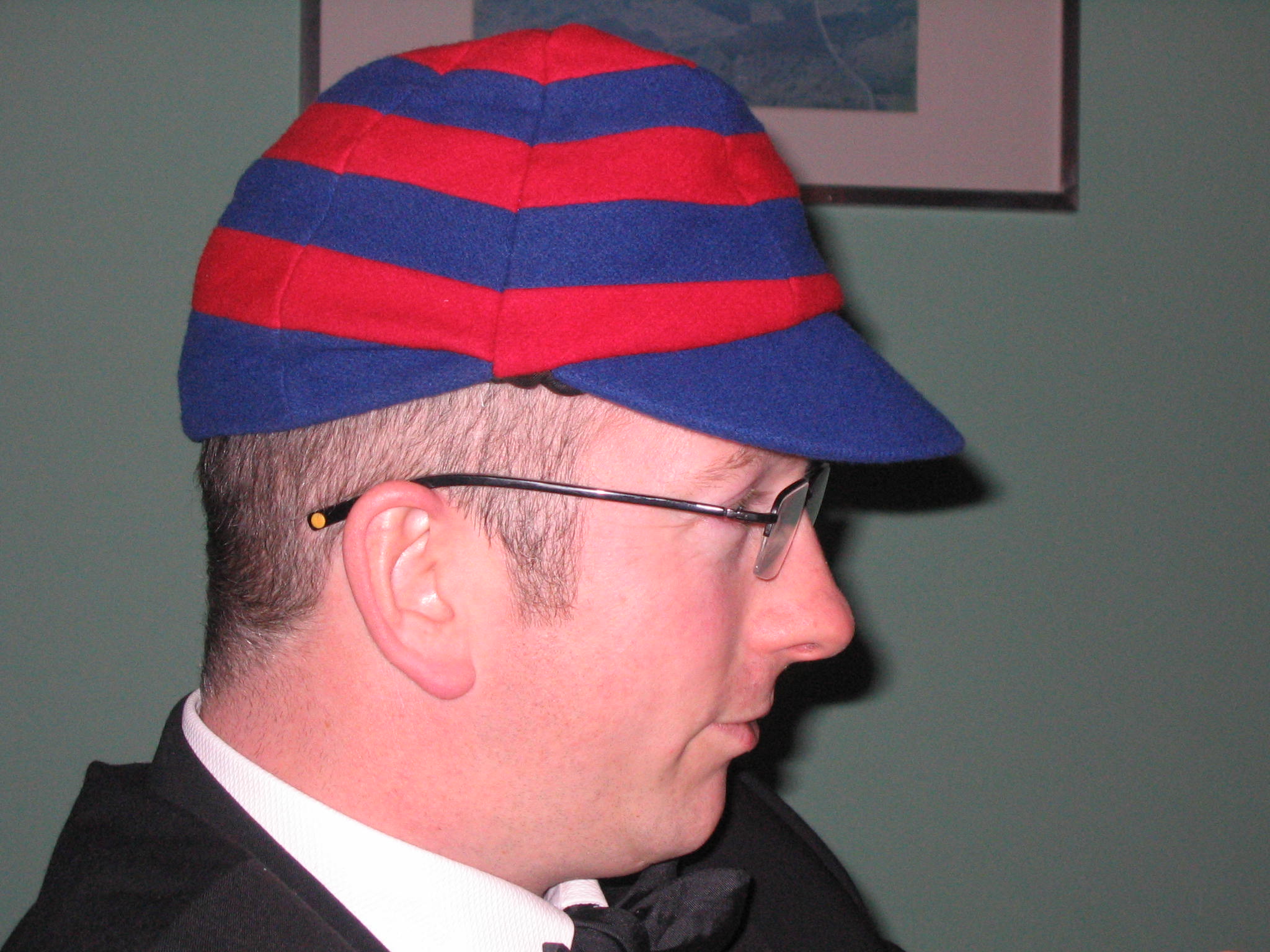
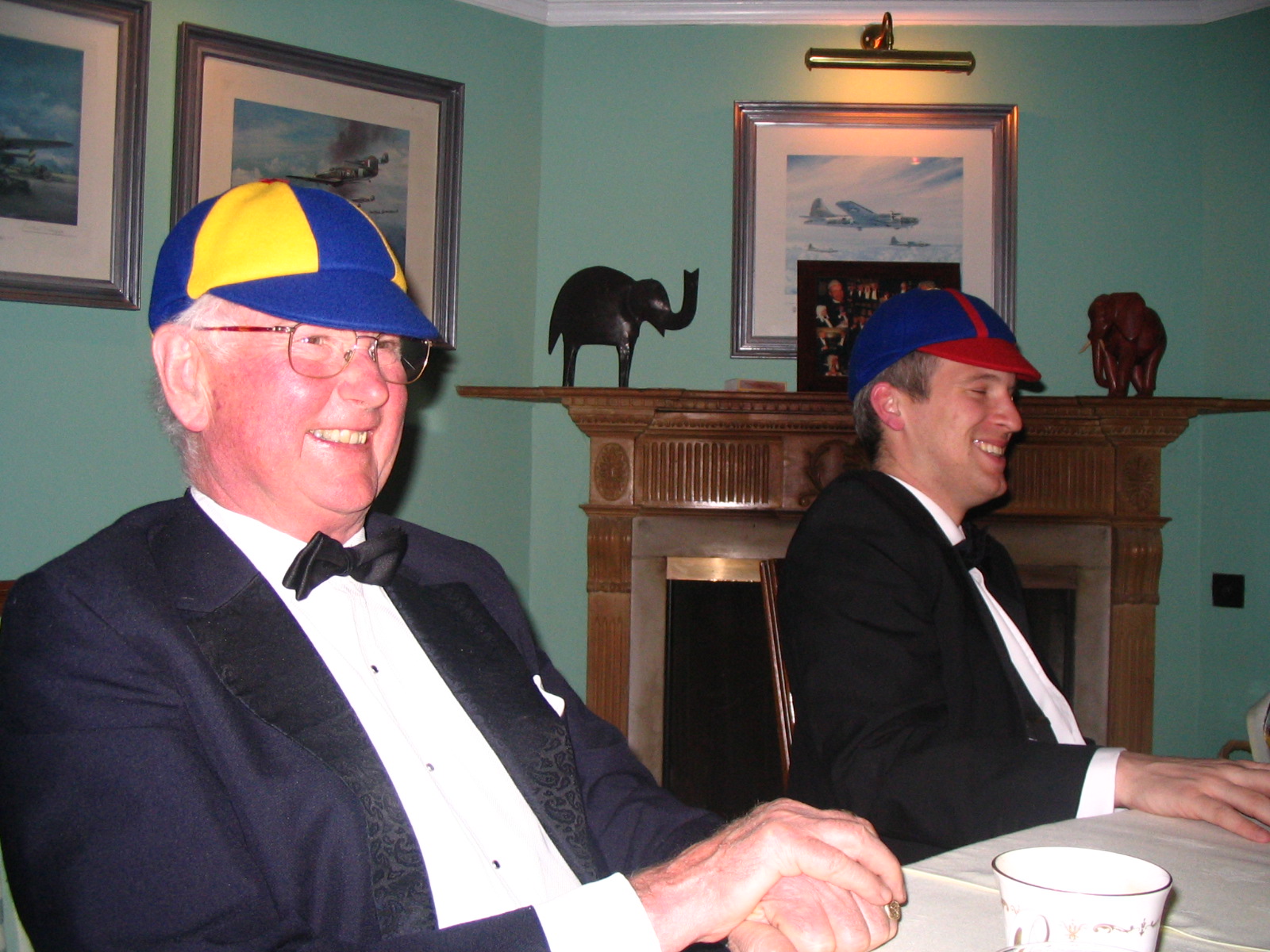
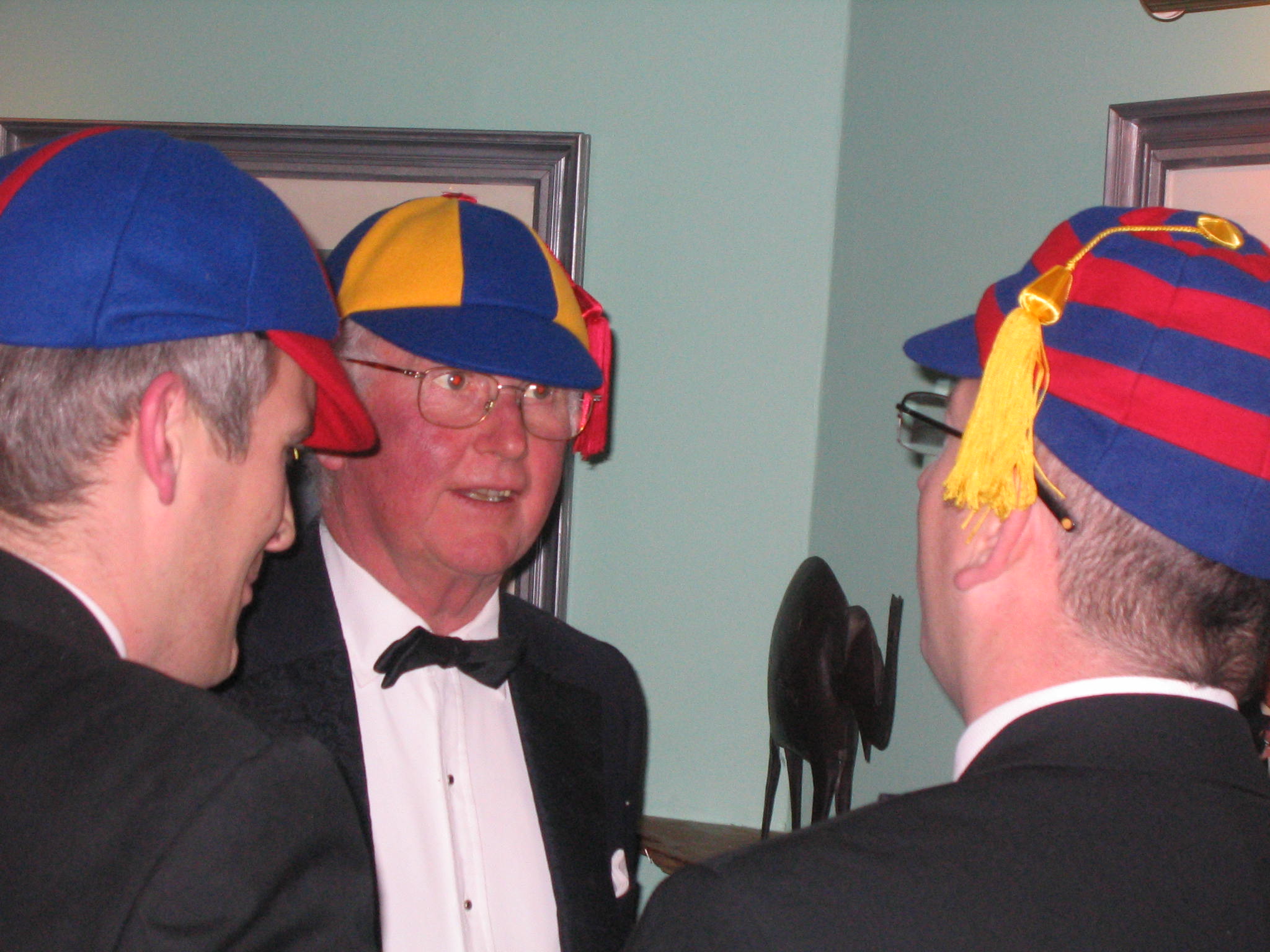
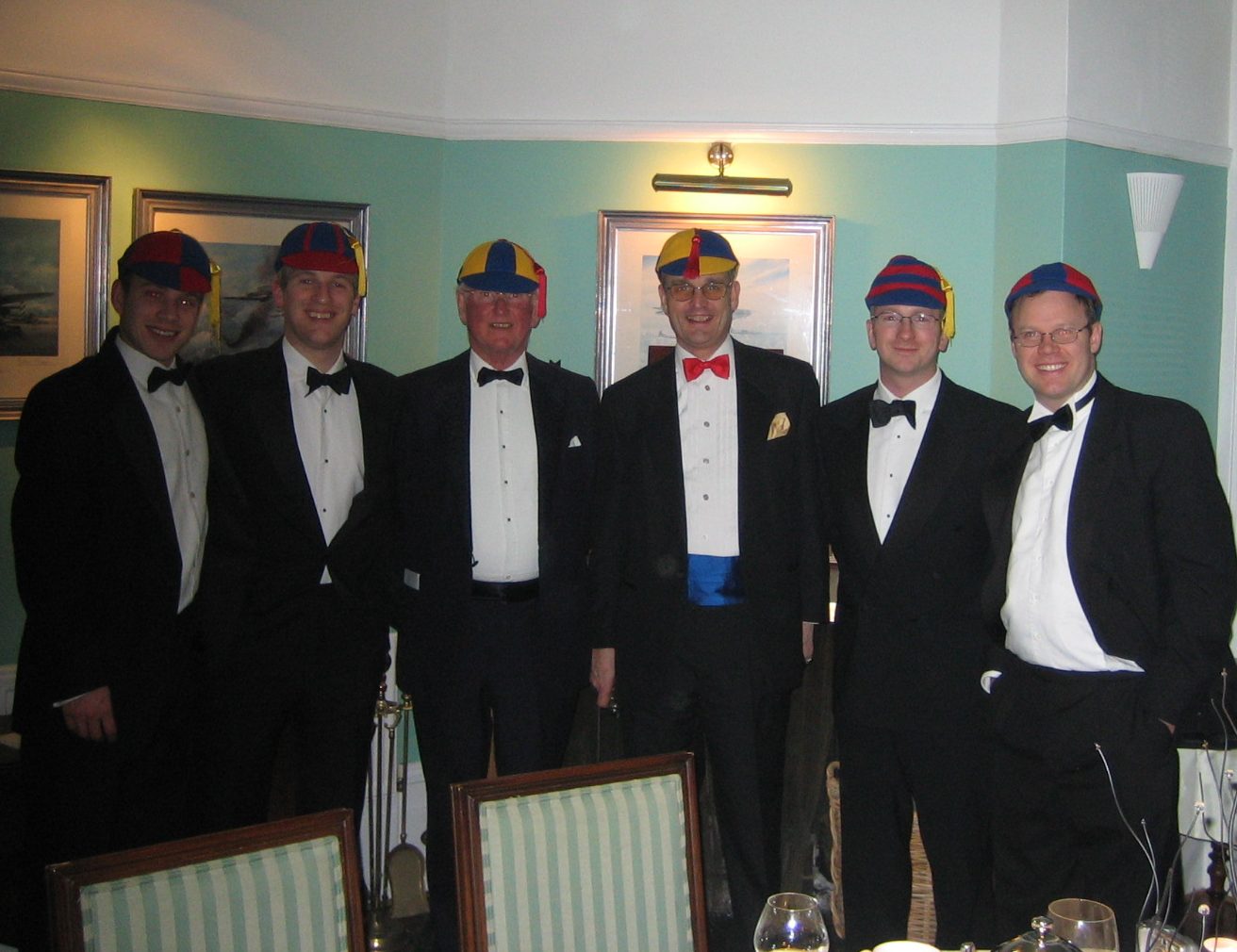
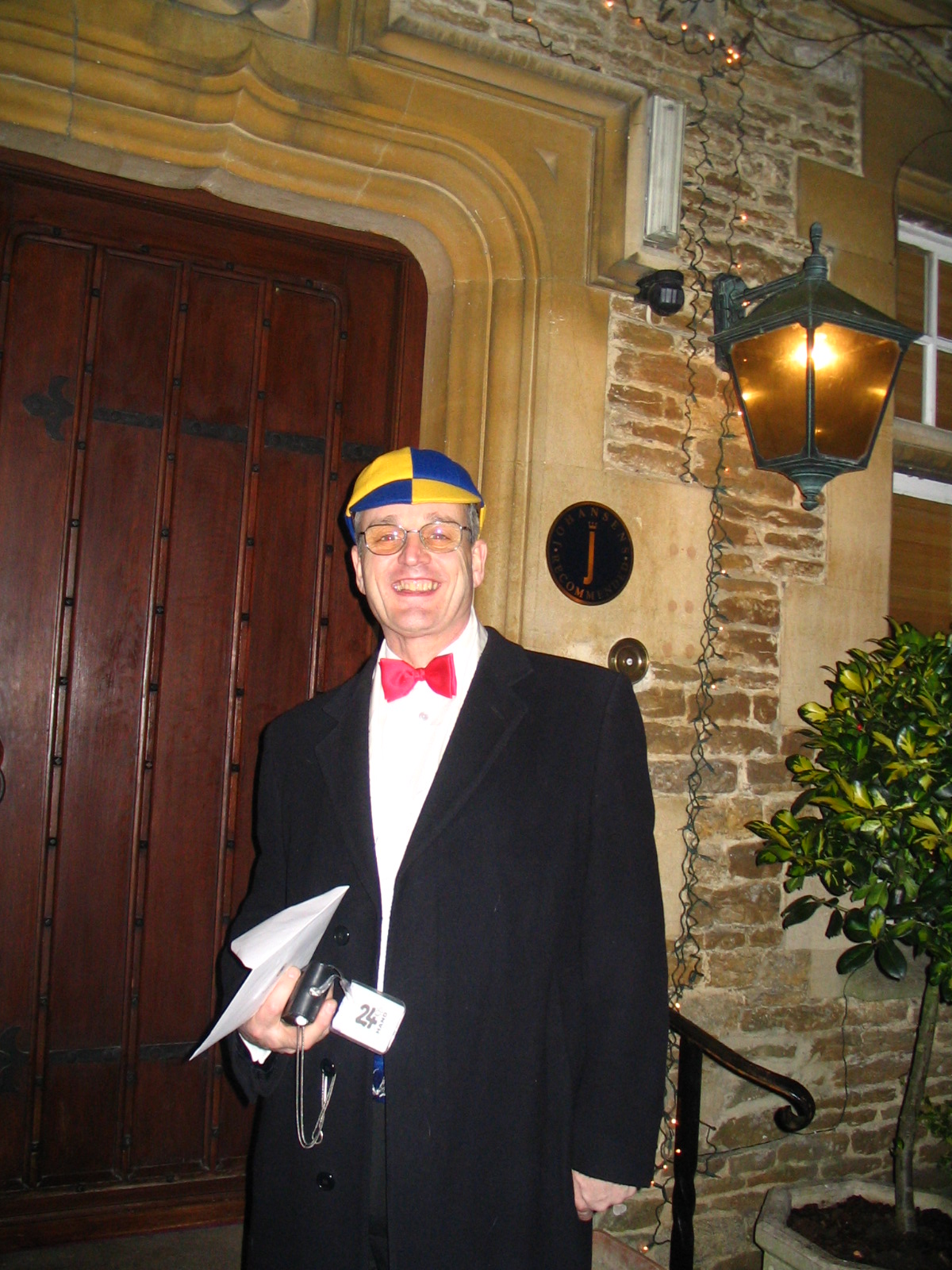
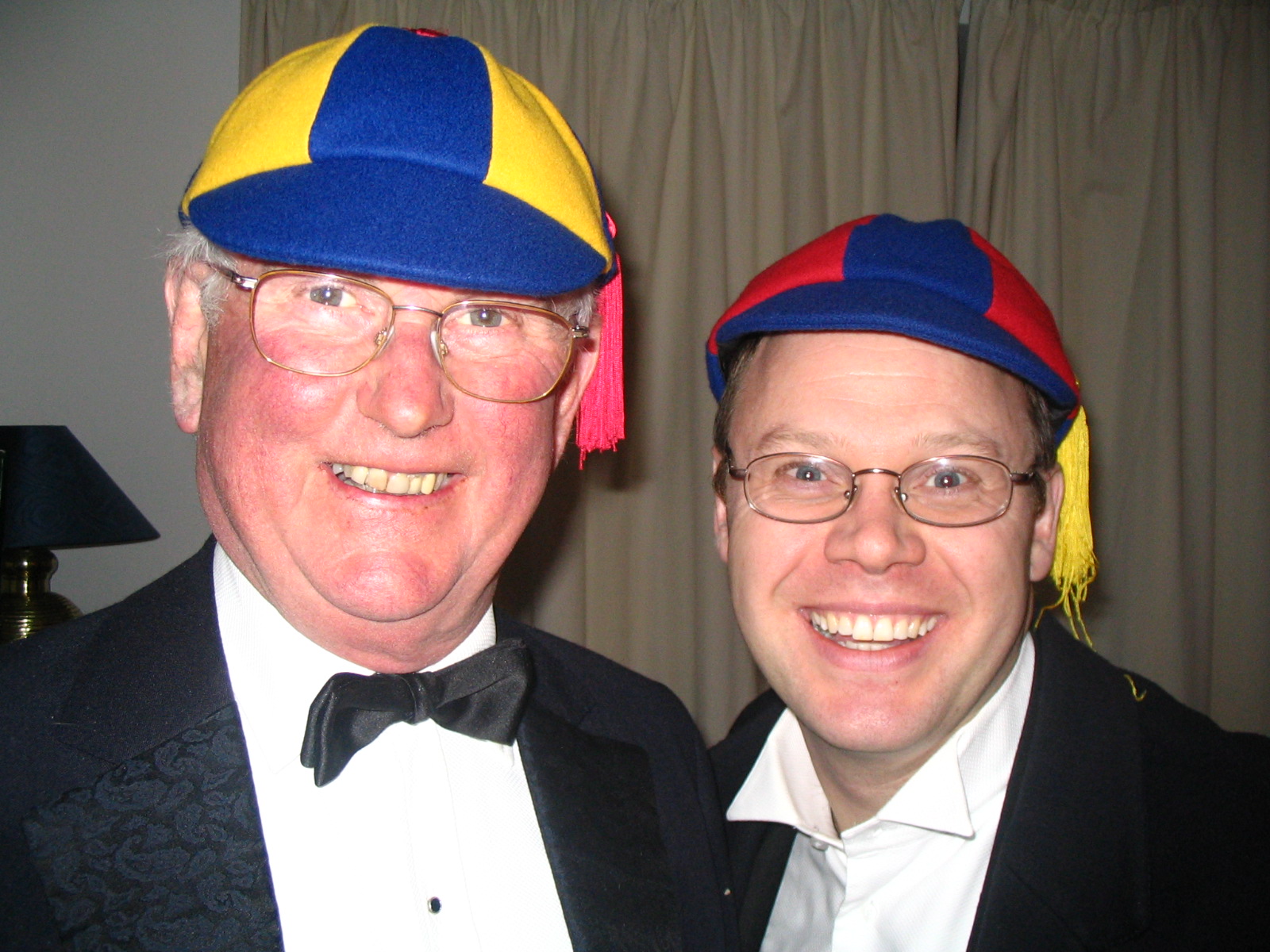
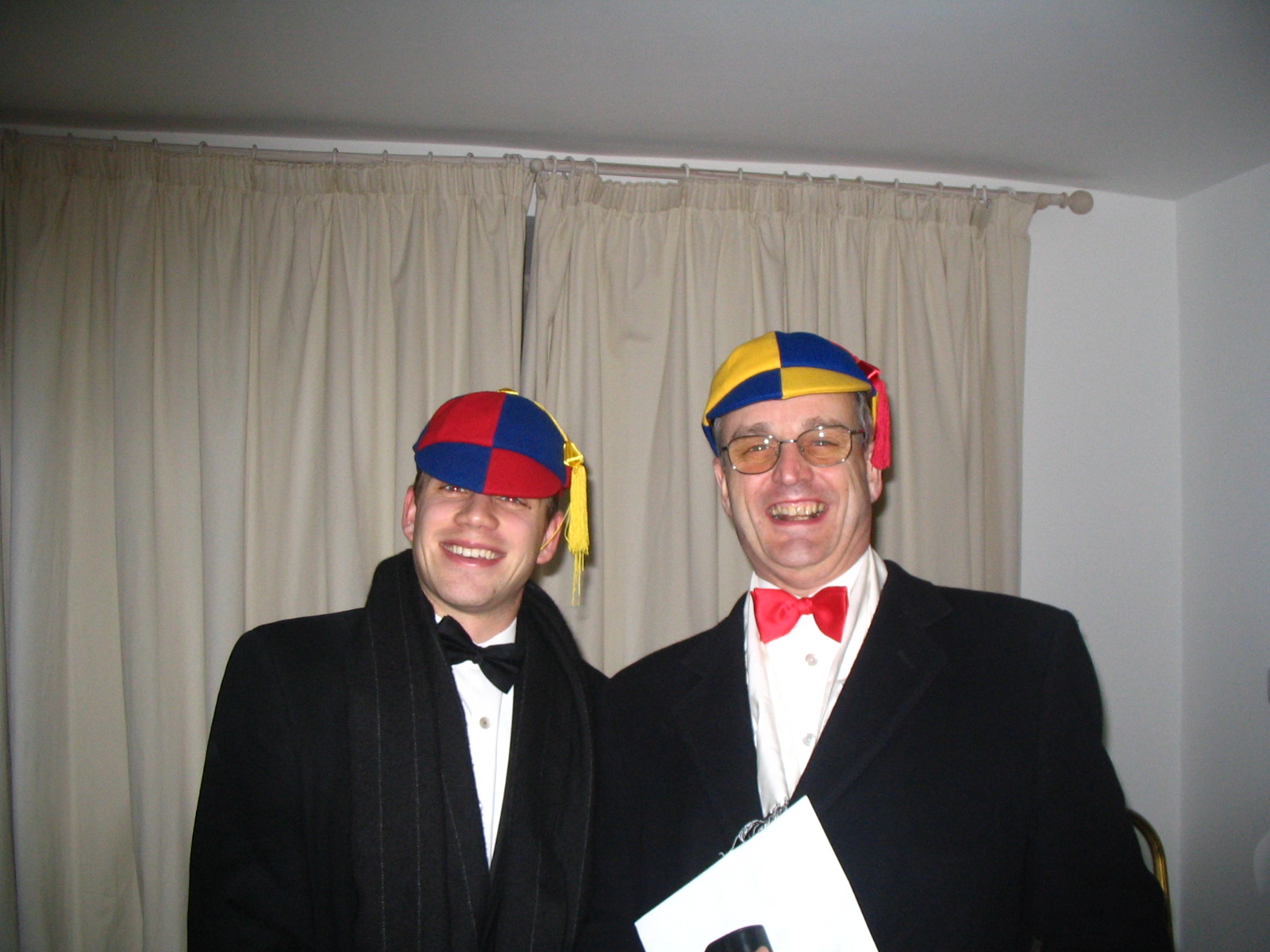
It felt apt to bring together the Committee and the participants for an Opening Dinner (any excuse), which was held on the outskirts of Oxford.
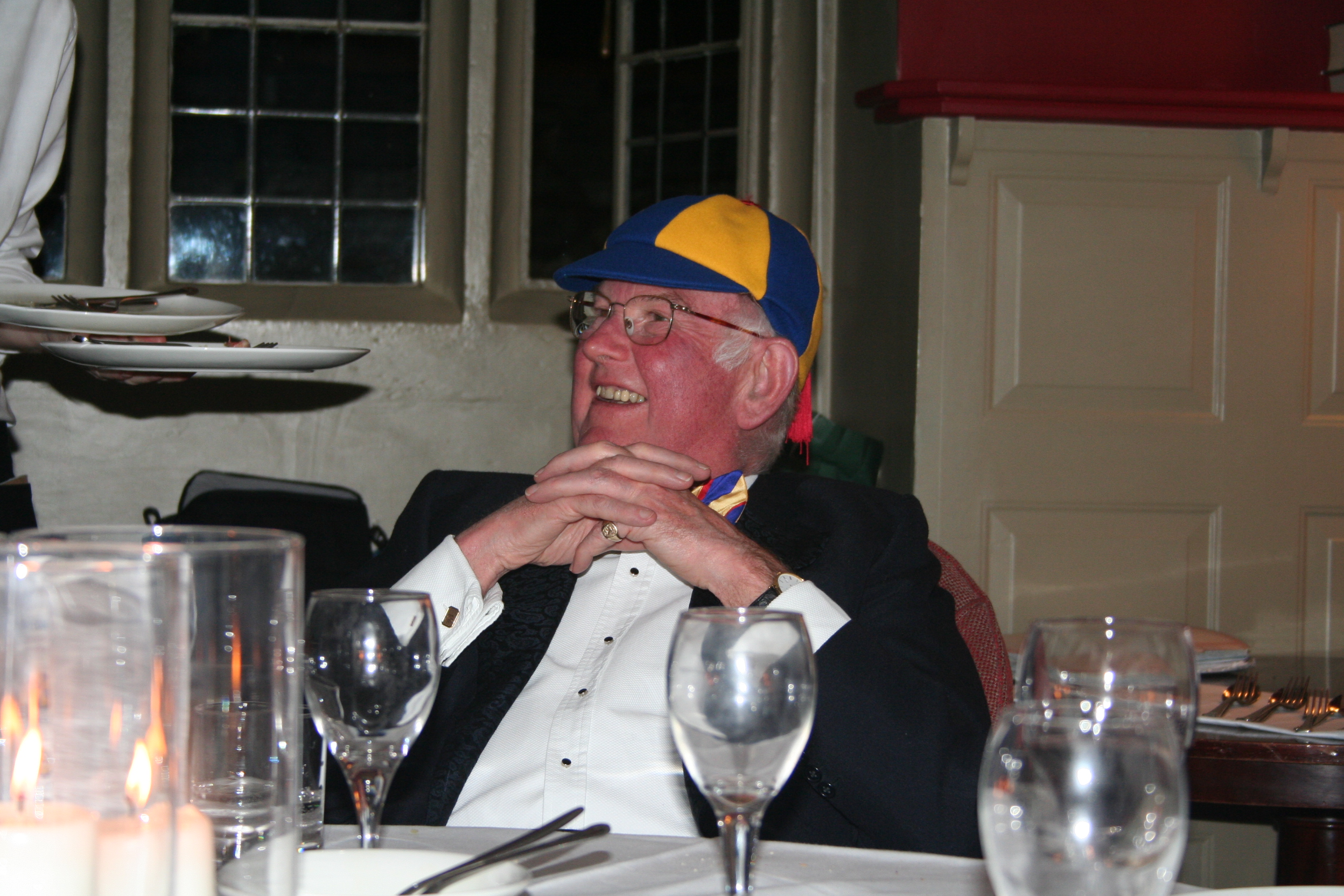
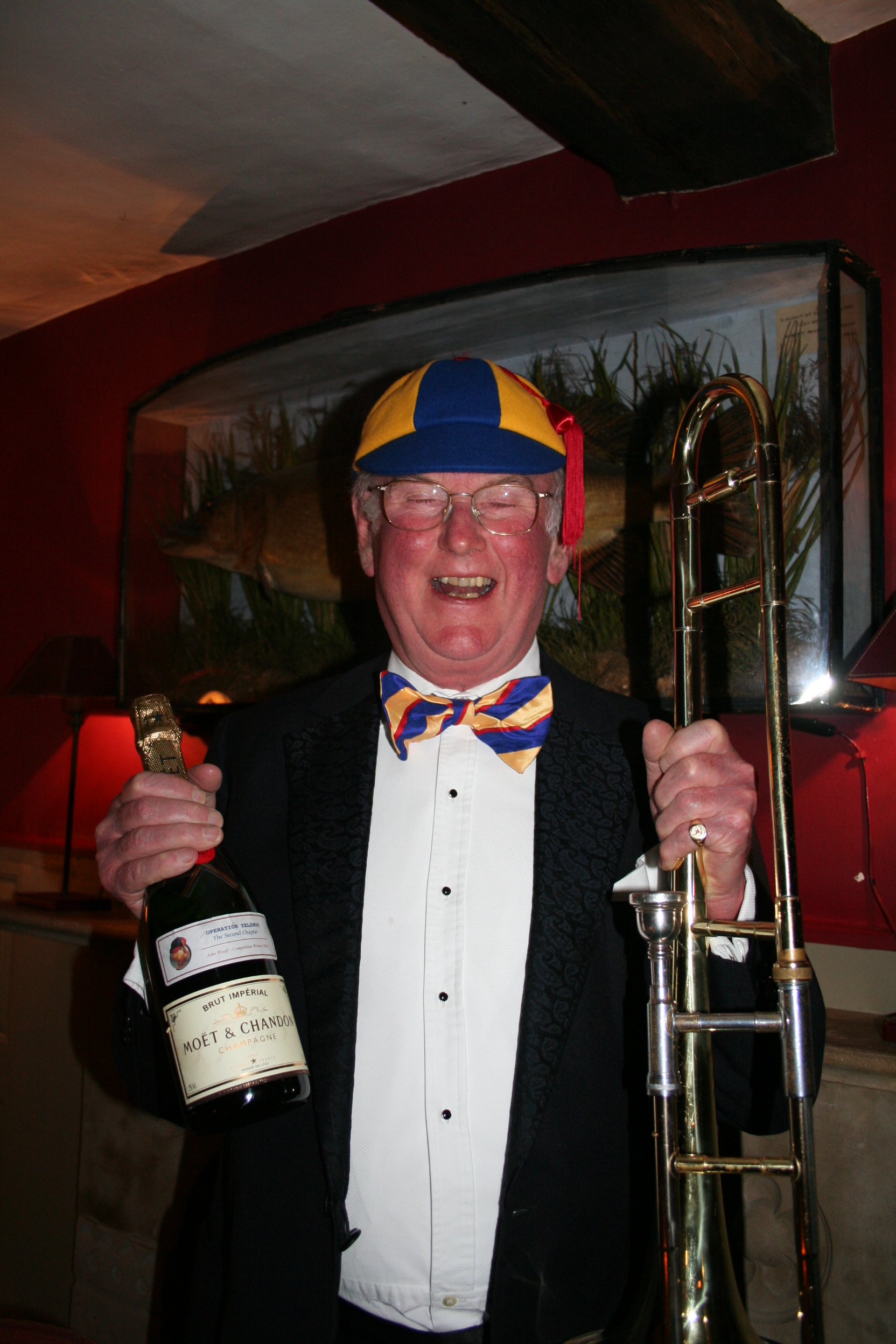
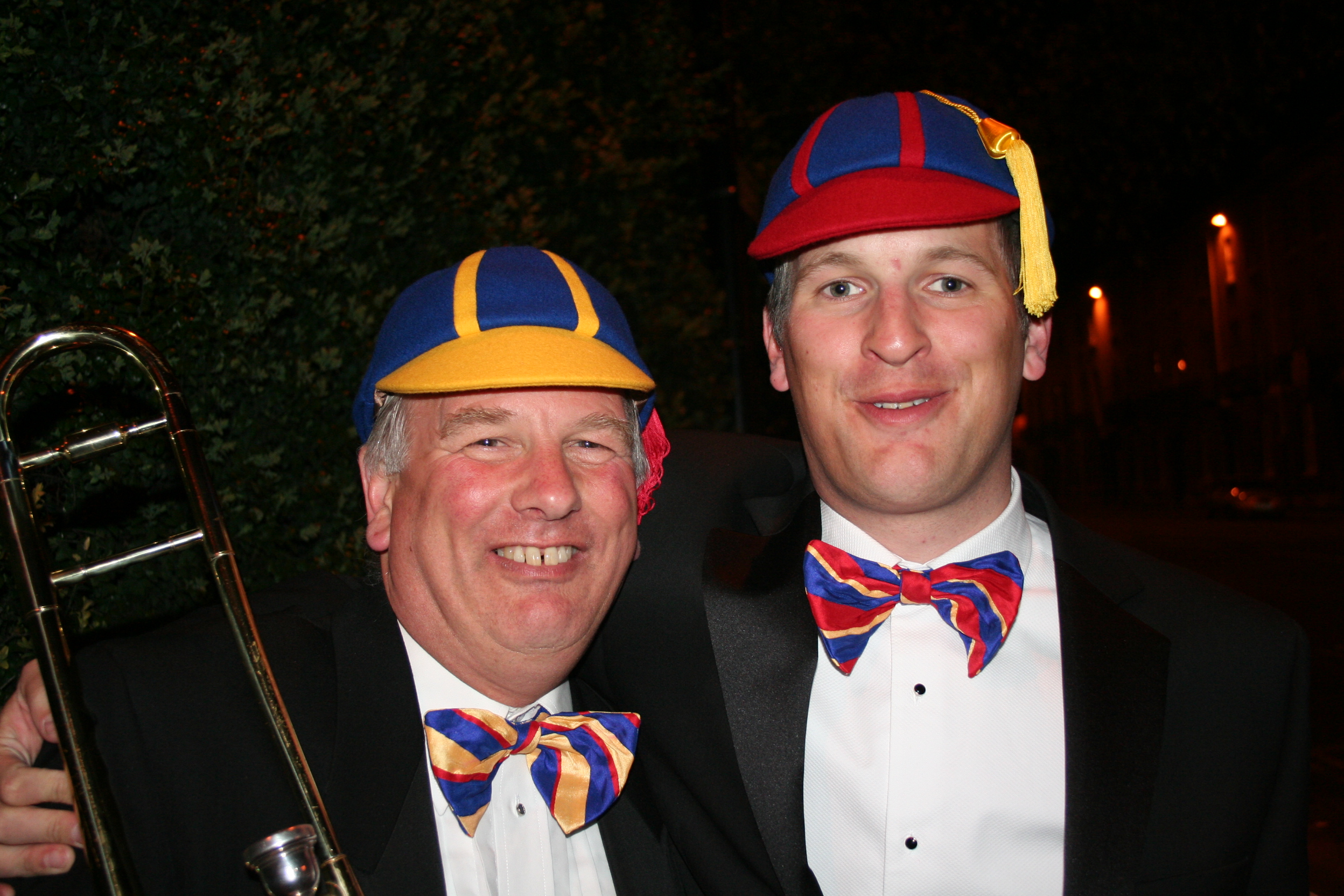
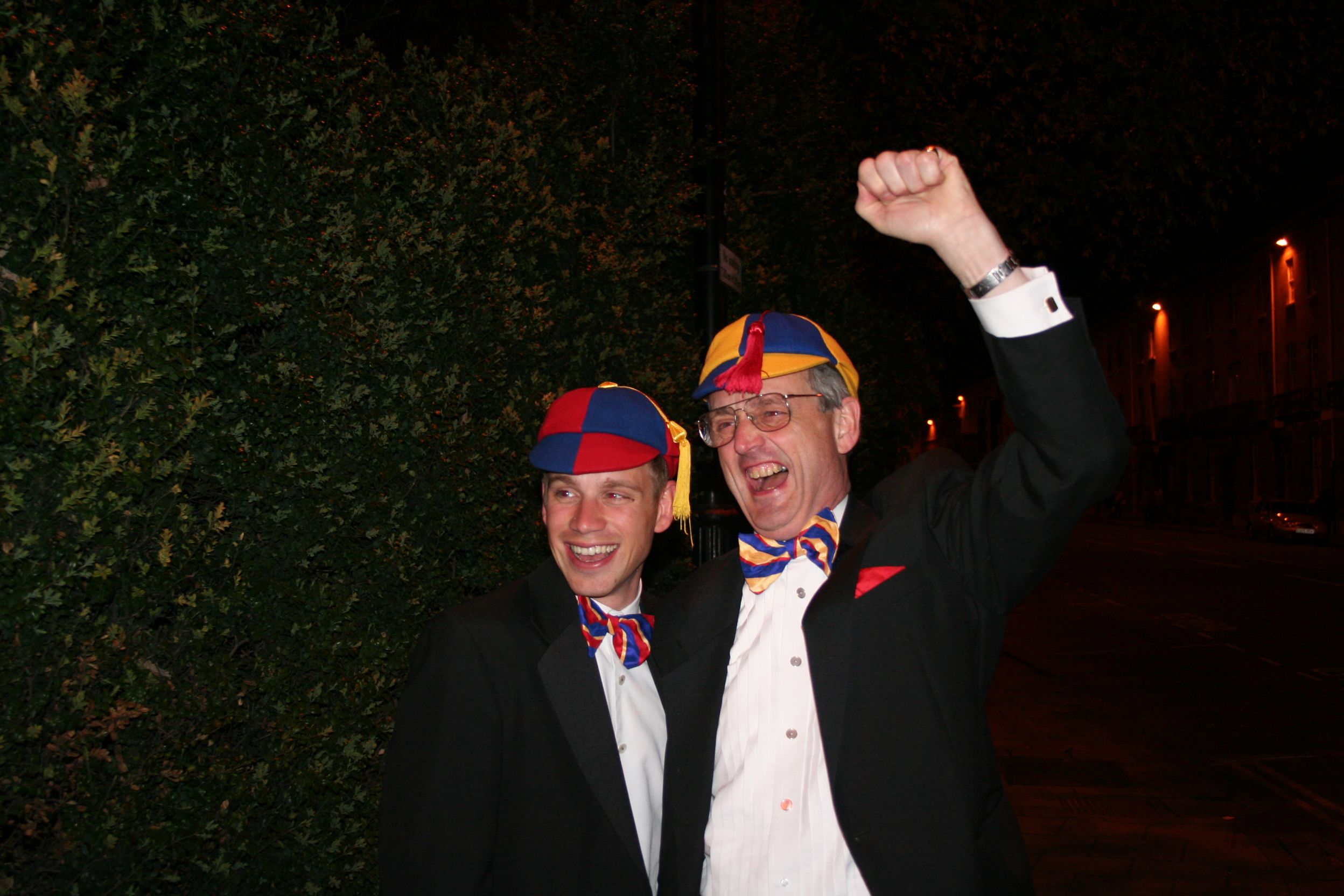
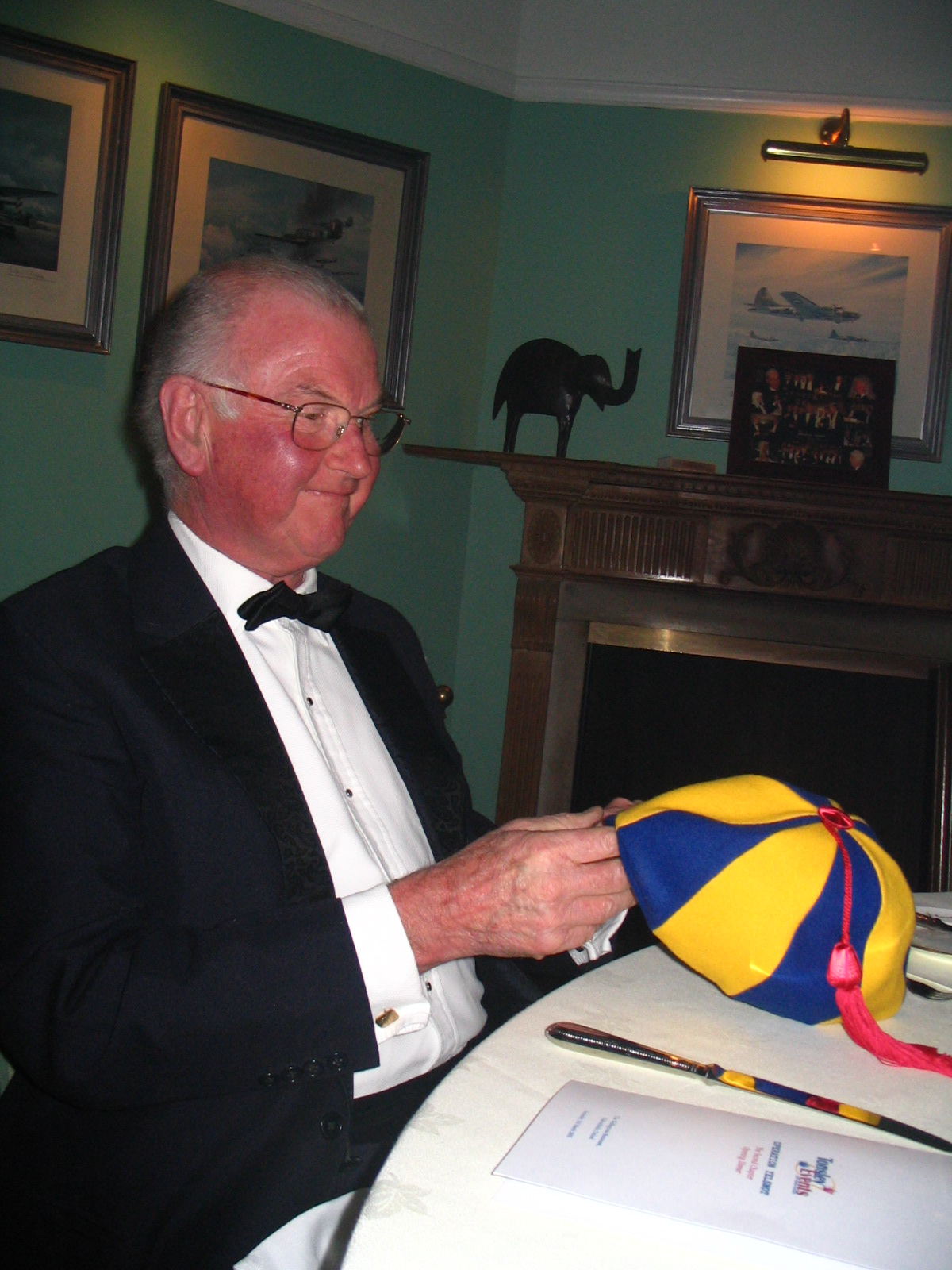
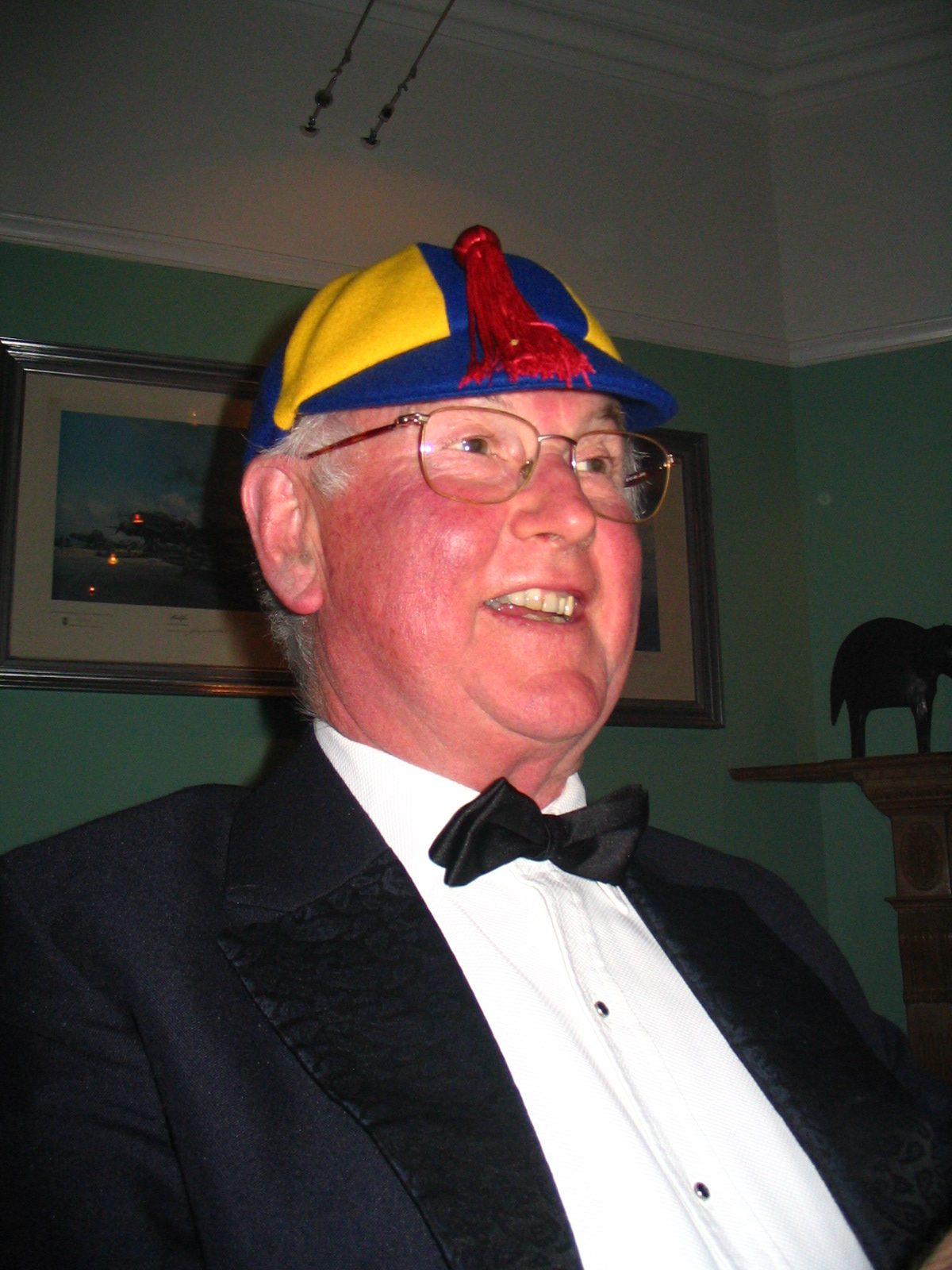
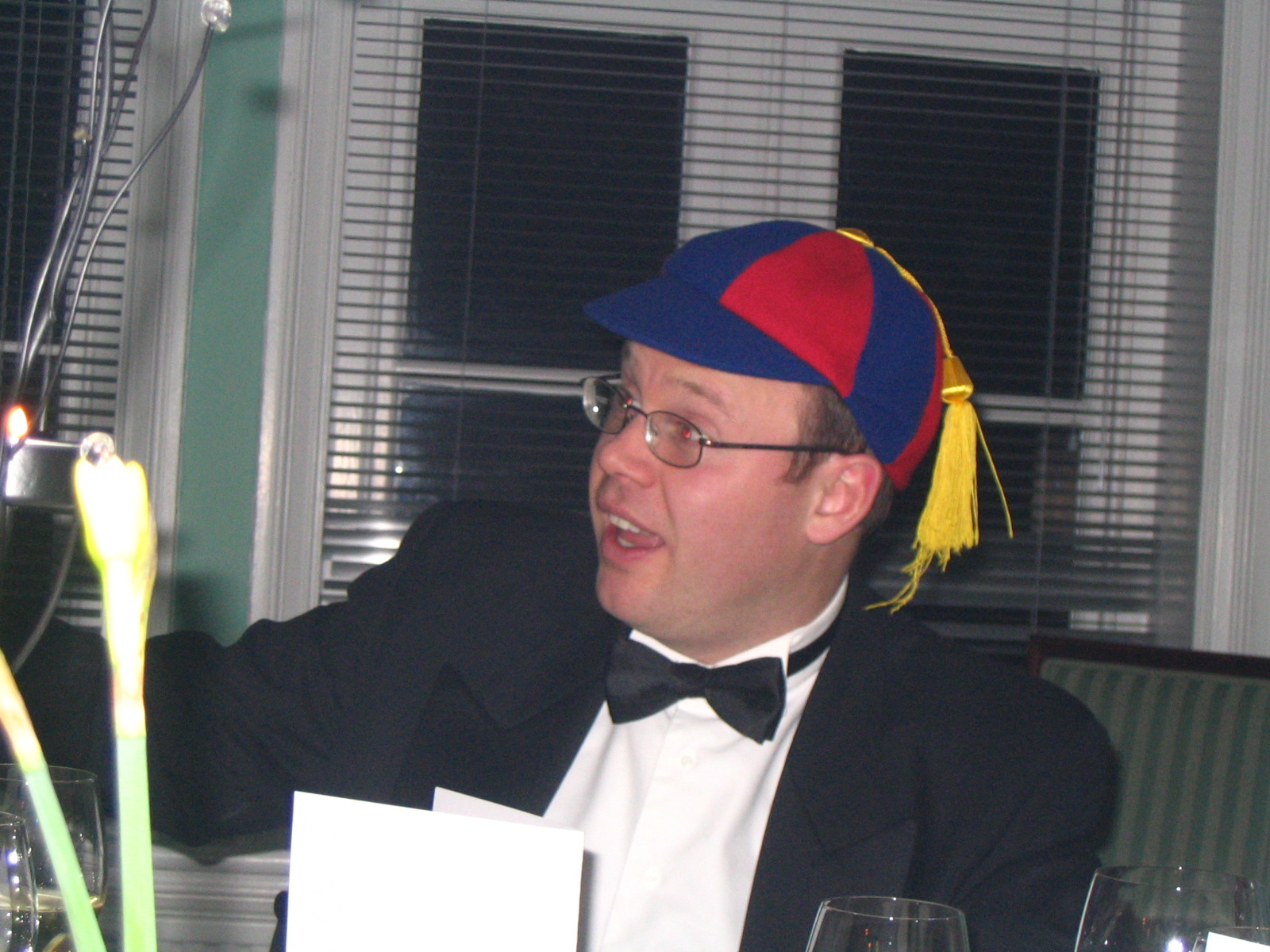
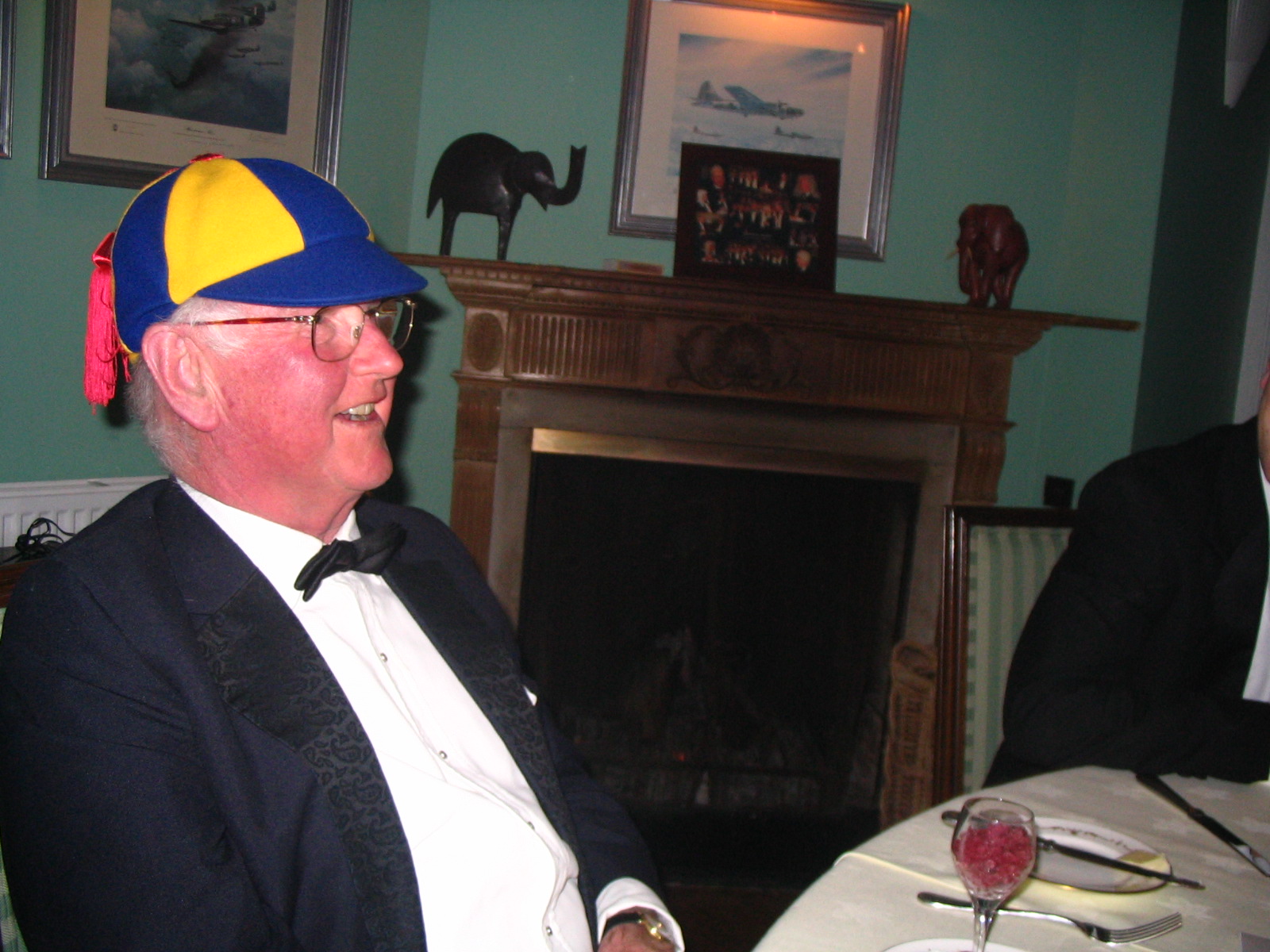
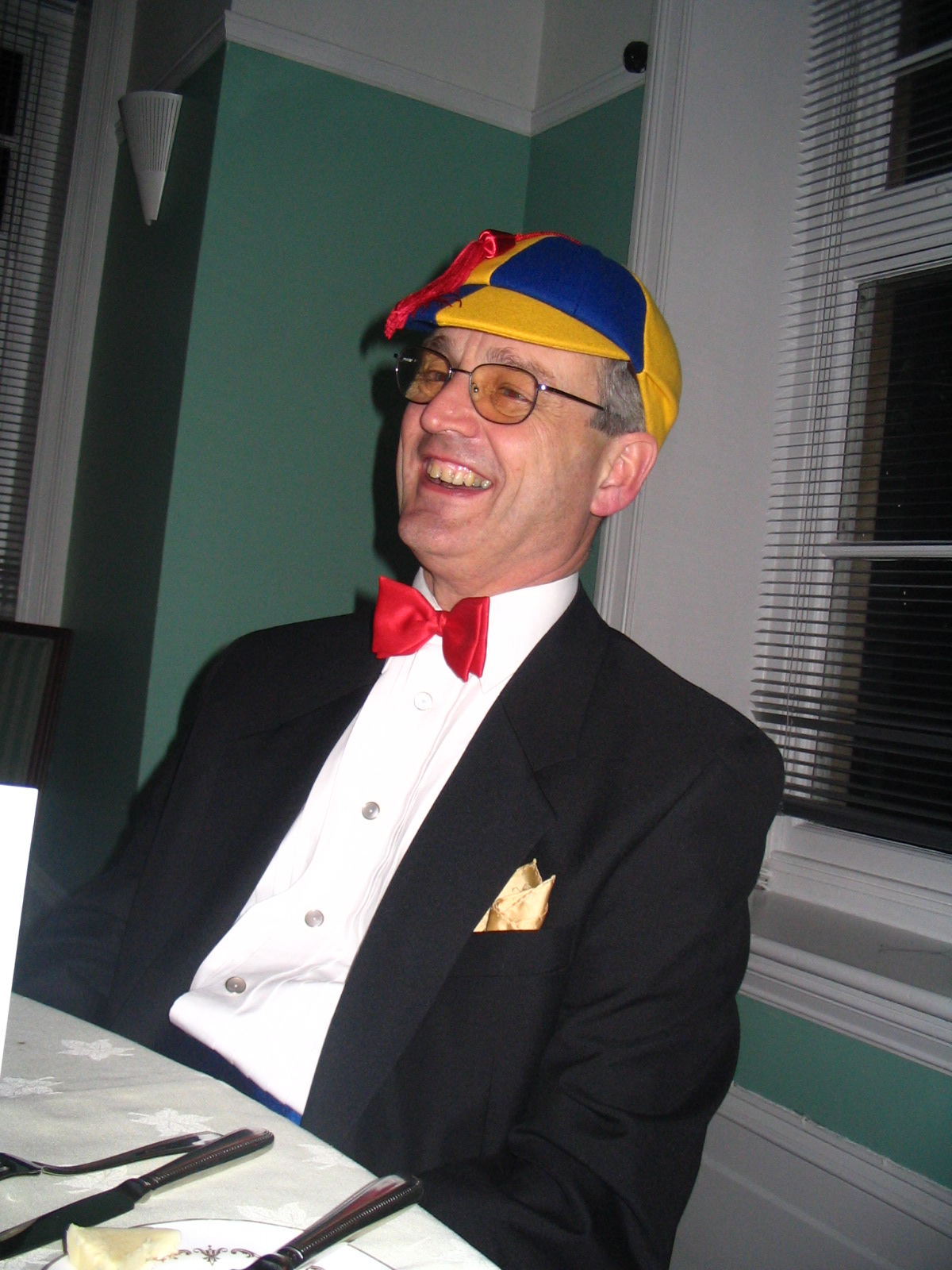
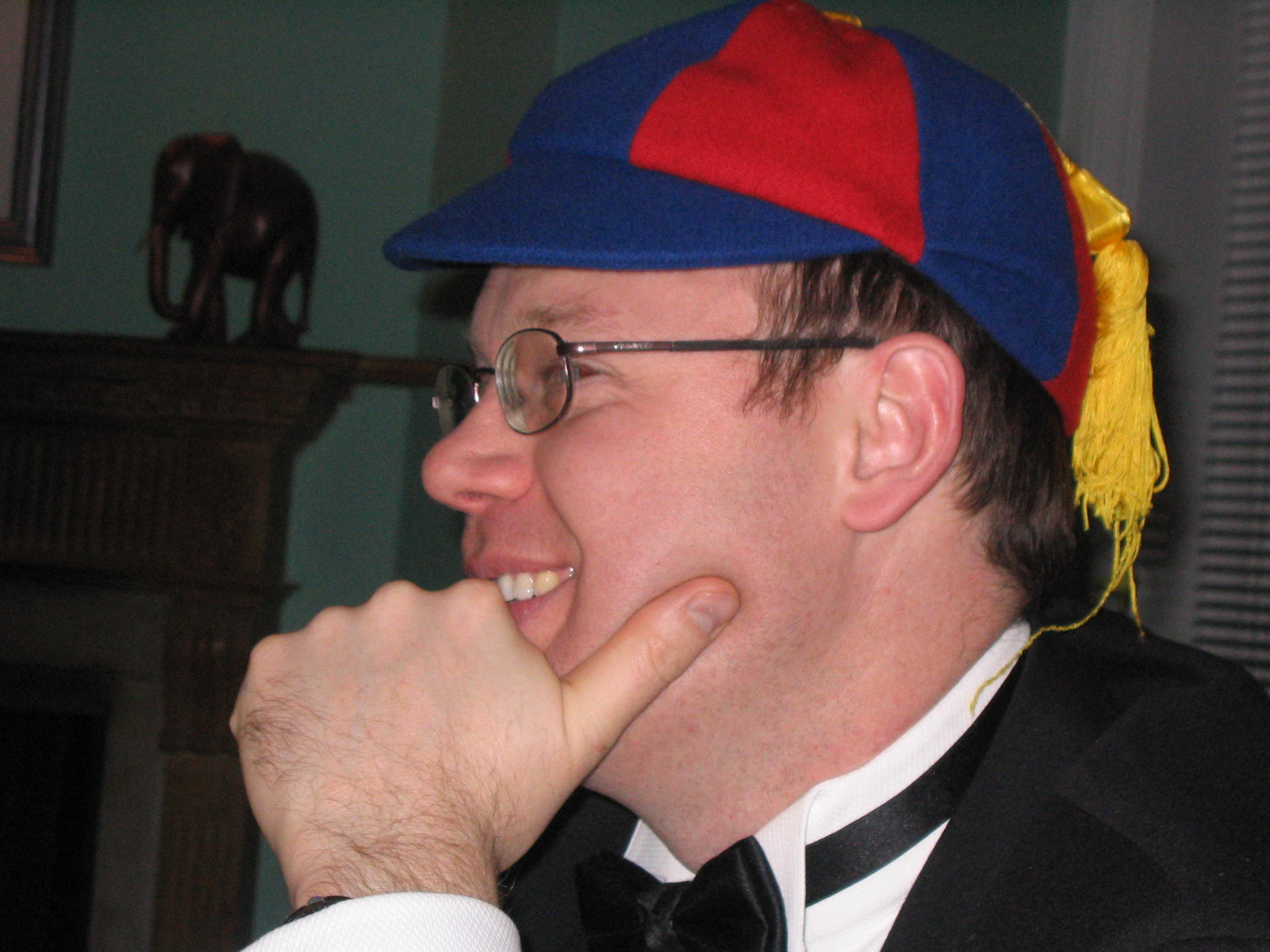
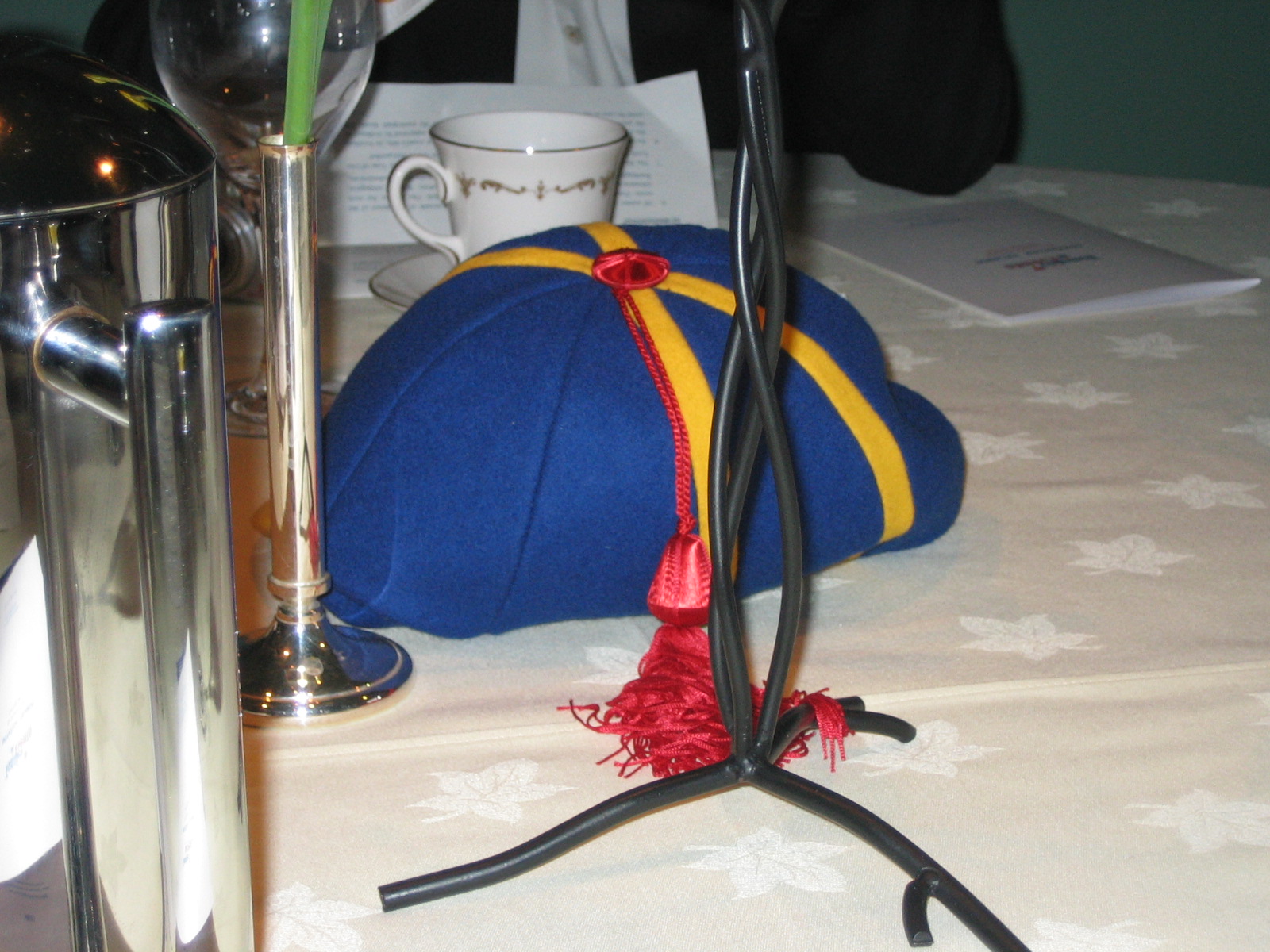
Competitors’ caps were presented to the participants and the Rules were established. Two Bruce candidates were sadly not there in person, but both participated by Nokia link round our table at various points. And so commenced, the Second Chapter!
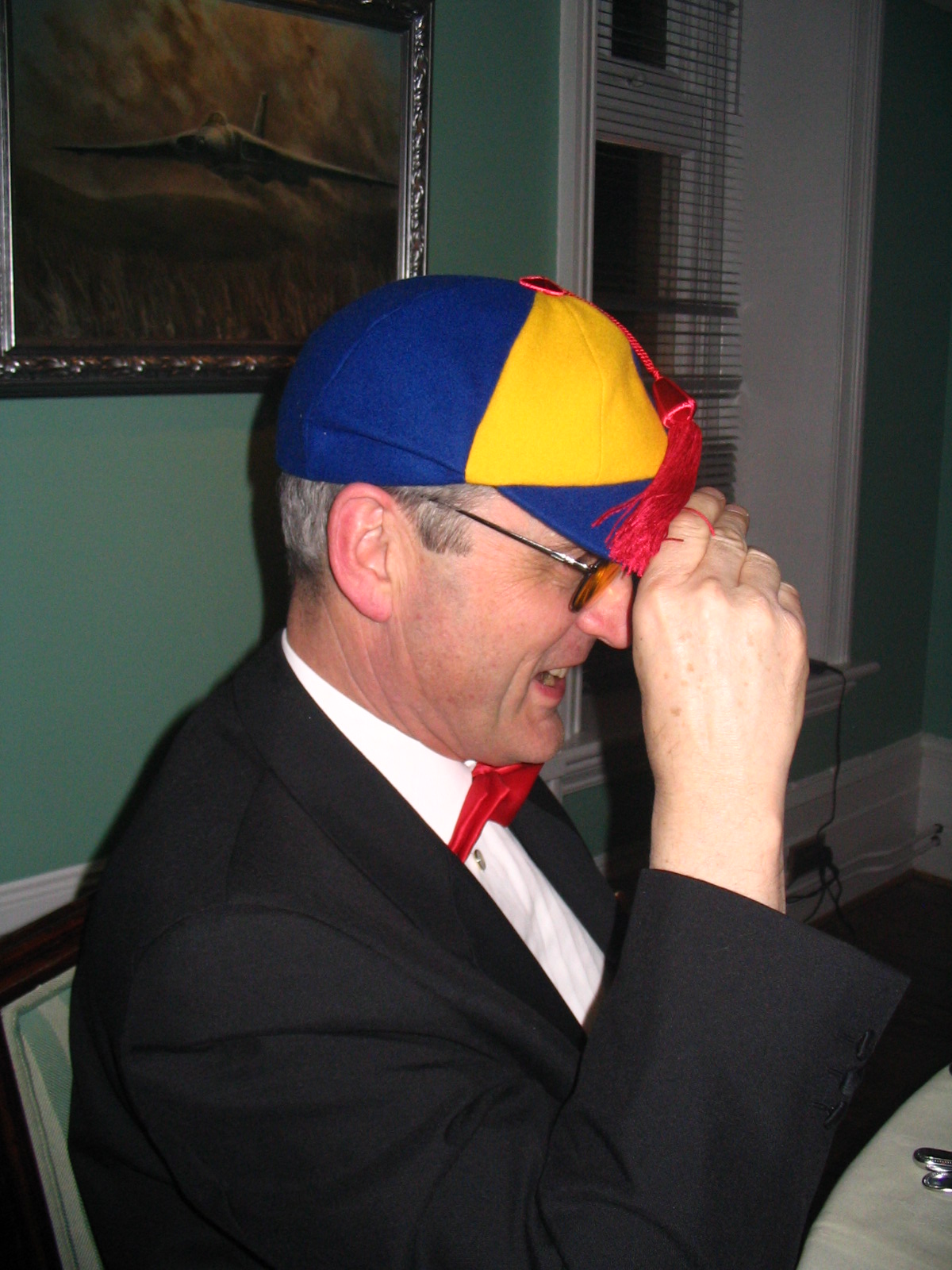
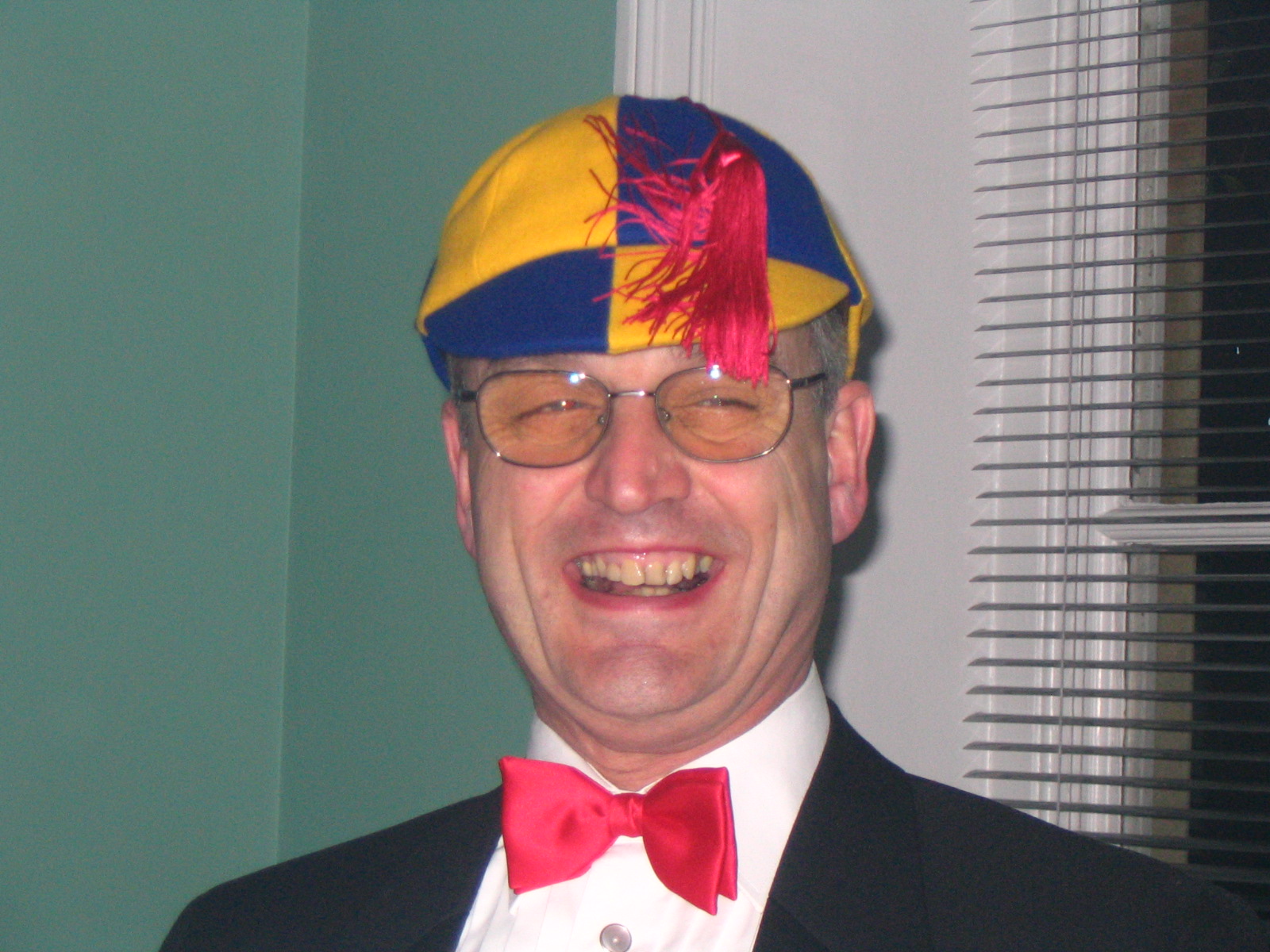
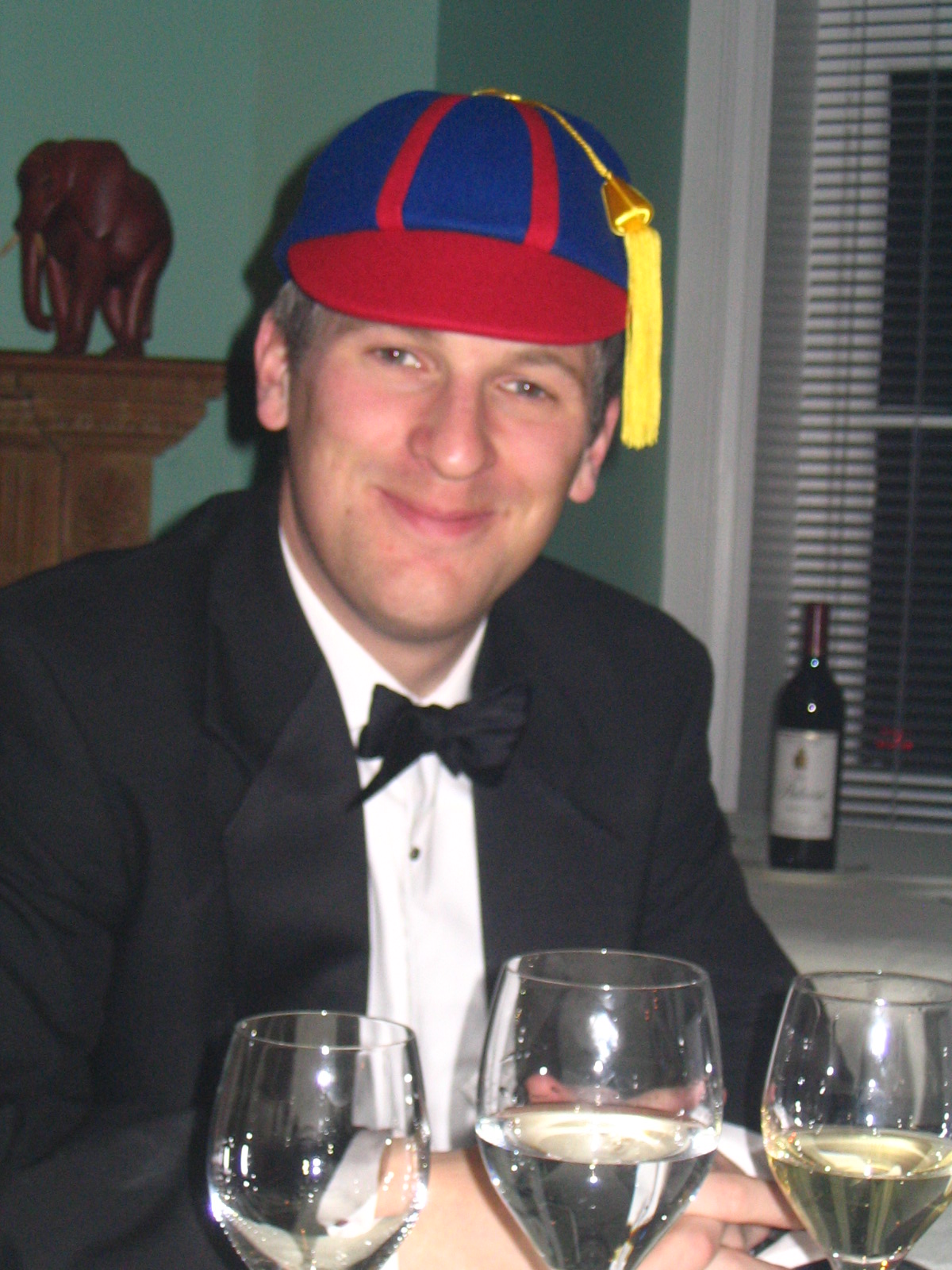
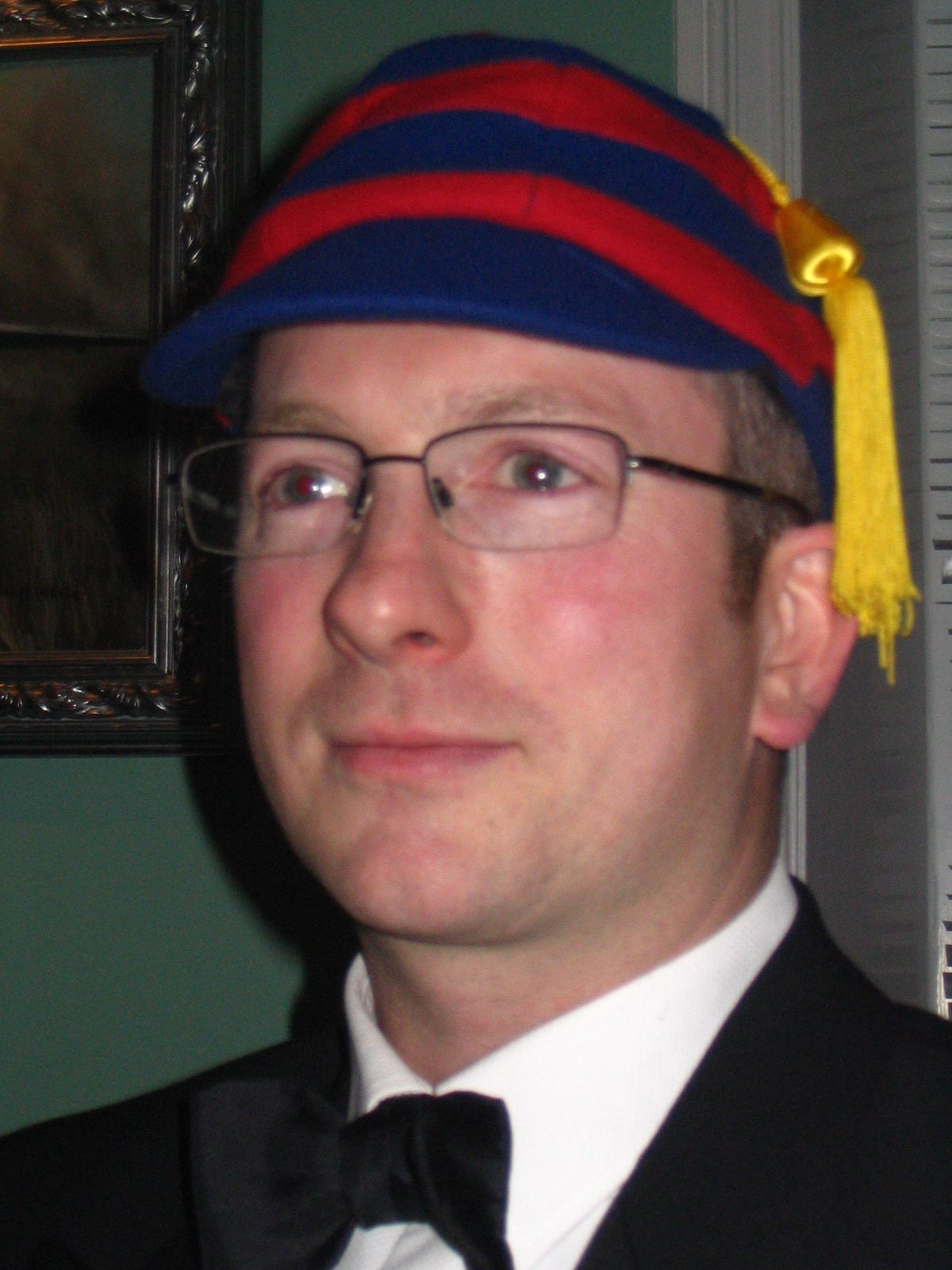

Ras Beca’s Race
Preseli Mountains, Cresswell, Wales – 27th August 2005
WINNER!
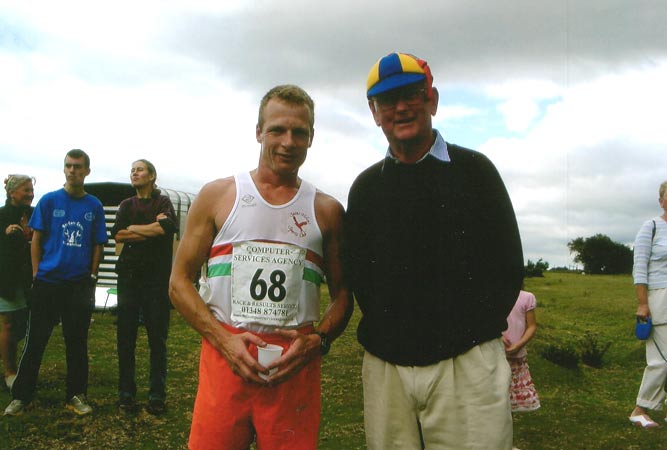
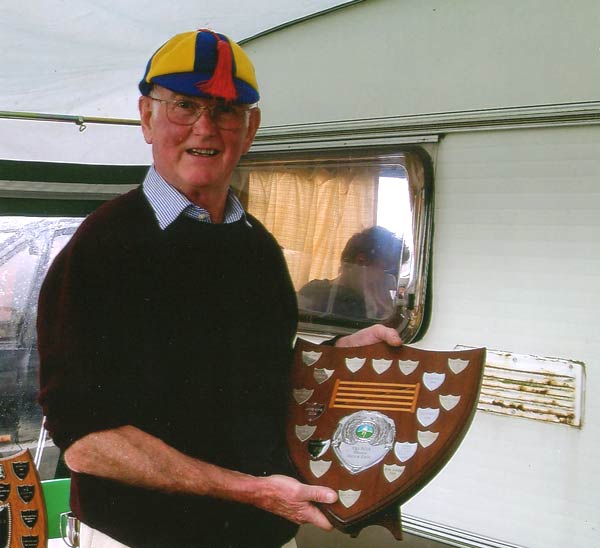
On 27th August 2005, I attended the twenty-eight anniversary of Beca’s Race. The race is a 5 mile fell race on Preseli Mountains at Cresswell, near Fishguard, Crymych.
It is held to celebrate the Rebecca Riots which took place in this area between 1839 and 1842. These riots were a protest against the high tolls introduced on the turnpike roads. Many people disagreed with the high tolls and took the law into their own hands destroying the gates.
These gangs became known as the Rebecca gangs. They took their name form a piece in the Bible, Genesis 24:60 “And they blessed Rebekah and said unto her, Let thy seed possess the gate of those which hate them”.
Many of the men dressed up as women as a disguise as rioting was a hanging offence at that time. Some versions of this story say that these clothes were borrowed from a woman called Rebecca – hence the name Rebecca Riots.
To win the race, the leader must dress in women’s clothes and break down a gate with an axe at the finishing post.
I have to admit that it was the most enjoyable day out in Wales.

Hound Trailing
Lazonby, Cumbria – 15th May 2005
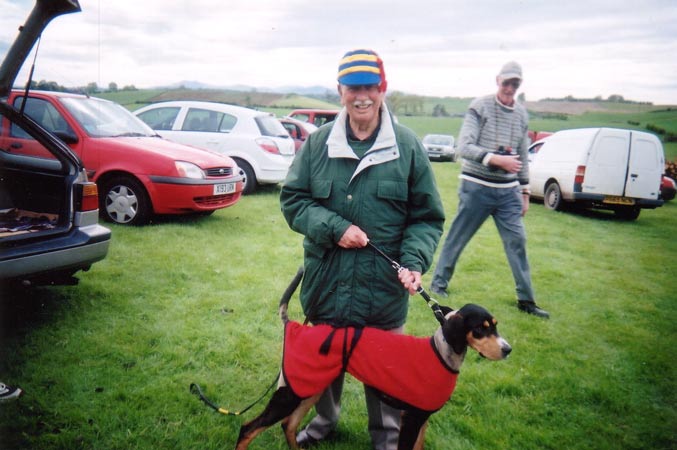
Hound Trailing dates from the 18th Century and is carried out throughout the Summer months. It is controlled by the Hound Trailing Association. Essentially it consists of races between Trail Hounds following a scent.
Trail Hounds are specially bred for the purpose, and, like other dogs, e.g. collies, that seem to have a hereditary instinct for controlling sheep, they have an instinct for following a scent at speed. There is said to be some fox hound in their lineage, but they are much bigger and more human friendly.
The Races are held over fells, mountains, valleys, bogs and woods etc. For Senior dogs, the race is 10 miles long and for juniors 5 miles. A trail is laid by two men, one at each end of the course, walking in opposite directions, dragging behind them a sack soaked in an aniseed solution. They meet in the middle and so the trail is laid. The 10 mile race takes about 40 minutes.
The competitors arrive with their hounds in boxes with wire netting fronts, in the back of their cars. There is much yelping and barking by the dogs in anticipation
At the meeting point, there is the committee and secretary, umpires and starters, a vehicle tent or truck. The bookmakers have their stands with the odds marked up as in horse racing. There is also a refreshment stall. There was no alcohol, but I am told there is at major meetings like the Annual Championships.
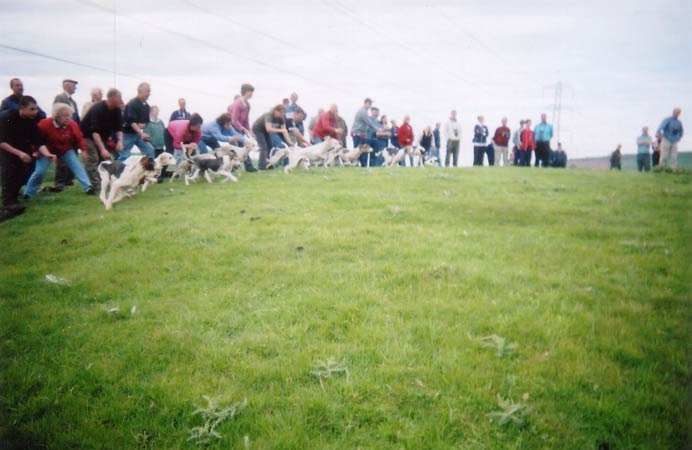
As the time draws near, the owners lead the hounds out on leads and the dogs go frantic with excitement. As the trail layer walks towards them, the noise reaches a crescendo. The owners slip the leads and hold the hounds by the scruff of the neck and at the word, let them go. They set off at full speed still yelping and disappear into the distance.
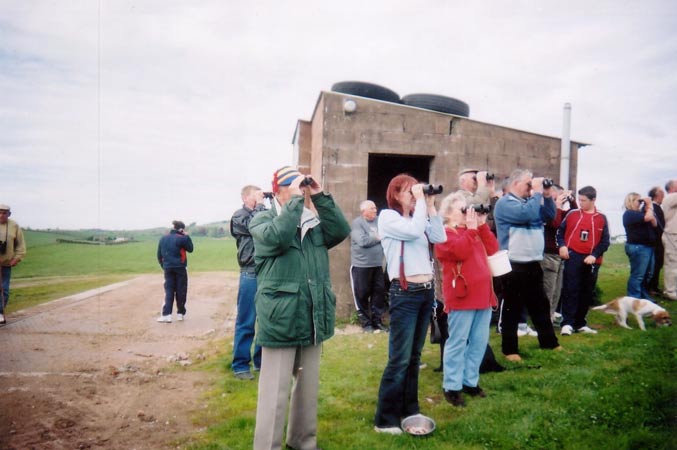
Then everybody congregates on vantage points armed with binoculars and soon, far away on top of a distant Fell, a flock of sheep dashes for safety, and then a line of white dots appears. In some miraculous way, the aficionados can tell which dog is which and relate the state of the race to each other. This happens several times and then the owners congregate on the finishing line, armed with a dish of food and a bowl of water.
They all start shouting their individual calls or whistles or sounds, and the dogs come hurtling in. The food is hoovered up in seconds and the water lapped up, also at speed. The bookies pay up!
There are quite a few injuries, mostly lacerations on bellies and legs caused by thorns or barbed wire, or on pads caused by hard ground or rocks or stones. These are treated on the spot and bound up. Occasionally these are bad enough to prevent the dog finishing and then a worried owner has to retrace the trail to bring him in.
Hounds start training at 6 months old and then race for years. Their diet is strictly controlled, high protein pellets and vegetable mask, sherry and raw eggs. Each owner has his own plan.
When an owner told me she gave her dog Sherry she added “And not cheap English Sherry, but proper Spanish stuff”, 1 wish I had reacted quickly and asked “Sweet or Dry?!”
Gold Panning British Championship
Wanlockhead, Scotland – 28th May 2005
Wanlockhead calls itself the “highest Village in Scotland”. It is in the North of Dumfries itself.
It is tiny, population about 150 and has a river running through it. Its only amenity is a pub.
In the 18th and 19th Centuries, it was a centre for lead mining, with occasional finds of small amounts of gold. There is a museum of mining, and a section of the mine and some miners’ cottages are still there preserved for the tourists.
Gold Panning, made famous in the 19th Century in the “Gold Rushes” in North America, consists of trying to find gold in mud by oscillating it under water in a pan. The lighter mud is washed away and the heavier gold, if any, sinks to the bottom and is recovered. This skill has become a “sport” on a worldwide basis. I have enclosed some blurb on this.
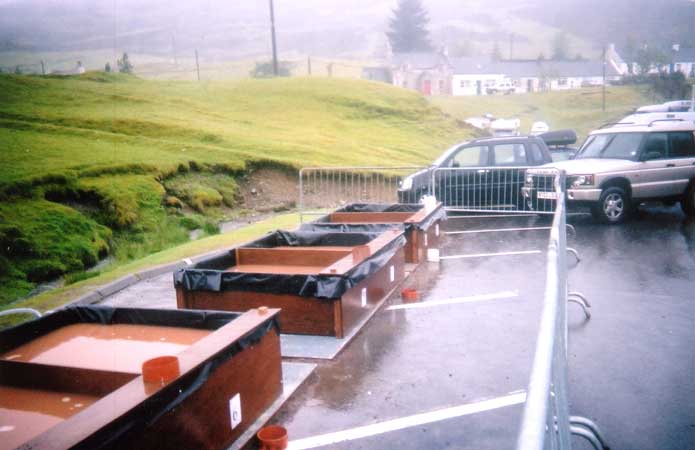
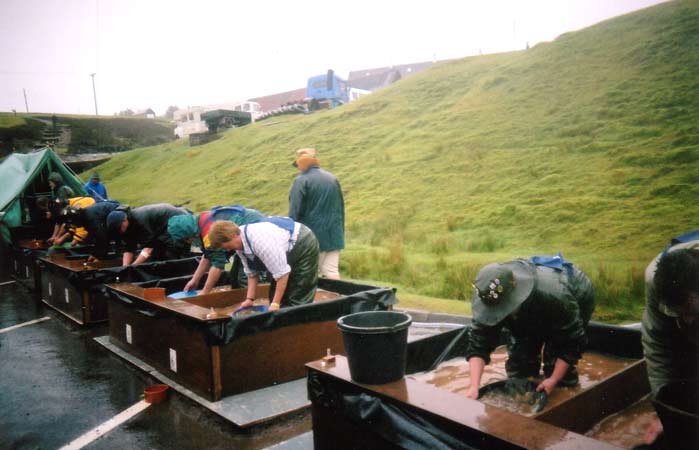
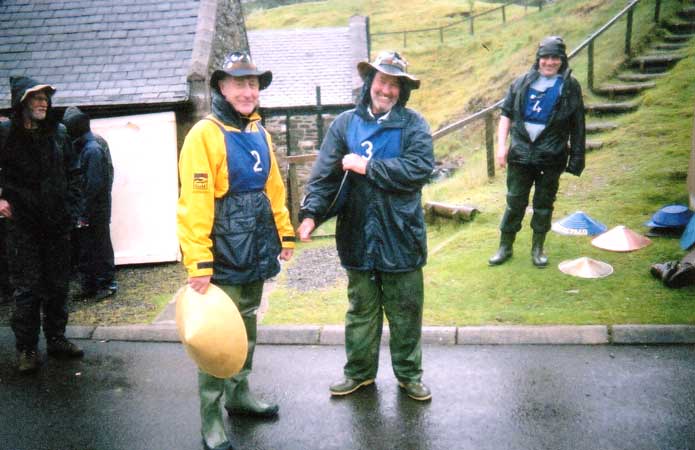
The “Field of Play” (see picture) consists of about 10 tanks containing water about knee deep. The pans are plastic, shaped like deep dinner plates, and about 18 inches or more in diameter.
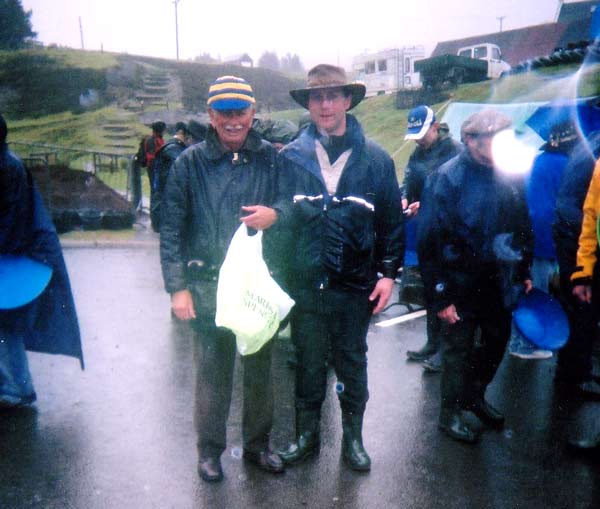
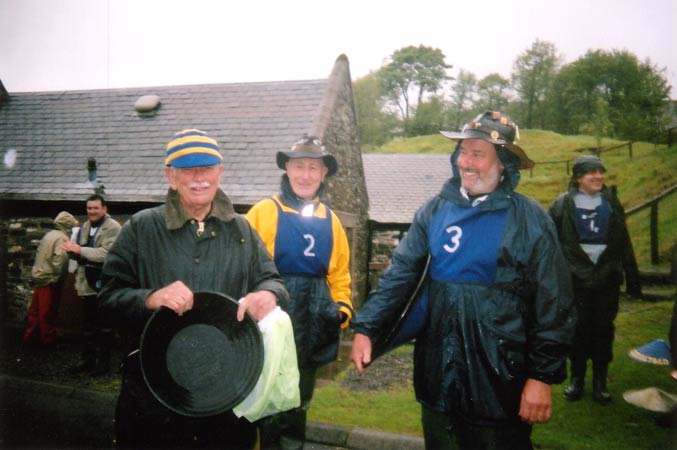
The competitors come from all over the U.K. and abroad as well. The “uniform” is a slouch hat usually covered in badges and waterproof trousers. It rained very hard, and a very strong wind blew too while I was there. But events carried on just the same as it is a pretty wet performance anyway.
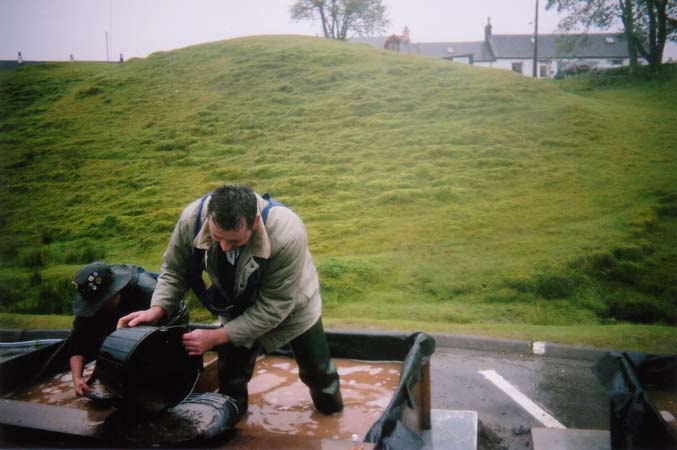
Competitors are allocated one to each tank. They are handed “test tubes” containing minute flecks of gold, about 2mm in diameter and paper thin. There may be any number from five to twelve. These are carefully checked with the umpire. Each “race” has the same number for each competitor. The flecks go in the pan and mud, supplied in buckets, is added. They stand in the water in the tank and, at the word “go”, they start oscillating gently under the water. They are timed, usually 20 minutes, and at the end of that time, the amount of gold flecks recovered is counted. There is a complex system of both plus and penalty points and so the winner is the one with the highest marks. There are various heats leading to a final in each category.
The umpire called out the time as each period of 5 minutes passes. The onlookers go in for much badinage and laughter while the competitors earnestly go jiggling away. The judges, when all is over, go in for much counting, calculating and verifying before they announce the results which are received with cheers and applause.
They were a friendly lot, anxious to inform and explain, and of course were much intrigued by the Tonsley Cap.
The Horseshoeing and Shoemaking Competition
Museum of Scottish Country Life, East Kilbride, Scotland – 21st August 2005
The Museum is a very modern building, large and beautifully appointed and well worth a visit at any time.
The Horseshoe Show was about a mile away, on the site, up a track to a farm. We were conveyed there in a large trailer with seats, towed by a tractor and driven by a lady.
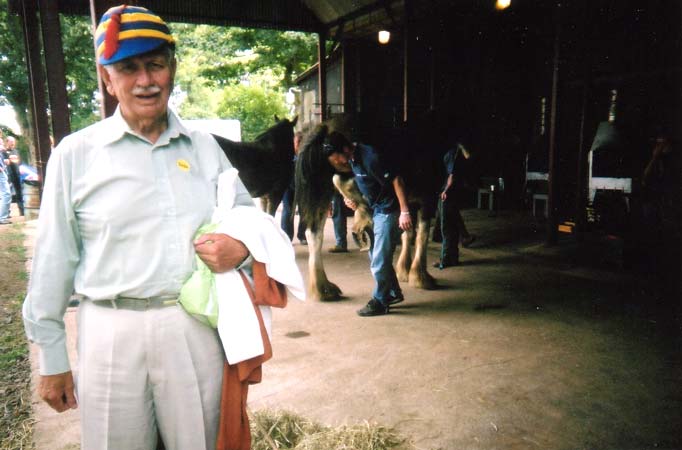
The site was a large barn, long and open on one side on which was a collapsible “grandstand” on wheels. A rope kept spectators at a safe distance from the scene of the action. The scene of action was a line of about 8 furnaces (presumably gas fired) up against a long wall.
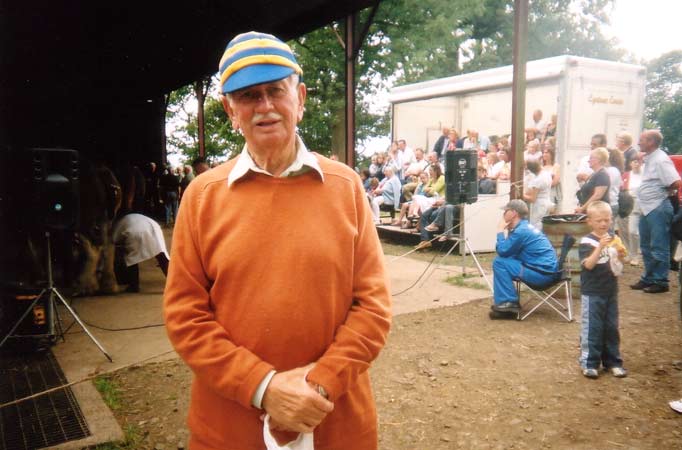
We were told it takes 4 years and 2 months for a blacksmith to qualify and become a member (if he passes the examination) of the British Federation of Blacksmiths, which dates from the 14th Century and is based in London.
On the right were four furnaces, each manned by two chaps still training. Their job was to make a horseshoe of the same size and pattern as one of the four examples. There is a time limit so they work fast. One chap seems to do most of the hammering and his partner attends to the heating. There is much taking the prospective shoe, which starts life as a piece of straight metal, back and forth and measuring and shaping with occasional clouds of steam, as the shoe is plunged into water. Hammering ad infinitum goes on all the time.
On the left the competition is for qualified chaps, older and more mature and looking very powerful and this is the horseshoeing part. Two working farm horses, each with one front and one rear hoof unshod, wait for attention. Again the men work in pairs and again there is a time limit. Further the shoes have to be made from two pieces of metal which have to be welded together before they can start.
The preparation of the hoof is the part that a spectator sees most. The heating and shaping of the shoe goes on furthest away but right
in front the chap is cutting into the hoof removing lots of surplus tissue, shaping, deepening, measuring, dashing back and forth to the furnace. The process of cleaning the hoof looks very painful and cruel but it is not. The hoof consists of Kerotin (like our own nails) and the horse feels nothing and is unconcerned.
At last is it considered ready and the shoe has been made. Red hot, it is applied to the prepared hoof and clouds of smoke are raised. The horse is totally unconcerned. Again more shaping and alteration to both hoof and shoe ensue and finally the holes are made for the nails, and the shoe is hammered on.
White coated judges move through the scene, marking and observing the work. Occasionally a competitor refers to them when he encounters an unexpected problem and the judge examines and decides. The time limit for the two shoes was 70 minutes. Nobody finished on time, so everybody lost marks.
We were told that working farm horses should have two shoes, left front and right back, and then right front and left back, redone every six weeks and the cost is £100 a time.
We left before the end because we had a 70 mile journey back home.
I should add that I was amazed to see a young girl taking part in the beginners section, and she hammered as hard as the males.
32nd FISA World Rowing Masters Regatta
Strathclyde Park, North Lanarkshire, Scotland – 5th-11th September 2005
FISA stands for “Federation Internationale de Societies d’Anvirons”.
The International Regulatory body of Rowing which is based in Switzerland.
The Masters Regatta is an annual Regatta held in different countries, (Last year Budapest, next year Princeton) for older male and female rowers.
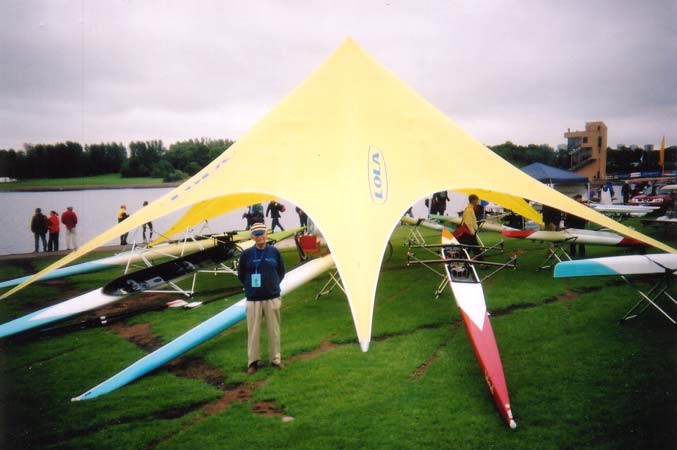
Strathclyde Park, ten miles south of Glasgow, is the site of the Scottish International Rowing course, the only one in the U.K. with eight rowing lanes, and the home of SARA (Scottish Amateur Rowing Association) and the Scottish National Rowing Academy which has lecture rooms, videos, coaching area, and a P.E. gym well stocked, including a static rowing “Eight” on water, and a restaurant and cafe/bar, showers and dressing rooms.
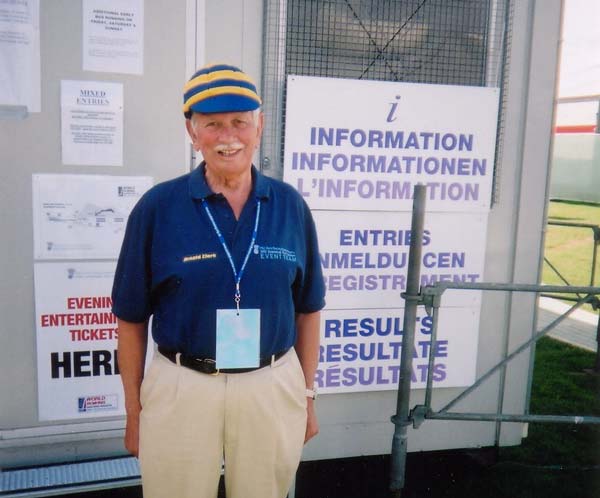
As an active, now land rowing only, member of the Nithsdale Amateur Rowing Club, I had assisted at the World Rowing Championships held here in 1996. I therefore responded again to the call for volunteers to help run the Masters, and was appointed to the same job i.e. a member of the Information Team and a Spanish Interpreter.
The lowest age allowed to compete is 26 and the oldest 76+. Classes are arranged, A to I, in average ages of crews, the oldest being average 75 or more. All types of races, fours, eights, sculls, double sculls etc. are represented. Evidence of age e.g. Passport must be produced with entry.
Many additional tents and temporary buildings are added to the site
including an enormous tent with restaurant, a grandstand, extra showers and changing tents. In the restaurant tent, there was also a grandstand for the numerous bands which performed throughout and a sitting area inside and outside, plus dance floor, bar etc.
The number of active rowers taking part was about 3200 and their attendants coaches etc. numbered another 3000. They brought with them 2500 boats each crew also bringing their own oars and there were another 250 boats available for hire. Space had to be found for the required boat racks. The youngest competitor was aged 27 and the oldest 86, who won his sculls race. They came from 33 countries, as far afield as Russia, Japan, Australia, South Africa, and South America. Most represented a club.
The Information Team was housed in a large cabin together with the
Entries Section, the Finance Section (changing of money, fees etc.)
the Transport and Accommodation, and Entertainments Section. Our job was to receive people coming in, direct them to the right section, give them the draw in different events, the programme for the day, results and anything else. We never stopped all day and there were endless questions and requests such as a Lithuanian, with no English who wanted to find a Stud for breeding Clydesdale Horses! Another difficult one was the Italian woman, who wanted to change a Ryanair flight. Also many questions about visiting other places in Scotland. There were a very few complaints too!
The majority stayed in the hotels in Glasgow and a special bus ran every 30 minutes from 7am to 11pm stopping at various convenient points throughout the day. For those staying in the two hotels in the Park or the caravan and camping sites, there was a funny little “train” which ran round and round all day.
Strathclyde Park is situated 65 miles north of my home. I would drive up, mostly motorway M74, to arrive at 7am to open the office. There would already be people practising on the loch and the first race was at 8.30am and the last at 5.30pm They took place every 3 minutes and only became delayed the day we had a strong wind and rain. I would have breakfast when others joined me. The restaurant opened at 6am and the bar 11am to 11 pm. I would leave at 4pm.
We were given a uniform and cap and a £5 voucher for lunch. We consisted of about 5 people regularly. My Spanish was very useful to some people who were very relieved to find me! I frequently received a handshake and relieved thanks!
Watching the races, one soon discerned a pattern. The races, in all categories tended to divide into 3 groups. The first of about 3 crews, would consist of past stars of the Olympics, Boat Race or their equivalent, people who had rowed all their lives and achieved high powered success. After a gap, the second group would be club crews from more humble life long rowers. After another gap, the final group would be those who did not take rowing too seriously, had thought the whole trip would be fun and had cobbled a crew together, perhaps from different clubs, hardly done any training, and were happy to provide “the rear party”.
The course was 1,000 metres instead of the usual 2,000. On the last day the races were confined to mixed, men and women, crews. was left with admiration for the superb organisation, the commitment of the rowers, and their immense height, of men, well over 6 ft, except the Japanese, and the women nearly 6 feet.
Sled Dog Racing
Ae Forest, near Dumfries, Scotland – 17th December 2005
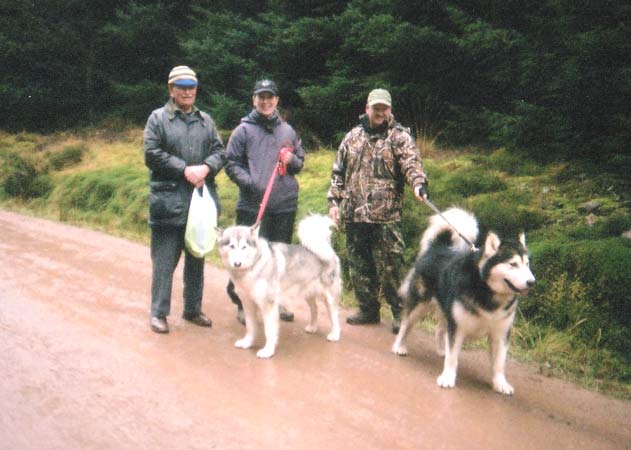
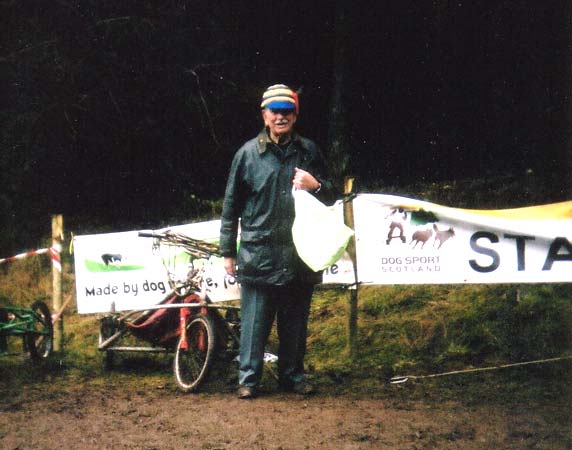
Dog Sports Scotland is the organisation that runs this event. Originating from the Husky Dog teams used in Northern Canada which function as normal transport, but also in sporting events, it seems that racing goes on in many parts of the world using three wheeler buggies where snow is not available.
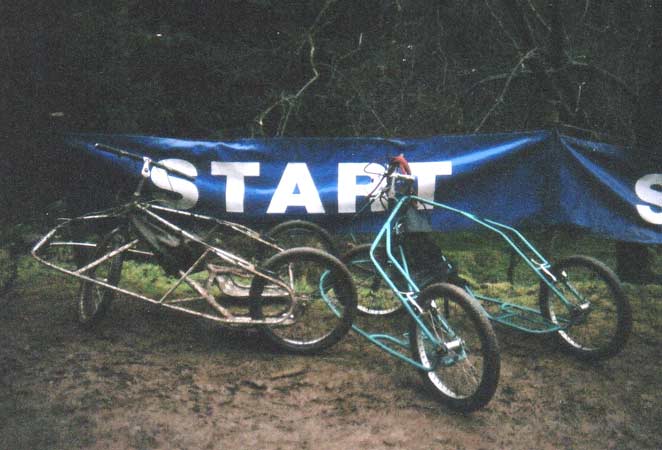
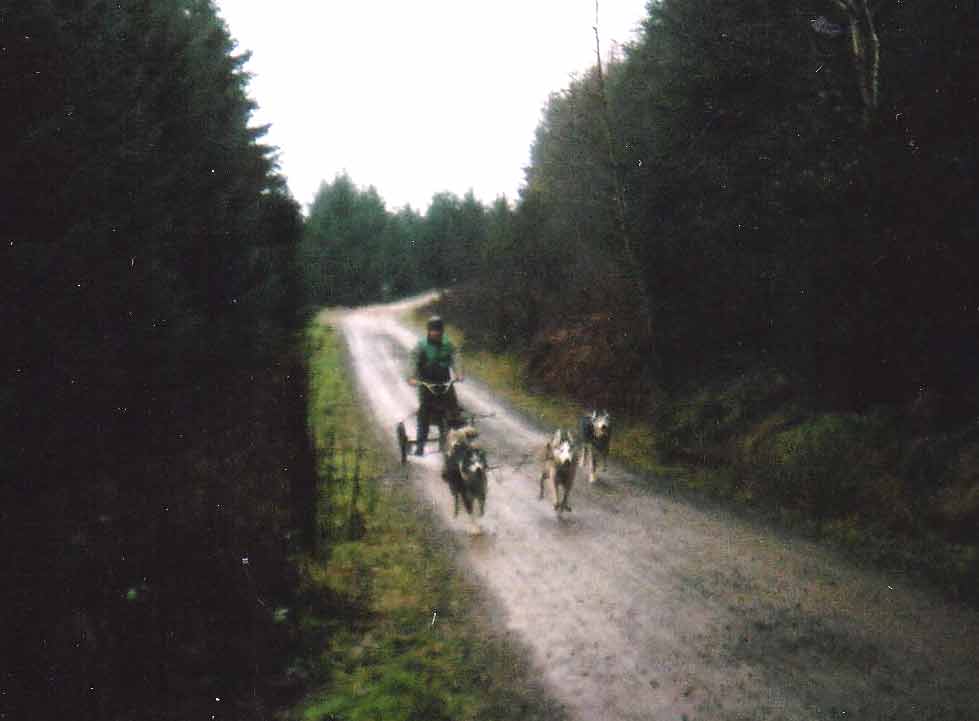
The buggies are like tricycles, with two rear wheels and one front. Brakes work on the back wheels, and the front wheel is used for steering with handlebars. The driver stands on a slat.
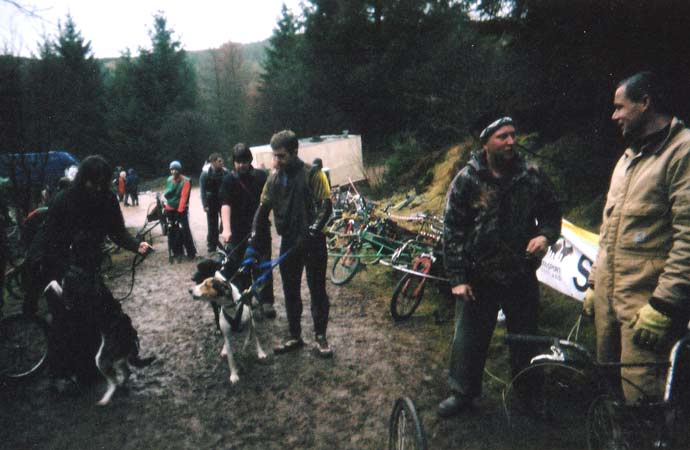
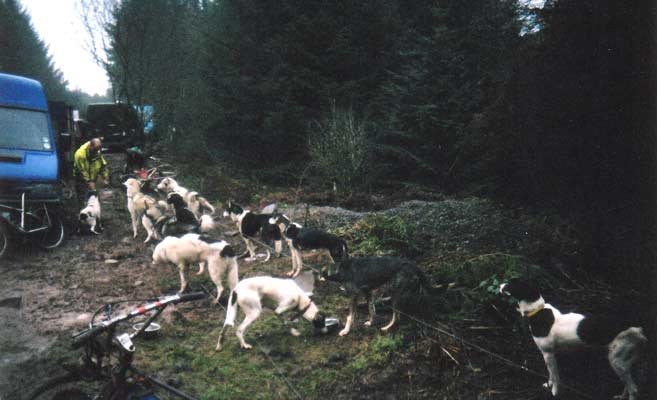
The dogs are mainly huskies but, surprisingly, ordinary dogs also participate, and with equal enthusiasm. The enthusiasm of the dogs is the most outstanding feature.
While waiting, they are mostly placid with occasional barks. But once they are hitched up, there is a cacophony of barking and yowling and straining to get away. They are restrained by helpers but as soon as the starter gives the “Go” and restrainers release them, they tear off like rockets with much barking.
The event I attended had a course of 3.5 miles. It consists of an uneven muddy track, which winds about, up and down, through the forest. The buggies sometimes overturn on the bends. Teams can be of six, four, three and even two dogs.
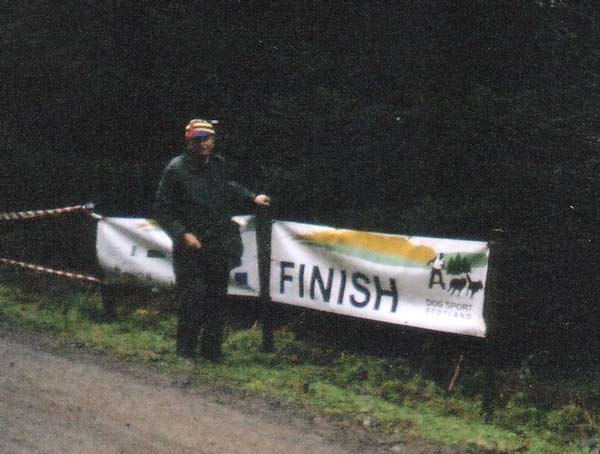
Teams are let go singly, at intervals. Results depend on times of starting and arrival at the finish. When they arrive back, they seem to be still going flat out. But when they stop, there is little barking, but much panting with tongues hanging out.
There are shouts of words of command, but I am told it is nigh impossible to stop them in the middle of the course, except by locking the brakes. Even then it takes time for the intention to sink in.
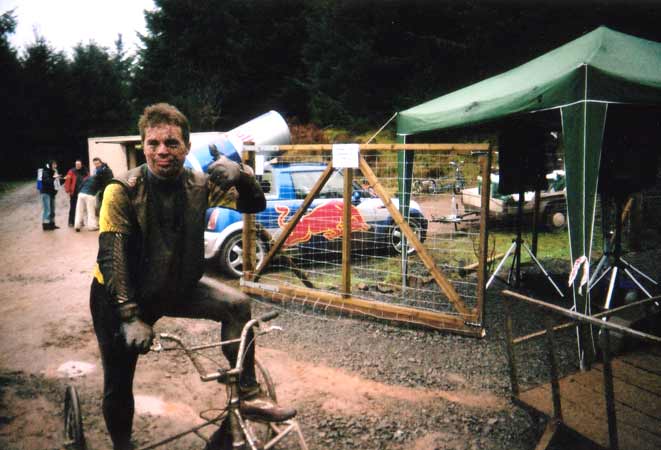
The whole scene is one of many vans, with dogs in their compartments, or tied up outside. The drivers’ waterproof clothes are usually covered in mud. The incessant barking and yowling has to be heard to be believed. My pictures have captions and I have enclosed a newspaper cutting which refers to an event last March, which I attended, but forgot to take the camera.
The participants come from all parts of the country. Some from far away, or even from other countries. There is camaraderie between them and much discussion goes on about dogs, courses or kit. It is a world of its own.
Up Helly Aa Festival
Lerwick, Shetland – 31st January 2006
FINAL ENTRY
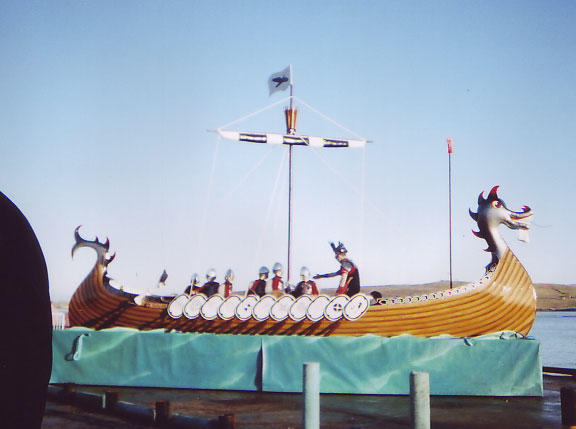
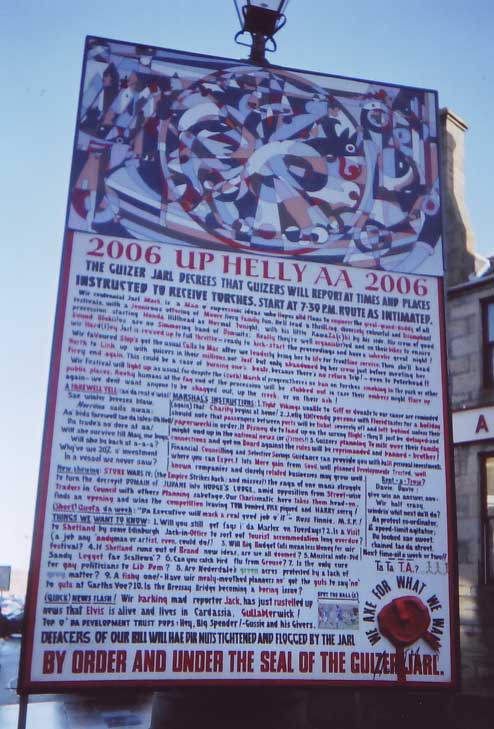
Up Helly Aa is a traditional Shetland Festival of Viking origin that has gone through many changes over the years, but now consists essentially of a torchlight parade and the burning of a boat.
Going there in a 36 seater twin airscrew plane is a far cry from a Boeing 737. It to &12 hours from Glasgow (stopping at Inverness and Kirkwall) and a lot of the time, I was looking out of the window to make sure the propellers were still going round!
On the day before the festival, I attended a short lecture and walking tour of the town to learn the route and discover the best place to watch the parade. The lecturer described the gift of Orkney and Shetland to the Scots King in the 15th Century as dowry for the Viking Princess who married King James III as the “greatest disaster in Shetland history”. Nevertheless DNA testing of today’s Shetlanders shows that 96°0 of them are of Viking descent.
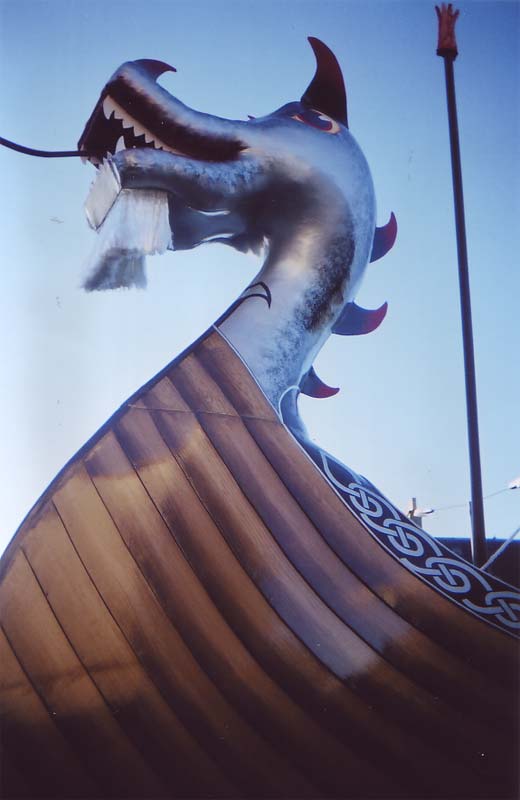
During the year the boat builders lovingly construct a 30ft Viking long-boat. It is beautifully made, painted and varnished. Also the torch makers make over a thousand 6/8ft long torches.
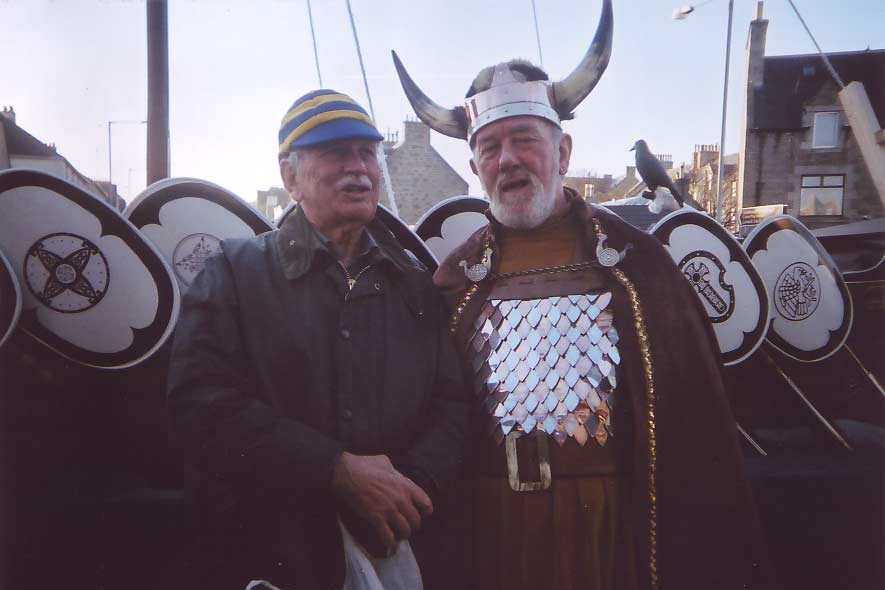
The proclamation by the Guizer Jarl (pronounced Guy Zer Yaroll) the day before heralds the occasion. The day itself,(which, like all our days there, was bright and sunny with a clear blue sky) was started with the Guizer Jarl, who is the elected leader for the year, accompanied by about 100 Guizers, attired in Viking Clothes and wearing helmets, bringing the boat which is mounted on a wagon and attended by the Pipe Ban to the British Legion. A crowd assembles and the boat is escorted by these 100 Guizers armed with fearsome huge axes and shouting war cries in unison. The boat is wheeled by underlings and the brass band plays them down to the port where it is left on show for the day.
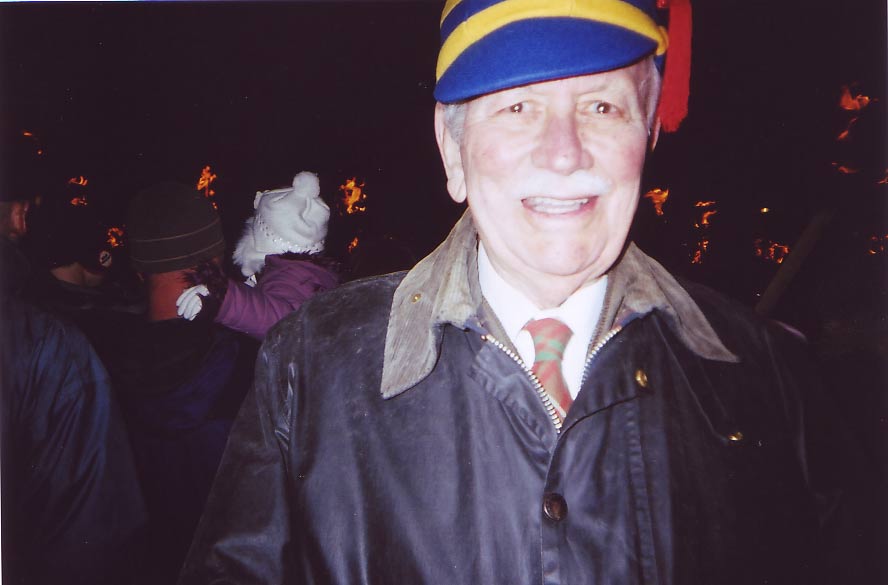
At 7 p.m. we joined the crowd by a wall which we could lean on, observe the parade which passed that point twice, and look over the wall to the boat-burning place about 50 yards away. Far away you can hear the music and then a gun goes off, torches are lit and the street lights go out. You Can now make out hundreds of lights up a hill from us. Don they come with the brass band playing and it is quite a sight.
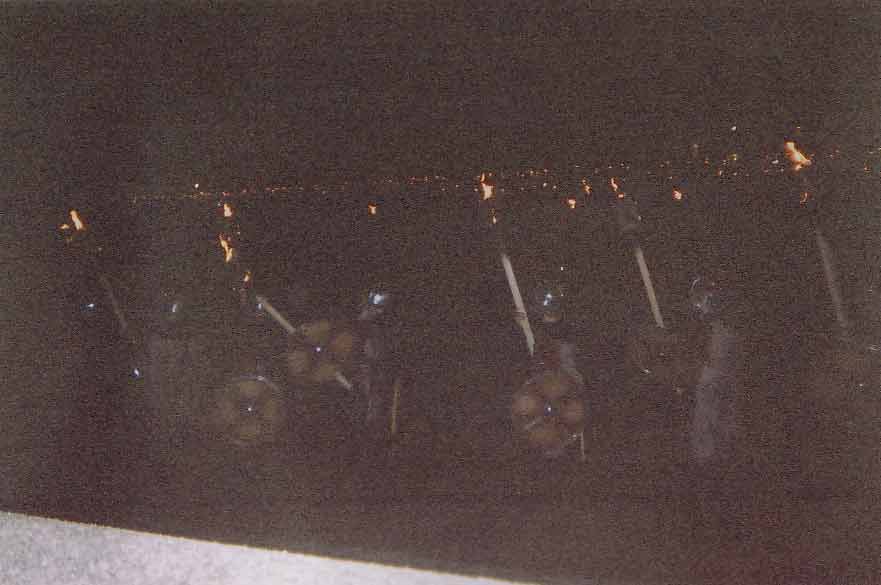
As they pass us, the first 900 are Guizers in Viking clothes, organised in squads, each with its own Jarl. Different kinds of helmets denote different ranks. The flaming torches give out some heat. They are followed by the squads in various kinds of joke clothes, e.g. chickens, cavemen, angels and devils etc. also carrying torches. Only the occasional woman is on parade.
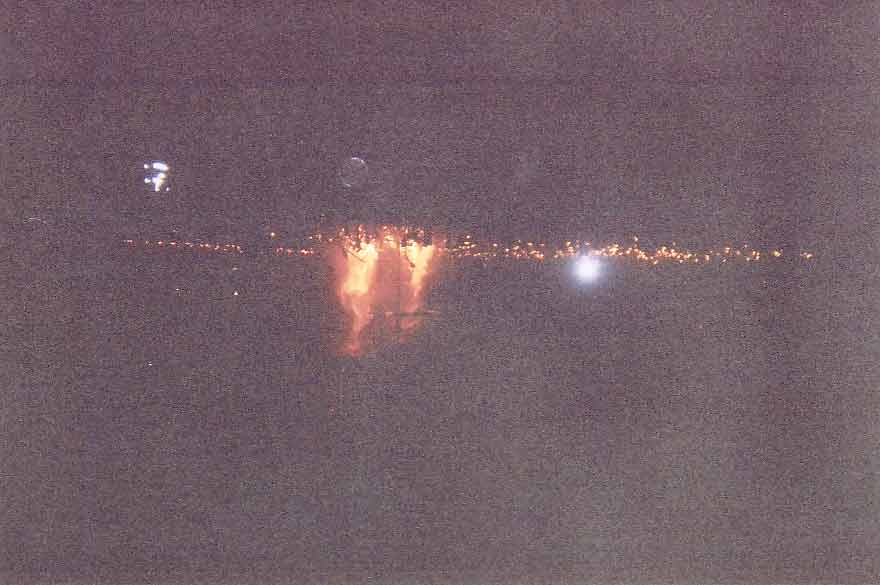
Eventually the boat is brought to the burning place in the field and all (about 1500 or more) surround it. The band plays the Viking song which they sing lustily, knowing the words, like the Welsh crowd in Cardiff. The singing stops, a signal is given, and they advance in an orderly manner and throw their torches into the boat. The band keeps playing and we watched it burn almost to extinction. A firework display then took place.
At 9 p.m. the night’s festivities start. Round the town there are about 15 “Halls”. Our Hotel is one. These are visited throughout the night by the squads, who perform their little acts. No booze is supplied in the Hall, but you can take your own which we did. After their little act, the members have a right to ask any woman spectator to dance. The dances are Scottish, Eightsome Reels, Strip the Willow etc. Then another squad appears and so it goes on throughout the night. We lasted till 12 midnight.
Their stamina is terrific. The squads move from place to place in minibuses and have their drinks in them. Our band played from 9 p.m. to 9 a.m. The Guizer Jarl squad visits each hall once. We were told that at 6 a.m. there were still 150 spectators left and 5 squads yet to arrive in our “hall”.
The next day is dead! Everything is closed and nothing much moves. But that night the Guizers have an all night dance which many people attend!
There are many rules and regulations governing the entire evening too tedious to repeat here and aimed at the timetable and the swift reaction to any misbehaviour.
It was a wonderful sight. We were fortunate with the weather. We enjoyed being there – a thing we have been meaning to do for years.

Annual Shrove Tuesday Spile Troshing Competition
Hambridge, Somerset – 28th February 2006
FINAL ENTRY
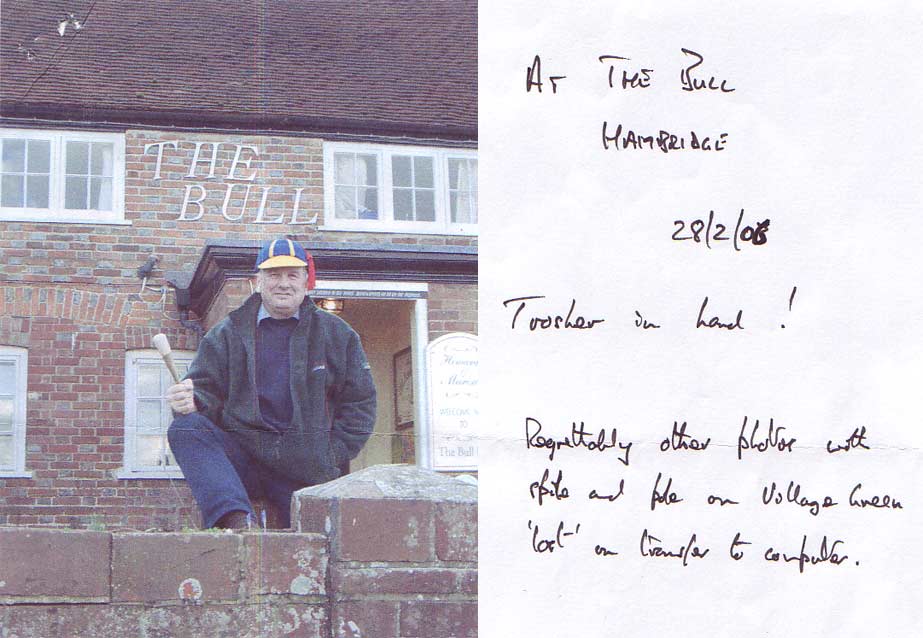
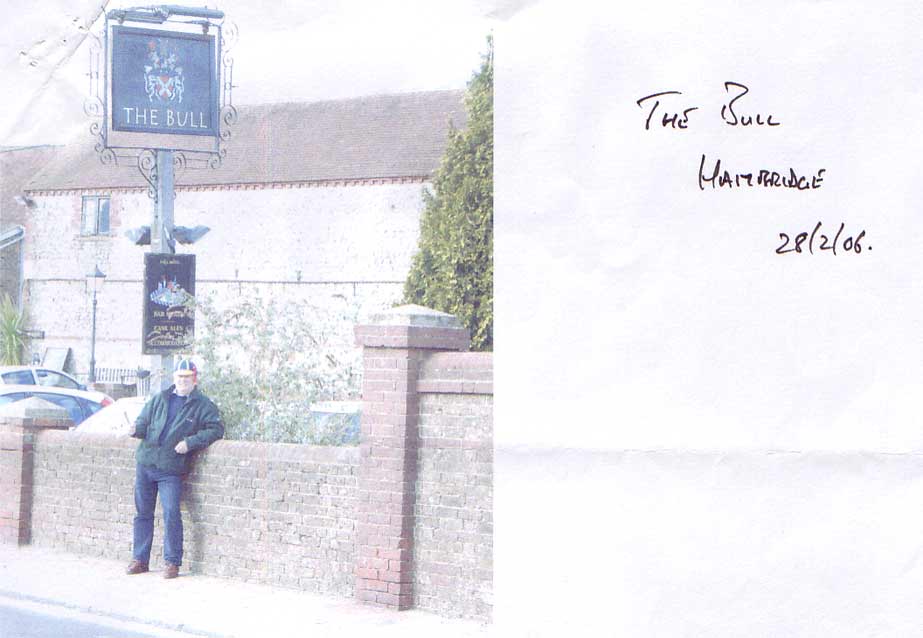
DISQUALIFIED
(see why)
Introduction
I had heard of this competition when we lived at Fivehead, only a few miles from Hambridge in Somerset, but I never managed to witness it so I am especially pleased to enter it now as clearly the weirdest sporting event amongst the Operation Yelsnot Chapter Two submissions.
While many of the other submissions are intriguing and give credit to the ingenuity and enthusiasm of my fellow competitors, few of them can really be classified as weird in the true sense of the word and while no definition of weird is referred to in the rules, may I take the liberty of reminding the Honourable Judges of the Oxford Dictionary definition: ‘queer, odd, old fashioned, strange, incomprehensible’..
Furthermore, I would ask the Honourable Judges to recognise that this entry has been completed in the spirit of sportsmanship and fairplay which is justly associated with Operation Yelsnot, unlike some other entry which verges on the bounds of duplicity and exhibits shades of the worst excesses of professionalism in sport, namely competing to win at any cost however unreasonable that may be. I am confident that the Honourable Judges with their considerable experience in these matters will readily identify with this point of view.
Background
The Annual Shrove Tuesday Spile Troshing Competition held at Hambridge is organised by the Parish Council, has been running for well over one hundred years and has a unique historical and cultural background which has now developed into a sporting competition. It is derived from the ancient rural craft of thatching, especially strong in this area of Somerset which is one of the principal reed growing areas in the country.
The Competition
Competitors start by hitting the Spile into the box when at the lower, eaves edge of the roof, but things get progressively more difficult as the box is raised on its pulley higher and higher up the roof until it gets to the ridge. I was impressed by the skill shown, using the Trosh in either a backhand or forehand stroke and propelling the Spile off the end of its pole into the box up to 20 feet with amazing accuracy. Mishits were not uncommon and caused considerable commotion among the spectators, some of whom were lucky to escape serious injury – clearly the Health and Safety Executive has not penetrated this far into rural Somerset!
David, a farmer and member of the Parish Council organising committee, explained that this is very much a local event, ingrained into the history of the surrounding area. Up to the 60s each village entered one team of 4 male adults only, usually reed cutters or farm labourers, but in recent years this has been widened to include a youngster’s team and now female teams, probably because there are no longer many reed cutters or even farm labourers around.
This is still a very unsophisticated competition and the organising committee are very keen to keep this traditional atmosphere; so there is not, nor do they want, a village fete atmosphere – there is no bunting or razz-matazz. Winning is for the honour of your Village, and a quantity of Perry’s cider (and, I guess, the sore head which goes with it – and I saw plenty of evidence of the build up to that!). The modem involvement of a sponsor is really just to help the flow! As a result, there is very little publicity about the event and outsiders attending are fairly conspicuous and treated a bit like going into a country pub 20 years ago when everyone went silent as you entered! I think few people realise how isolated and remote this area of the Somerset Levels can be.
The Significance of Shrove Tuesday
I tried to find out why the event is held on Shrove Tuesday, but I was not able to get a convincing answer. The Vicar, who has not been in the village long, thought it was something to do with having a final party before Lent started and wondered if this was in some way connected with the religious influence which would have been exercised by the nearby Muchelney Abbey, which in its day was a considerable establishment.
Opportunity for Tonsley Events Involvement
I did get talking to Matt, a local businessman and like me, obviously something of an outsider (and rather of the green wellies and Range Rover brigade!). He lives in Hambridge and clearly felt that the whole event was just waiting for someone to come along and develop it. He would be very keen to work with someone who had event experience and an enthusiastic outlook, and it did seem to me that there might be an opportunity here for Tonsley Events; I request that the Honourable Judges might consider this possibility has some merit under Rule 21.
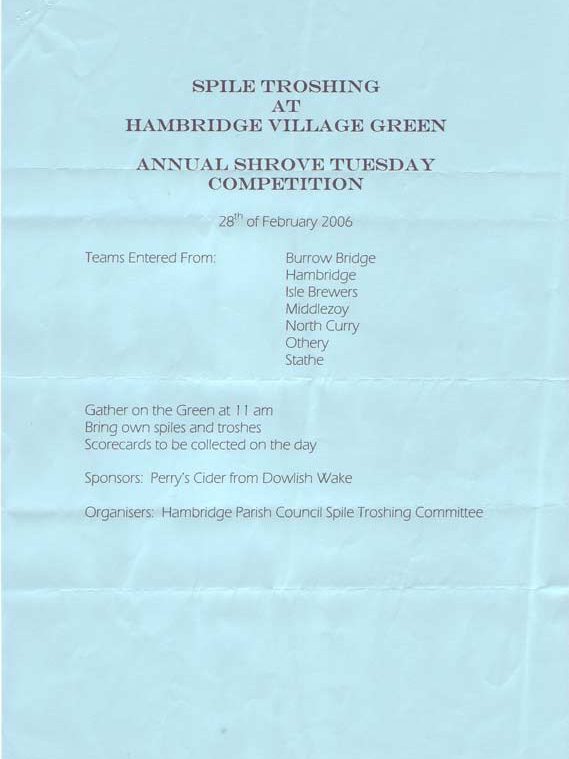
Each year on Shrove Tuesday, teams from local villages meet on the Village Green, outside The Bull public house to take part; competition is fierce and in many cases reflects inter-village rivalry which goes back over many years. This year teams took part from the villages of Hambridge, Isle Brewers, North Curry, Stathe, Burrow Bridge, Middlezoy and Othery.
A surprisingly modern touch is the involvement of a sponsor, currently Perry’s Cider from Dowlish Wake (who in years gone by benefited from the excellent harvest of cider apples from Tudor Cottage); needless to say there was ample opportunity to sample this quality Somerset cider while the event was in progress!
Historical Background
I met `village elder’ Joe, now in his late eighties but with a real mischievous twinkle still in his eye; he has worked in agriculture all his life and has been closely associated with the reed industry. He has been involved with the Annual Shrove Tuesday Competition since he was a boy and, in between several jars of Perry’s best, he explained that the competition involves tools from the thatcher, used in a manner originating from the thatcher’s work.
The Spile is a long wooden spike used to hold bundles of reeds on the slope of a roof until the thatcher is ready to stitch them into the thatch, or also used to hold ricks of reeds together when stored in the traditional Somerset long barns. The Spile can be stuck into the thatch with the aid of a long pole, but is then driven into place by the Trosh, a wooden `hammer’ with a stone end, not unlike an old fashioned policeman’s truncheon.
Another part of the thatcher’s equipment is a wooden box used to hold all his different tools together on the side of the roof, and this box is on the end of a rope and pulleywheel set at the apex of the roof so that the box can be raised or lowered according to the height at which the thatcher is working.
Joe told me that the competition developed at least 150 years ago, but maybe considerably earlier, when the young apprentice thatchers used to amuse themselves, often after several pints of cider which were part of their wages, by hitting the Spile with the Trosher from the end of its pole into the box on the roof. In the early days of the competition, the box and pulley were still placed on the roofs of the houses round the Village Green, but so many windows got broken that sometime between the wars the competition was moved to the centre of the Village Green where the box and pulley were mounted on a specially erected gantry representing the side of a roof.
Conclusion
I confirm that this is my sole entry which should be put to the Panel of Judges for judgement under Rule 13.
I humbly submit that, under Rule 17 which states that an event will be judged `solely on its weirdness’ and given the definition of weirdness previously mentioned, the Hambridge Annual Shrove Tuesday Spile Troshing Competition is clearly the outstanding event of all the submissions so far made in the Operation Yelsnot Second Chapter.
I remain,
Your Honours.
Your Obedient Servant
Robert Bruce
Dated this Eleventh Day of March
in the Year of Our Lord Two Thousand and Six

Austin A30/A35 2005 International Rally & The Engine Blow
Ryall, Worcestershire – 29th May 2005
My morning started early with a weird dream – an acute concern that I had arrived at the above event not only without my Tonsley colours but also without the all-important whisky bottle! There was some unexplained confusion in this dream with another, for me, weird event, albeit not, I assure you, of a sporting nature – my wholly unexpected and even more disconcerting nightmare of the previous weekend when, attending a conference in Denmark, I had been unexpectedly required to share a double bed with my overloud snoring brother-in-law Brian, the common thread being lack of sleep!
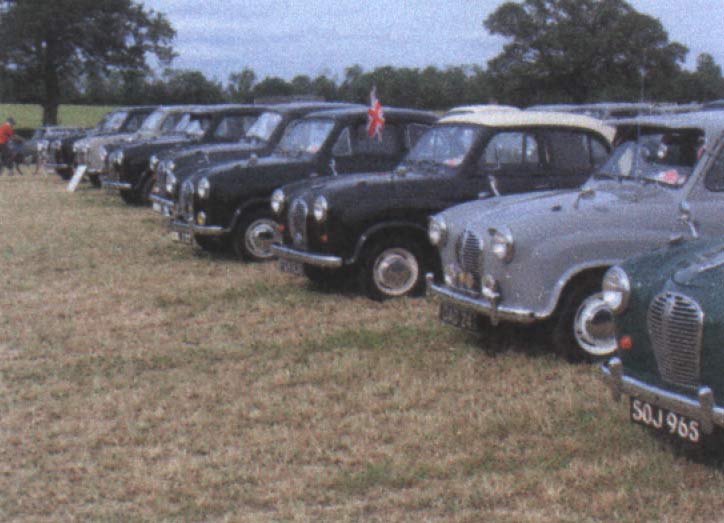
So it was that Celia and I set off rather tired for Worcestershire and to renew my acquaintance with not just one heroic little Austin A35, but with over 100 gleaming versions of this triumphant forerunner of the Peugeot 205GTI! On arrival we were greeted by boy scouts who, we thought, were collecting the admission charge when they asked us for a donation. Having nothing less than a £10 note between us we asked if they had any change to which the immediate response was “No”! As a former boy scout myself I did not begrudge them the tenner, at least not until we had parked the beamer and walked towards the gate to be confronted by a nonchalant youngster reclining on a hay bale asking whether we had paid our entrance fee and who then demanded another £2.
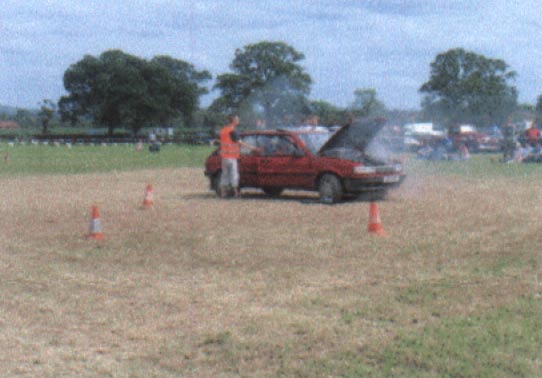
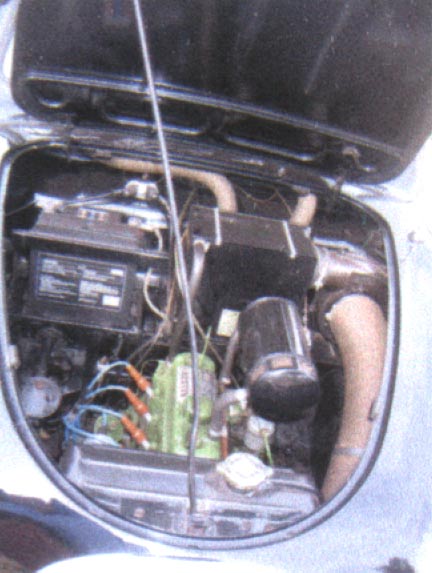
That paid we arrived in the arena in time to see “The engine blow” – a competition to see who would guess the length of time an engine would run without either oil or water – the answer was 16 minutes 11 seconds by which time there was a considerable amount of smoke emerging from the car. We missed the Blindfold Driving Event but there was no evidence of any life threatening injuries having resulted from this. It reminded me of the occasion when I rallied my A35 on the Yorkshire Moors and the competitors one by one went through a dust storm blinding them and leading to a multiple prang, unbeknown to my successor in title!
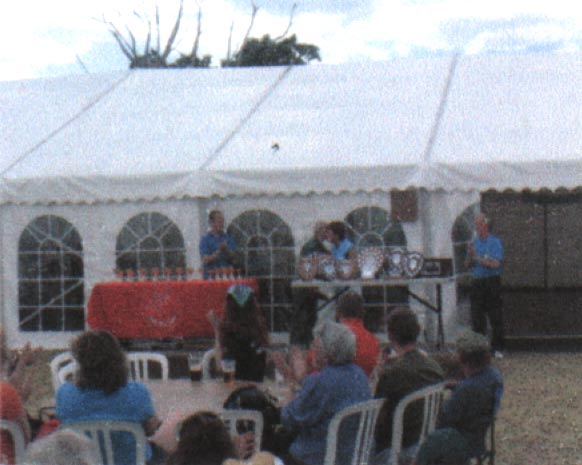
On then to the results of the main competitions and the granting of awards for the various classes, for which there appeared to be countless trophies awarded.
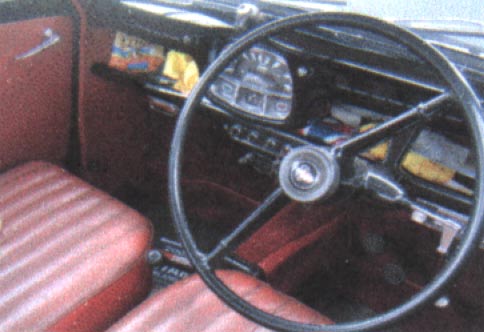
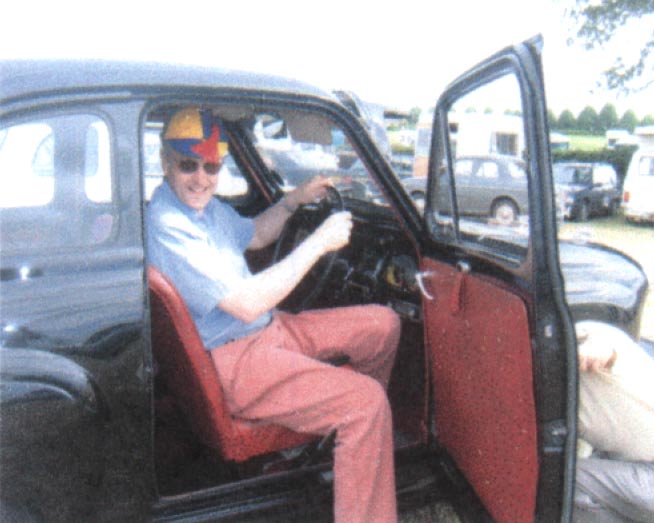
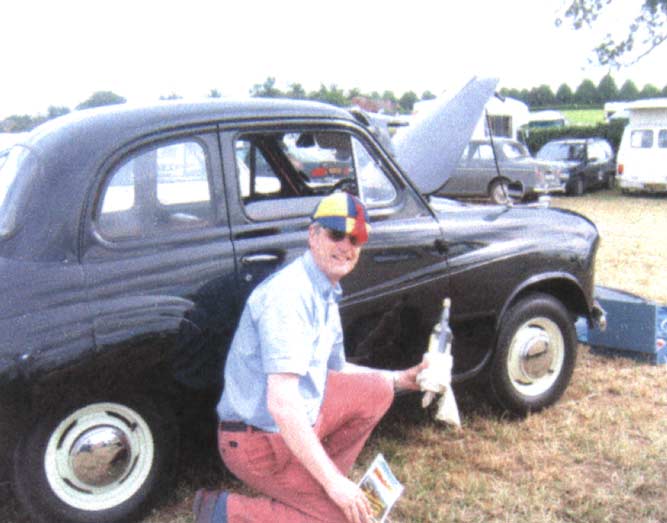
Celia – a very sensible person, used to weirdness in minor forms – found it very weird. The people exhibiting their cars were definitely weird – you can see one of them crouching beside his car to the right of the photo in which I am sitting in his car and from the list of entrance you will see one competitor was driving an A30 registered in the Netherlands (50-UH-ig), it certainly being weird to come all that way to attend the event (happily proving the event’s compliance with rule 16). It was also extremely weird to destroy a perfectly good Maestro (happily however not a classic A35) in the engine blow.
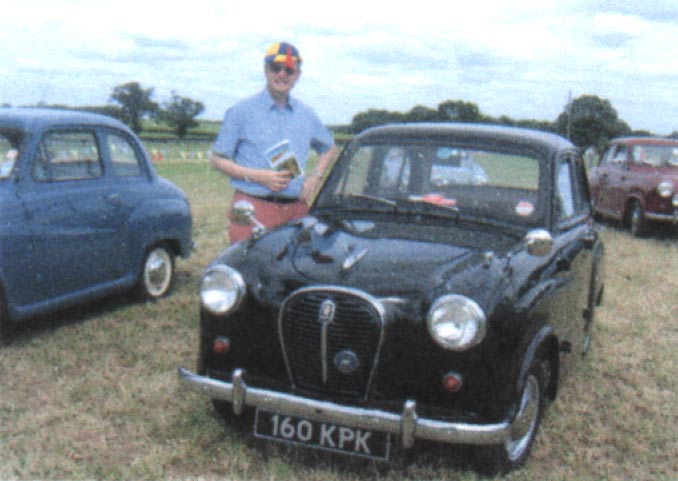
Then, with me proudly wearing my Tonsley colours, we found a version of a black A35 most like the one that I had all those years ago rallied through the Lake District, Snowdonia and the Yorkshire moors: 160 KPK. One of the most exciting moments was to sit behind the wheel of 422 MMP. While the A35 was the only car in which my 6 foot six brother could sit wearing his top hat, this one had its driver’s seat raised to accommodate its rather small but proud owner and I nearly did myself an injury getting between the seat and the steering wheel! The only disappointment was not to find the celebrated TLF 538 amongst the specimens present – but the blame for that has to be laid at the door of my fellow competitor, ex Judge Bruce Snr who, having picked up a bargain for a mere £50, failed to preserve it for posterity, making the spurious excuse that he had not realised that it had been involved in renowned rallies and that it was somehow weird that it should have two Teachers whisky bottles inserted in its floor to keep the car waterproof. Thus, without in any way my wishing to pre-judge your honourable decision on the Tonsley day of reckoning, little did he know that he would one day come to regret that his attributing the description “weird” to my notorious and deeply loved velocipede would earn me the Tonsley trophy and deprive him of that, the greatest of accolades!
HCPT Annual Greyhound Race Night – Human Race
Wimbledon Greyhound Stadium, London – 25th November 2005
FINAL ENTRY
Tonight was one of satisfaction – envisaged because our Race Night was to come of age in its 21st annual event, but unenvisaged on account of the presence of one of my competitors – erstwhile Judge Bruce Junior – but without his Tonsley Colours! My delight was all the more intense when his indiscreet wife revealed that he had contemplated bringing the aforementioned headwear, only to make an error of judgement in taking the decision to leave it at home – clear reason if ever it was needed for his relegation to the status “erstwhile Judge Bruce Junior”! Under your particularly sensible rules this left the field clear for me to take the Trophy on the night which was to include the weirdest of all sporting events! Hence the grump futtock expression recorded below.
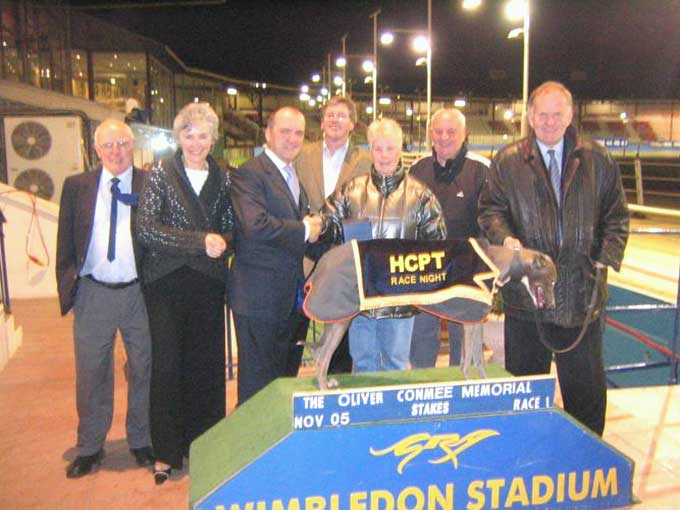
Other satisfaction and pleasure was to be had when he took the bribe of a reward (the nature of which, to spare his blushes, I will refrain from disclosing) to accompany me, for him in an unknown direction, but for the purpose of undertaking some important photography. Thus it was that I led him at 9pm to tag along at the back of a queue of 24 two-legged runners in the highly unusual and weirdest of races which was then about to take place on the Wimbledon Greyhound Stadium track.
After the difficulties that had been caused by one of your honourable judges not long after his appointment to that noble position, by his over exciting the greyhounds, when he ran in the first Greyhound Human Race as leader of the 2004 Santa Cruisers (forerunners of the team pictured here in 2005), to avoid similar disruption it was necessary for this year’s greyhound impersonators to be led onto the track without any danger of being seen by any of the four-legged variety and closely bunched around the 6 foot 6 hare that was making a guest appearance for this special night, when he was more usually to be found in an Olympic Eight.
So it was that six teams of 4 idiosyncratically named human greyhounds emerged onto the track closely followed by two Yelsnot competitors, but alas only one being properly attired!
Was it sabotage brought on by sheer irritability, at his misguided decision to leave his Colours at home, that caused former Judge Bruce Junior to press the button that turned the digital camera off, rather than take a photograph, that left me without a photograph of the runners and hare in transit, or was the cause the shame that had beset him that his own flesh and blood resident two-legged barely human greyhound failed to bring the baton in first?
Excitement reached fever pitch throughout the stadium as the Olympic human hare gathered pace and an assortment of barely human whippets gave chase. £1,500 had been staked on the outcome of this weirdest moment.
In a little over a minute and a half it was all over; the hare lived up to its Olympian tradition, closely followed by “Pie & Chips Twice” who can be seen here on the podium, otherwise strictly reserved for the real greyhound fraternity, having received their trophies from your competitor, to add to the weirdness of the occasion proudly sporting his Tonsley Colours.
When this year’s judges return to their more accustomed and befitting positions as competitors next year they, being four in number, would be ideally suited to challenge the field in their full Tonsley Colours to take the 2006 trophy as the “Tonsley Turbos”! See you there on 24th November 2006.
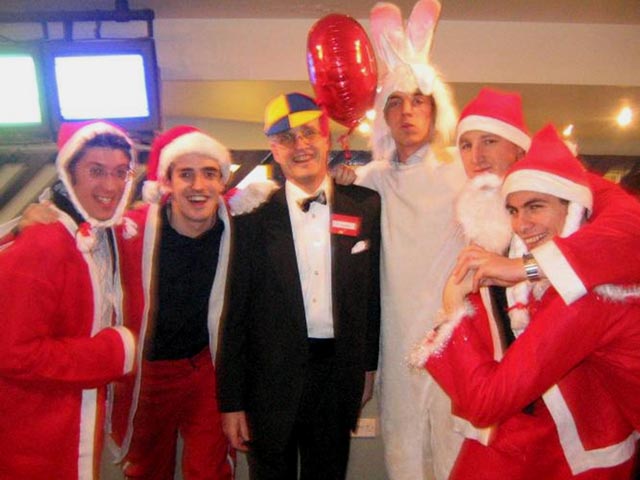
and Team “Santa Cruisers”!
(Photograph courtesy of Robert J Bruce Esq)
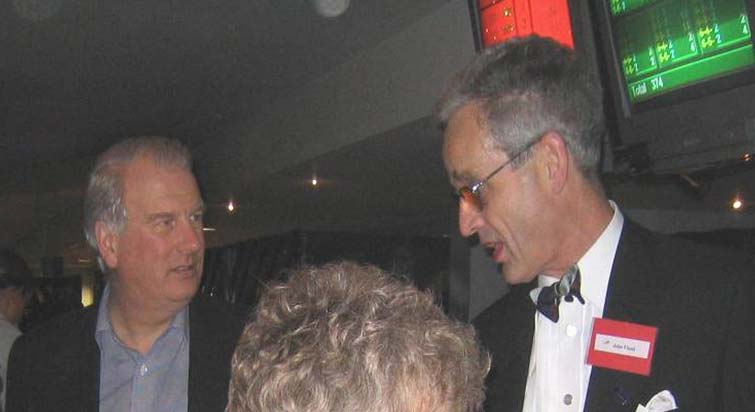
and disgruntled Yelsnot non-competitor
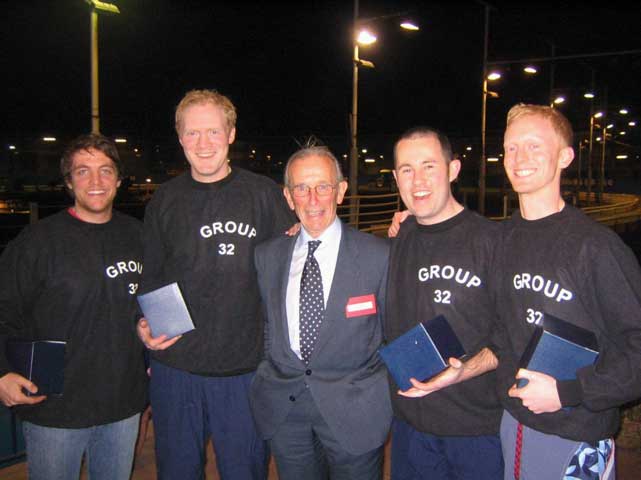

Day of Reckoning
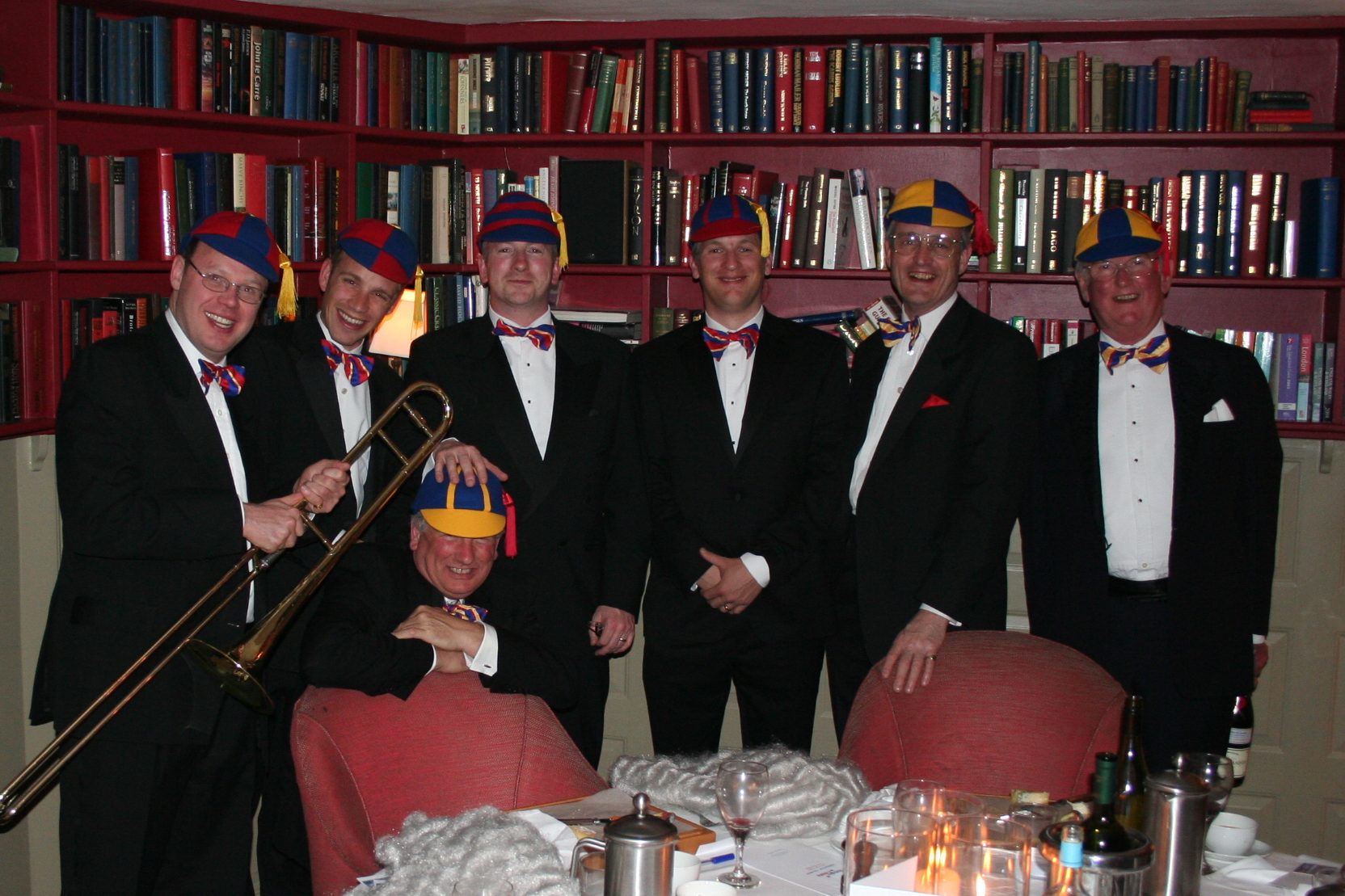
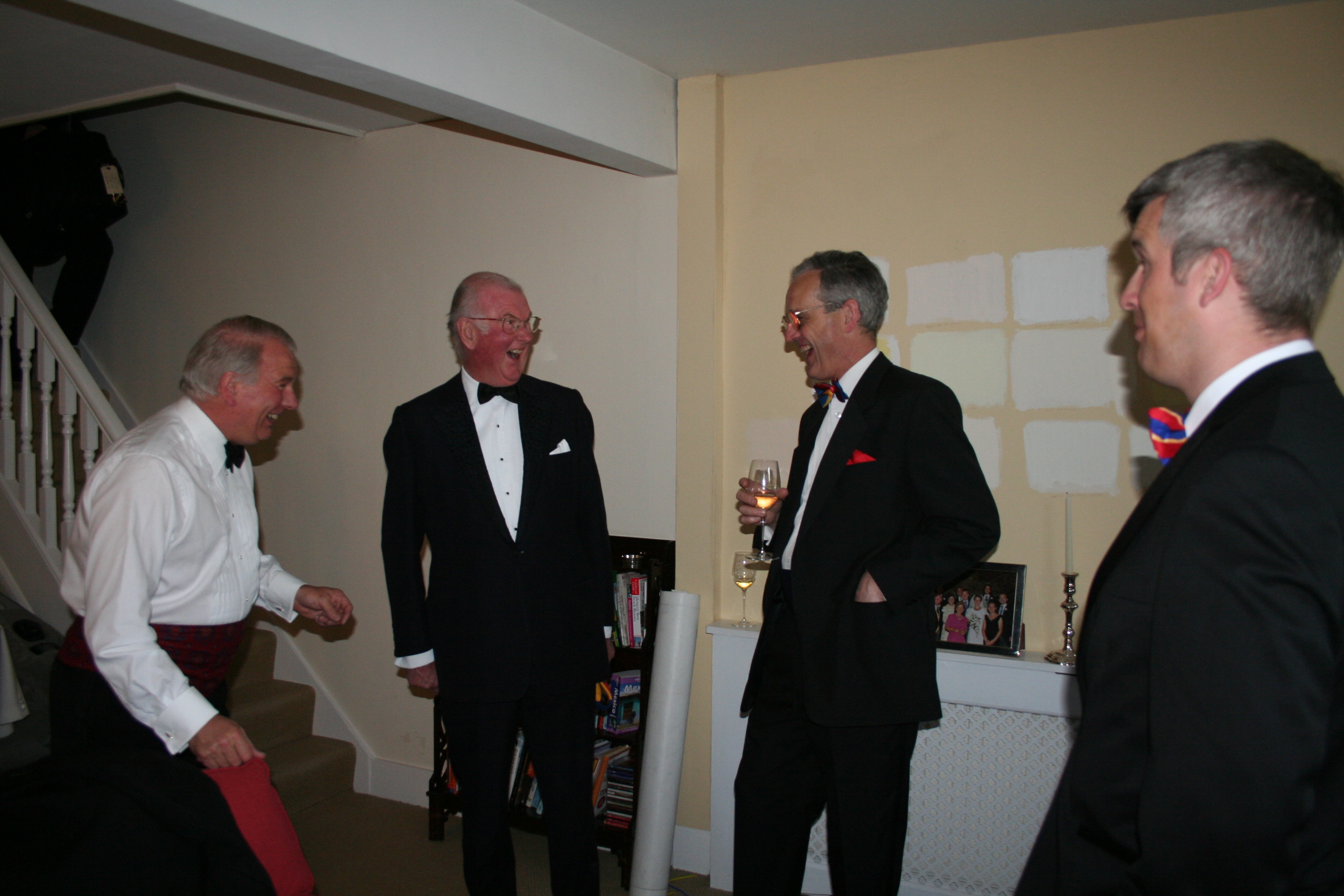
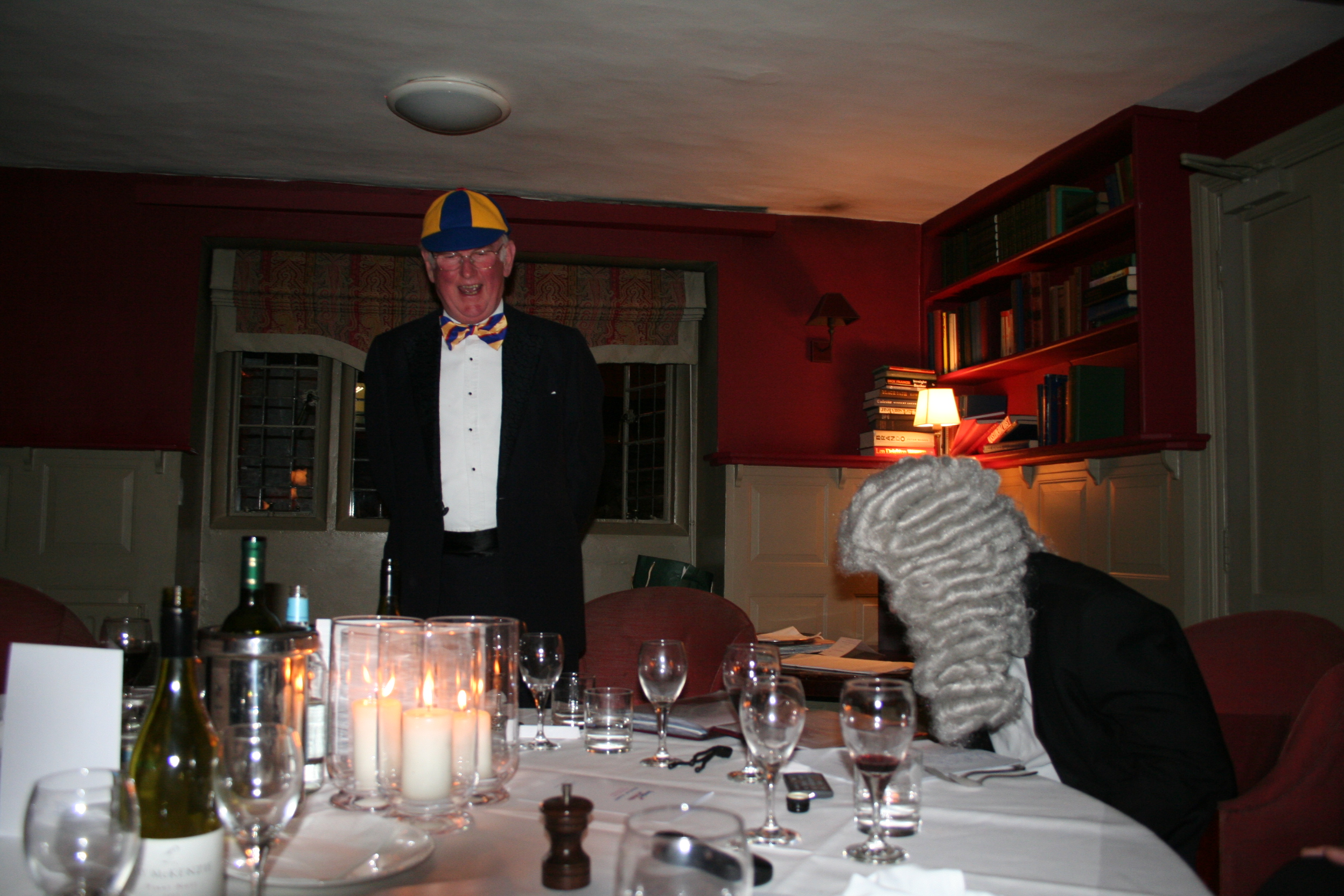
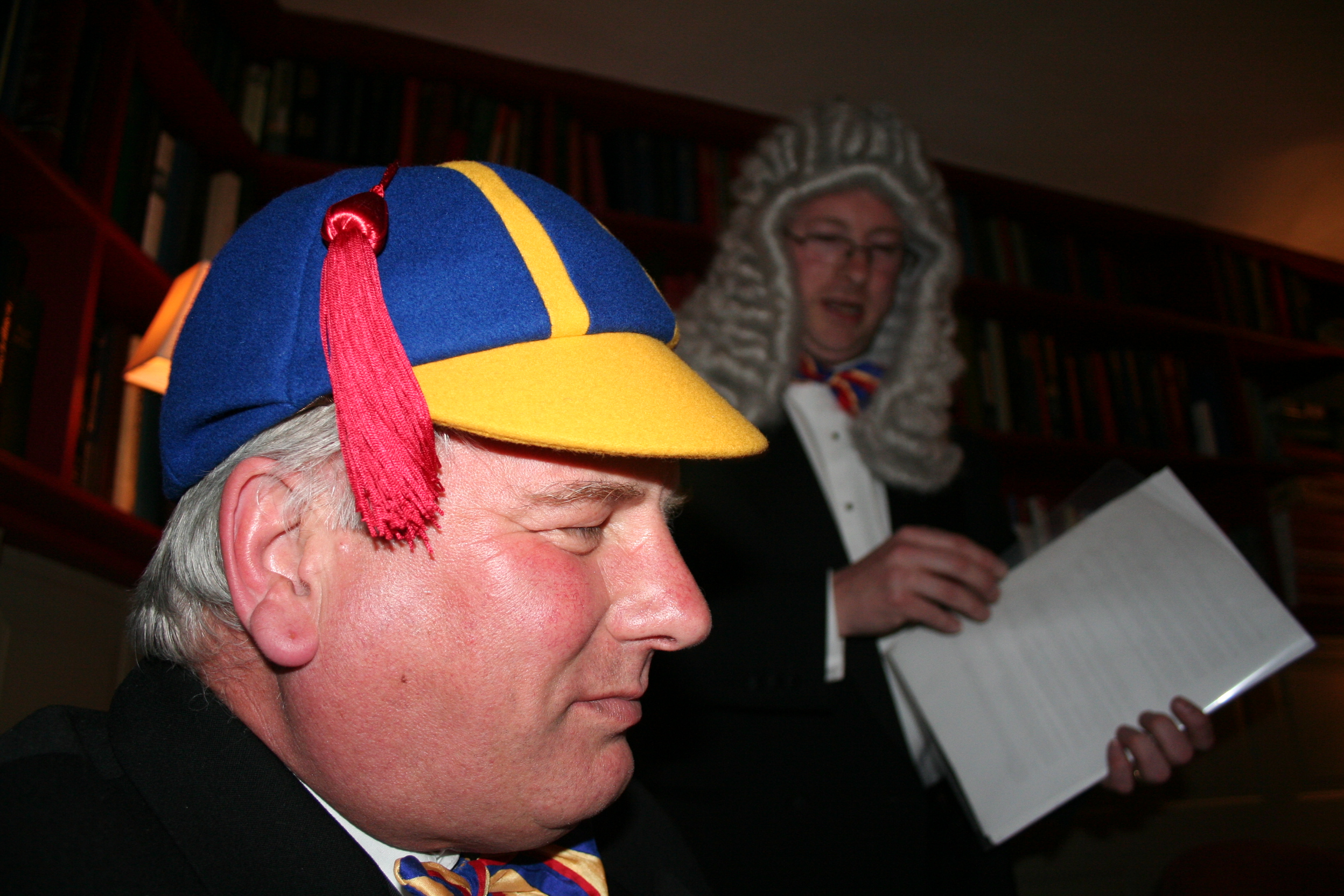
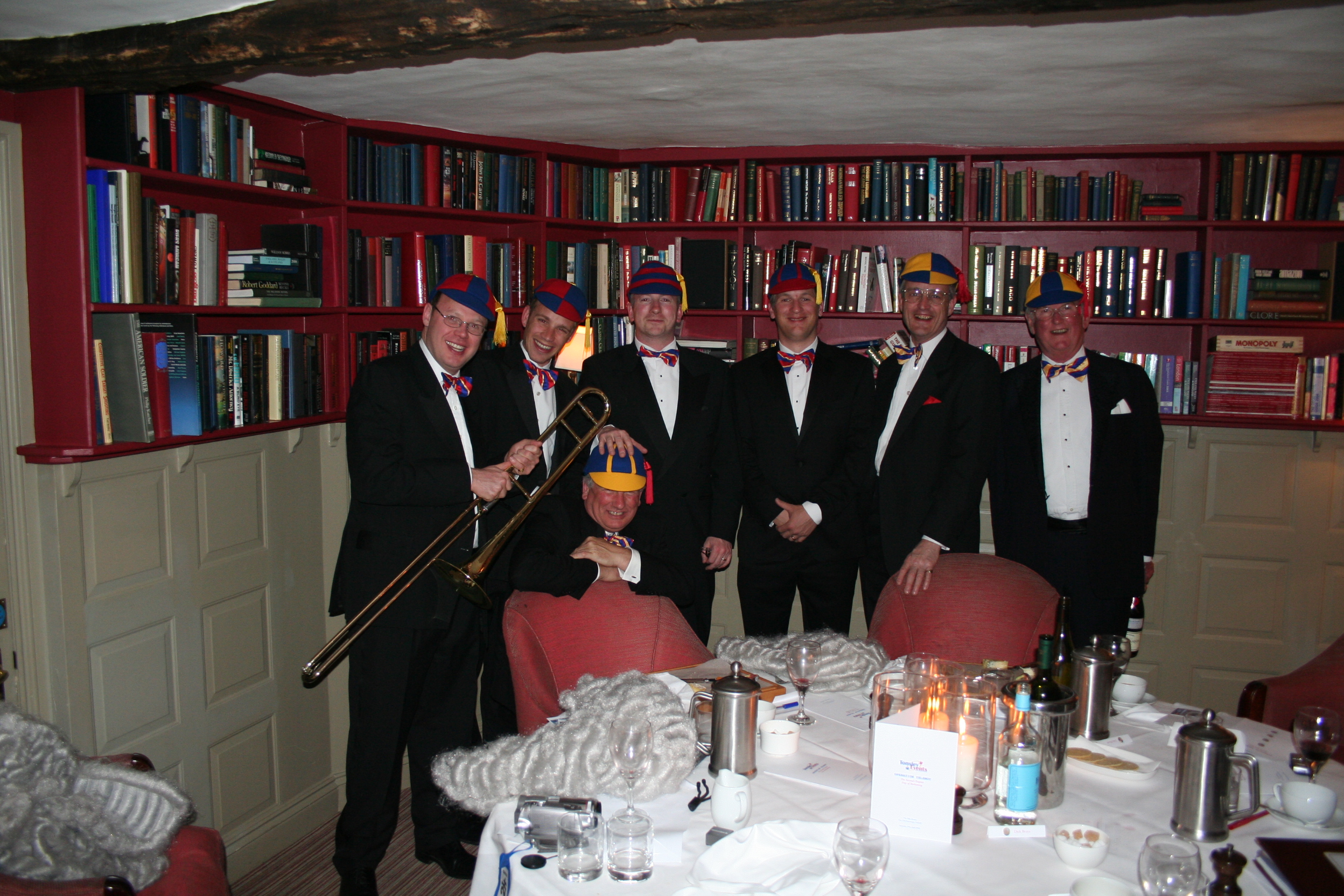
The Old Parsonage in Oxford was the venue, a serious restaurant for a serious occasion: Operation Yelsnot – The Second Chapter, The Tonsley Day of Reckoning. We were gathered to judge the Tonsley Father’s efforts at visiting the weirdest sporting event in the space of a year. As former judges of the competition and now competitors, great and more importantly, weird things were expected. Some did not disappoint, but a story of defiance and Tonsley shame unfolded.
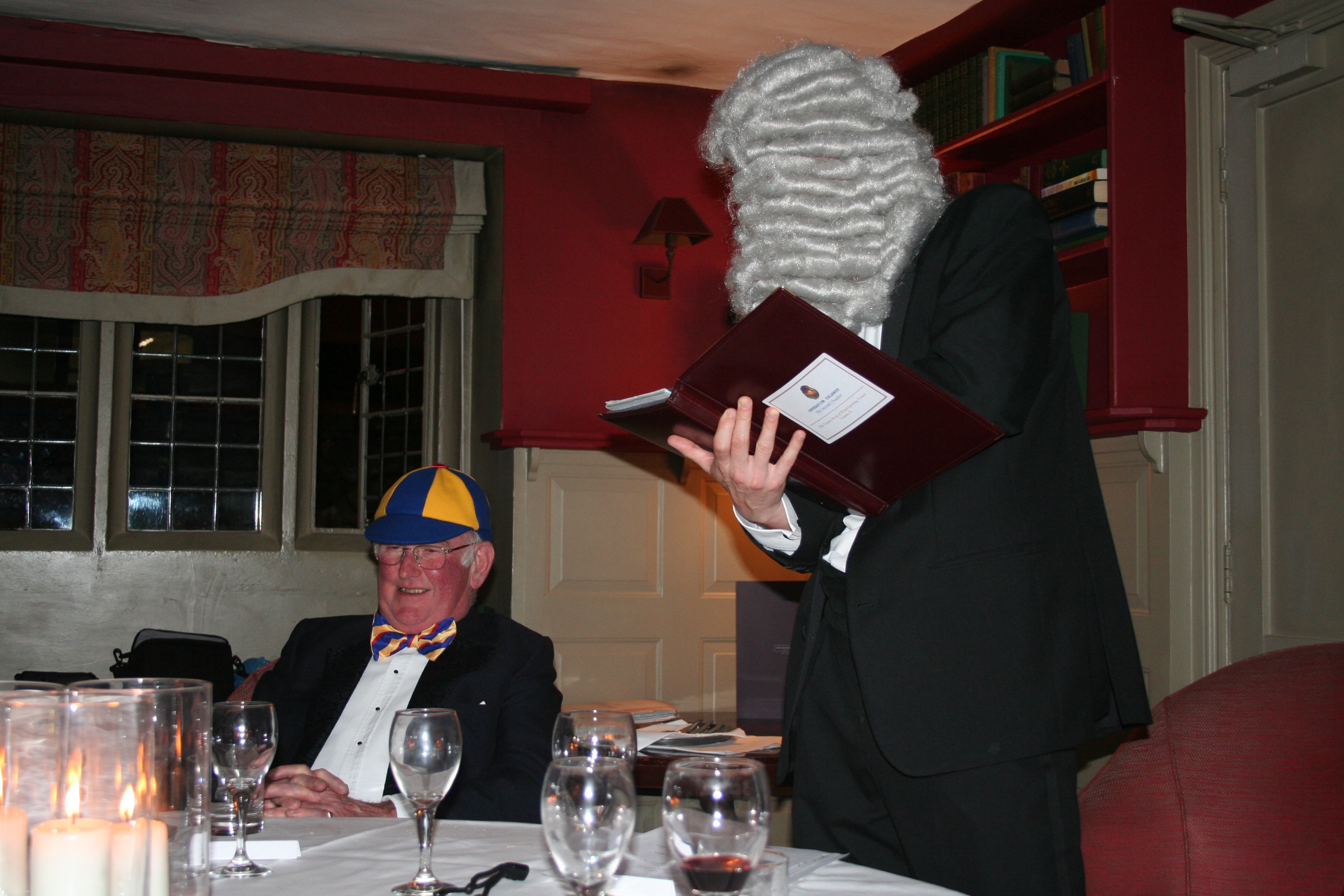
The black tie dress code was fitting for such an occasion in the library room of the restaurant, and dinner started in a light-hearted and jovial manner – that was until the waitress arrived with a silver salver unveiling the ceremonial Tonsley Wigs!
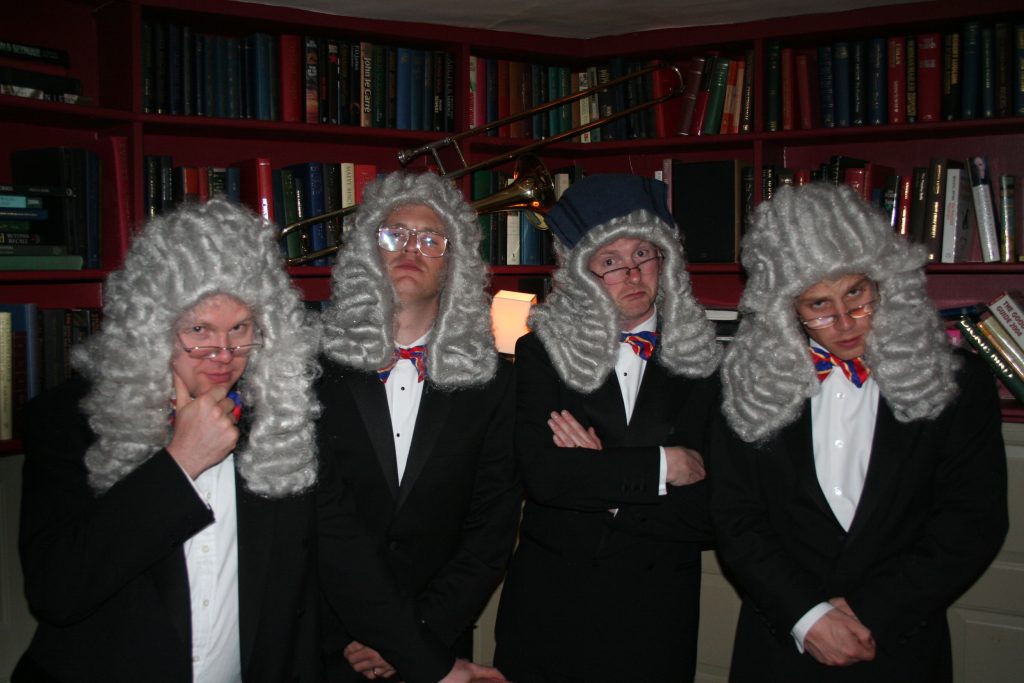
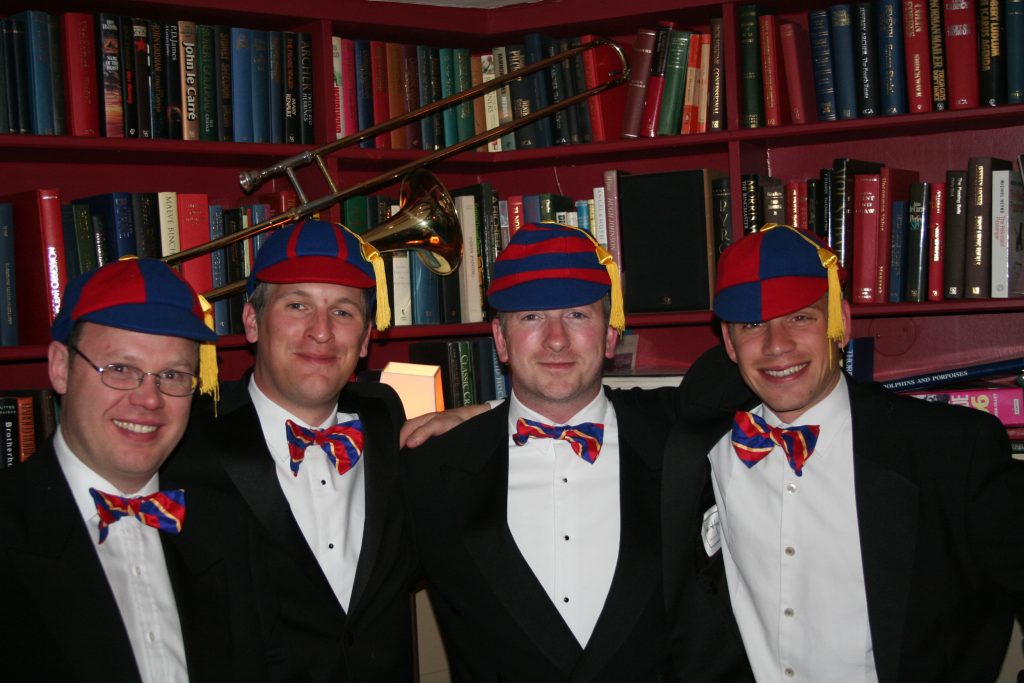
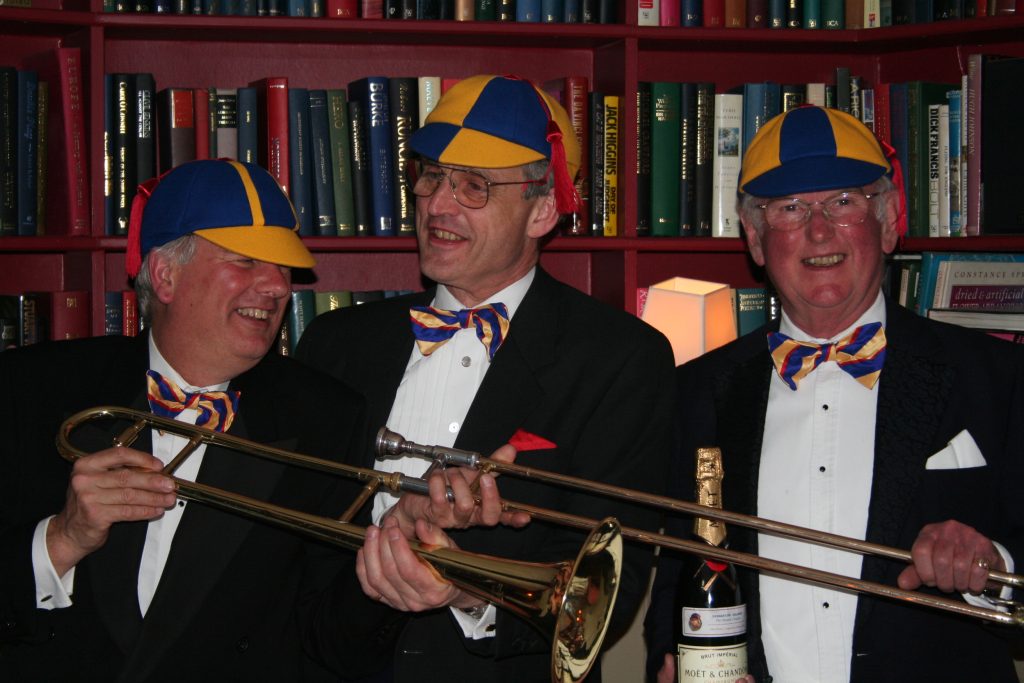
No longer light-hearted, the competitors became edgy and uncomfortable, realising their fate was about to be decided – the culmination of a year’s efforts.
Each competitor had previously been required to submit one final entry from the events they visited, and it was from these that the judges would decide. Each entry was cross-examined, starting with Dick Bruce’s (who unfortunately was unable to join us, as he was Chairing the inaugural Dumfries and Galloway Society of Weird Sporting Events AGM). Up Helly Aa, whilst being impressive, historical and very grand, was not deemed to be weird enough and the judges expressed their surprise that of the staggering and commendable number of weird sporting events Dick Bruce visited, this was the event he chose.
The Human Race at the HCPT Annual Greyhound Race Night was submitted by John Flood, another impressive submission largely as a result of the devious execution of evidence gathering. John had excitedly cajoled fellow competitor Robert Bruce (Snr) (who had foolishly failed to bring his Tonsley Colours Cap to the event) to take the photographic evidence required for the submission.
Reluctantly, Robert obliged capturing a proud John Flood posing with race winners, rather like a Peacock in full plume. Rather uncharacteristically, John had failed to read the small print, and failed to submit his entry in the correct fashion, but the judges were lenient and over-looked his error.
“The most enjoyable day out in Wales, I would highly recommend it – if it were not near Fishguard” was the feedback the judges received from the ever-competitive John Woolf, after his submission of Ras Beca’s Race. Whilst other competitors wrote derogatory comments about fellow competitors and their events in their reports, thinking that it may swing the judges opinion, John Woolf wisely stuck to describing the weirdness of his event, keeping the report simple and the judges were suitably impressed.
After characteristically leaving it until the last minute, and bragging about his ability and sure-fire victory in the competition, Robert Bruce (Snr) desperately scrambled to try to put an entry together. On the final day possible, a report on Spile Troshing was finally submitted to the judges at 16:00 on 11th March 2006. By 18:00 the Tonsley Judges had smelt a rat – “IT problems” given as a reason for only one poor quality image of the competitor in front of The Bull Inn in Hambridge, Somerset holding what was claimed to be a trosher. Trosher it was not, pestle it was, The Bull it was, Hambridge it was not, and by 18:30 the judges already had a photograph of Judge Flood (Jnr) outside the same Bull Inn in Newick, West Sussex – a couple of hundred miles from the suggested location. His downfall was spectacular, rigged as a potential winner, Robert thought that he had got away with it, and that he had even won, right up until the last minute when he was ceremonially de-bagged and given a forfeit – to provide hospitality to all competitors and judges at the 2007 Gird and Clique Championships in Scotland.
And my, we are all looking forward to it!
[Robert honoured this commitment in 2007, albeit at the Highland Games 2007 – The Yelsnot Forfeit.]




And so it was… the close of the Second Chapter. History is made once more.