
Introduction & Rules
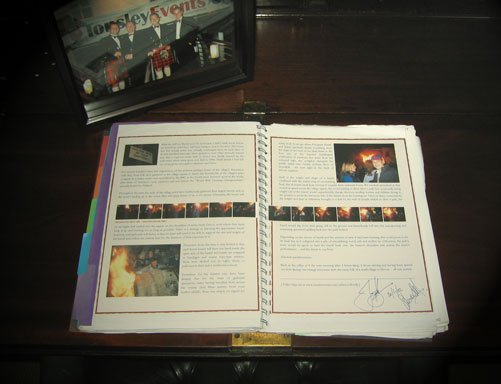
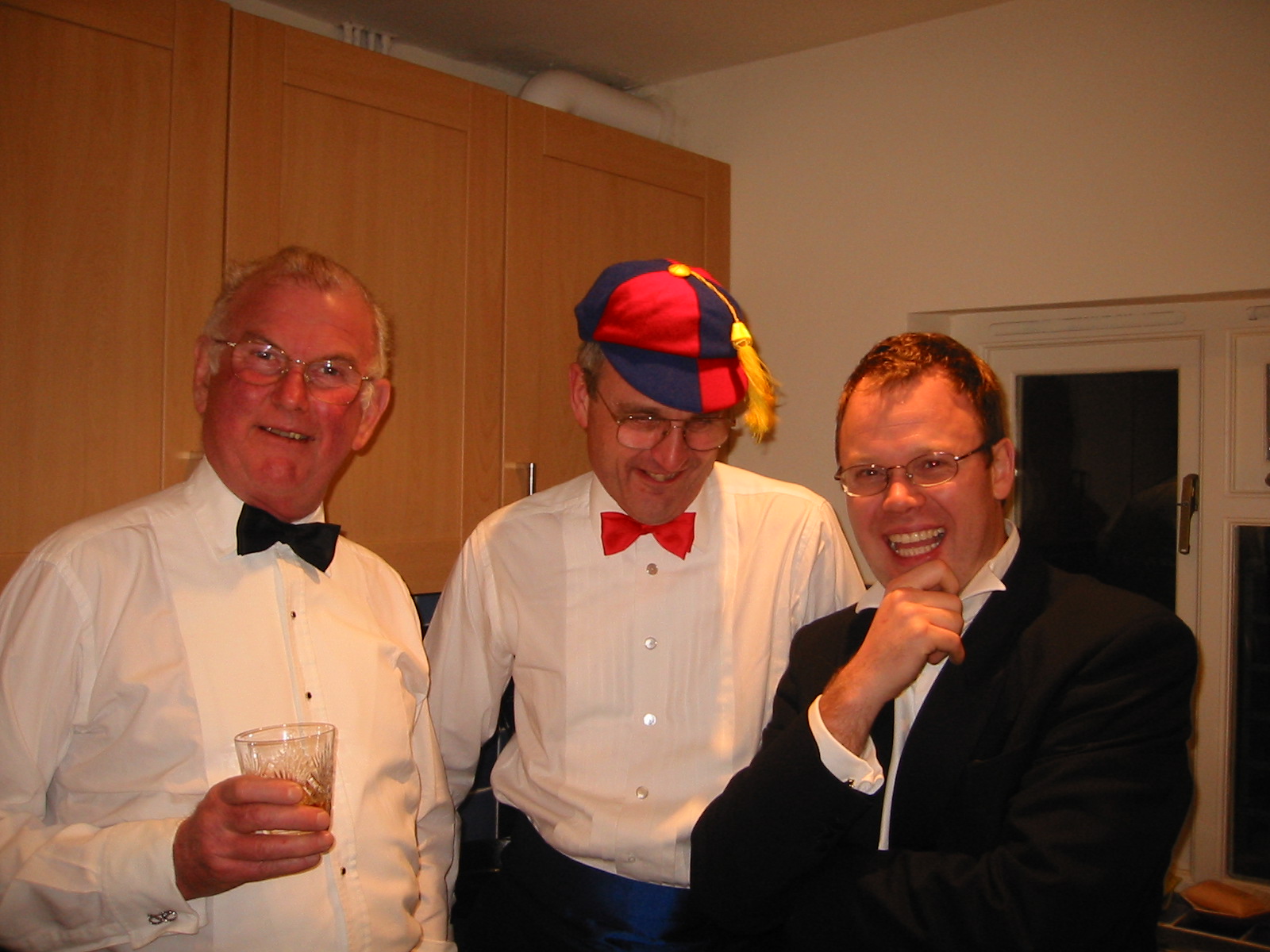
The “Yelsnot” (“Tonsley” backwards) Challenge was hatched in the usual manner of a conversation over too many beers at the East Hill pub in Tonsley Town. It was laid down by the four Tonsley Events crew and it was to run the course of a year from March to March in the year 2002/3. Rules of engagement were drawn up, proposed and approved by all. In a nut shell (though you can read the rules in full below), the individual had to attend the weirdest sporting event that they could find. The judging of this was to be done by each of the individual’s fathers at the Tonsley Day of Reckoning and the prize was £100 from each of the three unsuccessful competitors.
27 events were witnessed, some of which were participated in and some of which were World Championships. It was a year of bizarreness, intrigue, secrecy and hefty mileages!
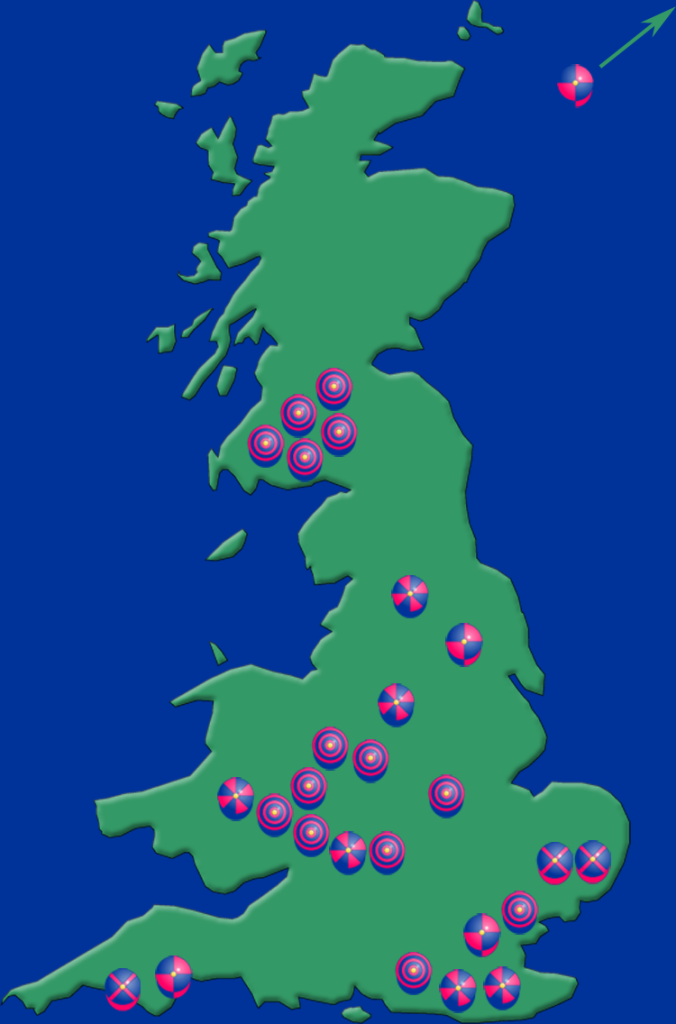
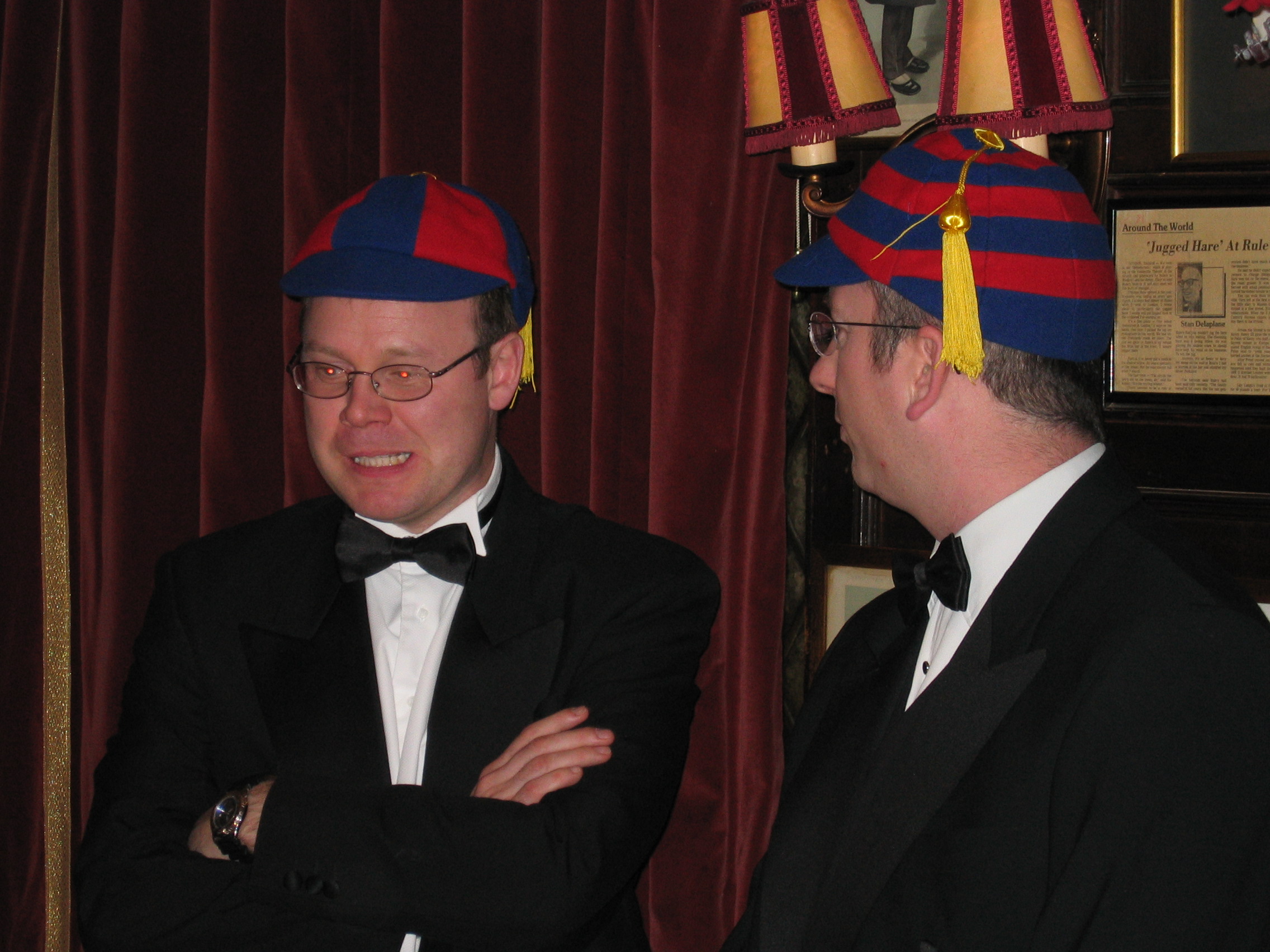
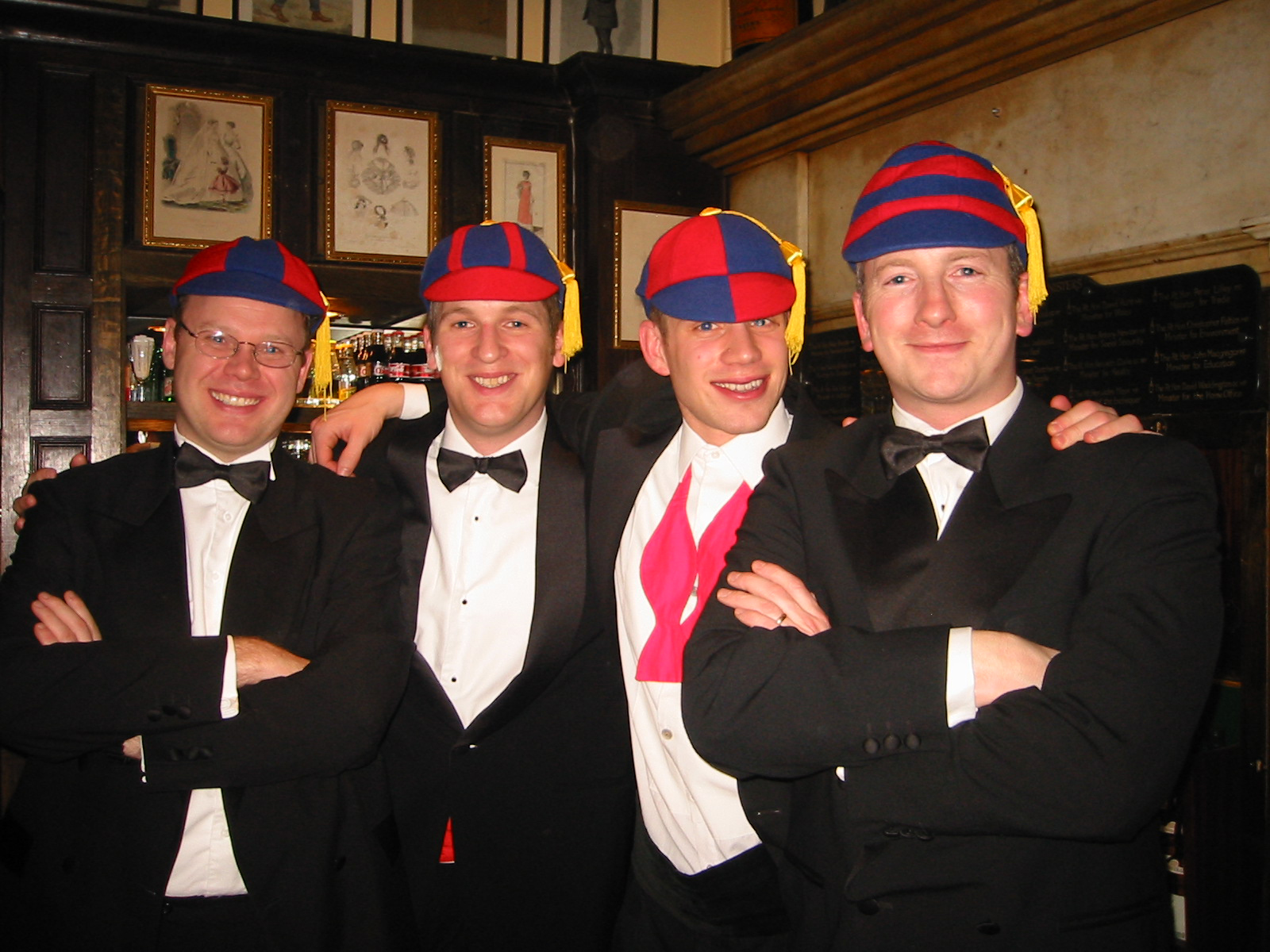
^ Click over the caps to jump to the event ^
Rules of Operation Yelsnot
Devised by the Committee in The East Hill Pub in Tonsley Town
on Monday 17th December 2001.
- Entrants must be from the Tonsley Events Committee.
- The entry fee to the competition is the princely sum of £100 sterling.
- The competition shall run over the course of a year and shall terminate on Monday 10th March 2003, exactly a year after the Committee receives the “Tonsley Colours”.
- Any entries submitted after this termination date shall be disregarded.
- All entries have to be submitted into the “Tonsley Book of Weird Sporting Events” within a month of the first day of the sporting event. Entries failing to comply with this rule will be disregarded.
- When a participant puts his entry into the said book, he must have it witnessed by at least one other Committee member.
- If all Committee members are “away on holiday”, then his entry must be completed and be witnessed at the first opportunity on another Committee member’s return.
- Entries into the said book may not be altered in any way after their completion and a witness’s signature.
- A period known as the “Tonsley Sneaky Beaky Period” will commence from Saturday 1st February 2003 and last until the closing date of Monday 10th March 2003, where events visited during this time do not have to be entered into the book – see Rule 10.
- Events visited during the “Tonsley Sneaky Beaky Period” will, however, need to be entered into the book in the normal way, in the week of Monday 3rd March to Sunday 9th March 2003.
- In the unlikely case that an event is attended by more than one Committee member AND subsequently receives multiple entries to the “Tonsley Book of Weird Sporting Events” by parties concerned, all entries from that specific sporting event will be deemed invalid and void. The only exception to the rule is if the event is held outside the United Kingdom. In such cases, two Committee members can submit the event. However, the panel must then consider whether the joint entry is as strong as an alternative entry by a single member.
- The winner shall be decided by the Panel of Judges, namely the fathers of those concerned, on the “Tonsley Day of Reckoning” over a dinner meeting after the closing date of Monday 10th March 2003.
- The winner is the person that the Judges deem to have visited or taken part in the weirdest sporting event throughout the year, based on the Collin’s Dictionary definition of “sporting” being “an activity for exercise, pleasure or competition”.
- It is to be left to the Judges discretion as to decide what is deemed “sporting” and what is not deemed “sporting”.
- The Judges should consider that geography plays no part in this competition – it is purely on the “weirdness” of the event that an event should be scored ie. an event in Honolulu holds exactly the same degree of ranking as that of the same event held in England.
- The Judges should be aware that for the sake of this competition, it has been agreed that the term “sporting event”, whilst being in line with Rule 13, must also fulfill the requirement of being of a scale that is open to competitors from a geographical area which is the equivalent of a parish or larger.
- All entries, further to their entry in the “Tonsley Book of Weird Sporting Events”, have to be supported by evidence of the entrant’s presence at the event and any further evidence the entrant deems will help his case with the Panel.
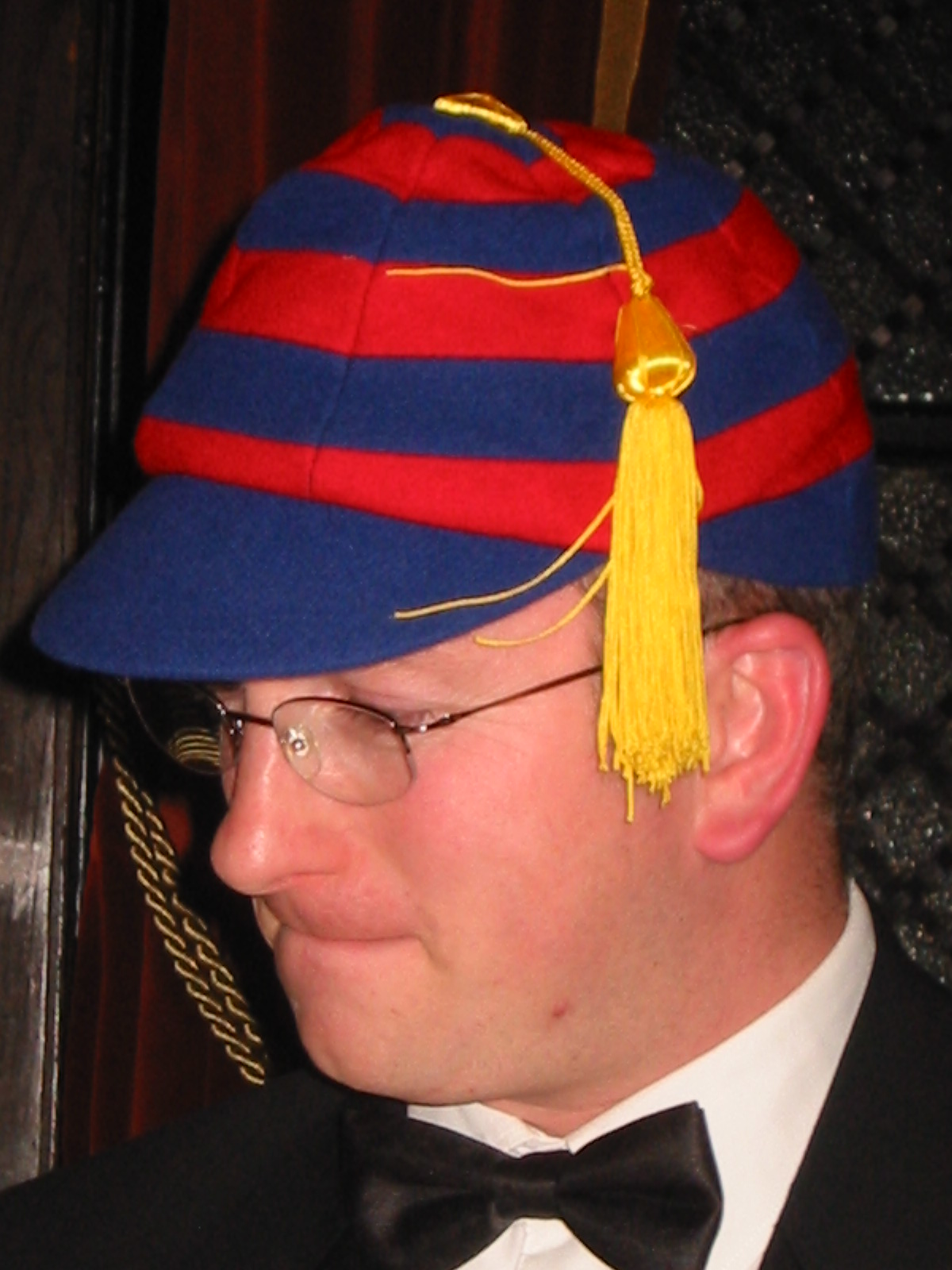
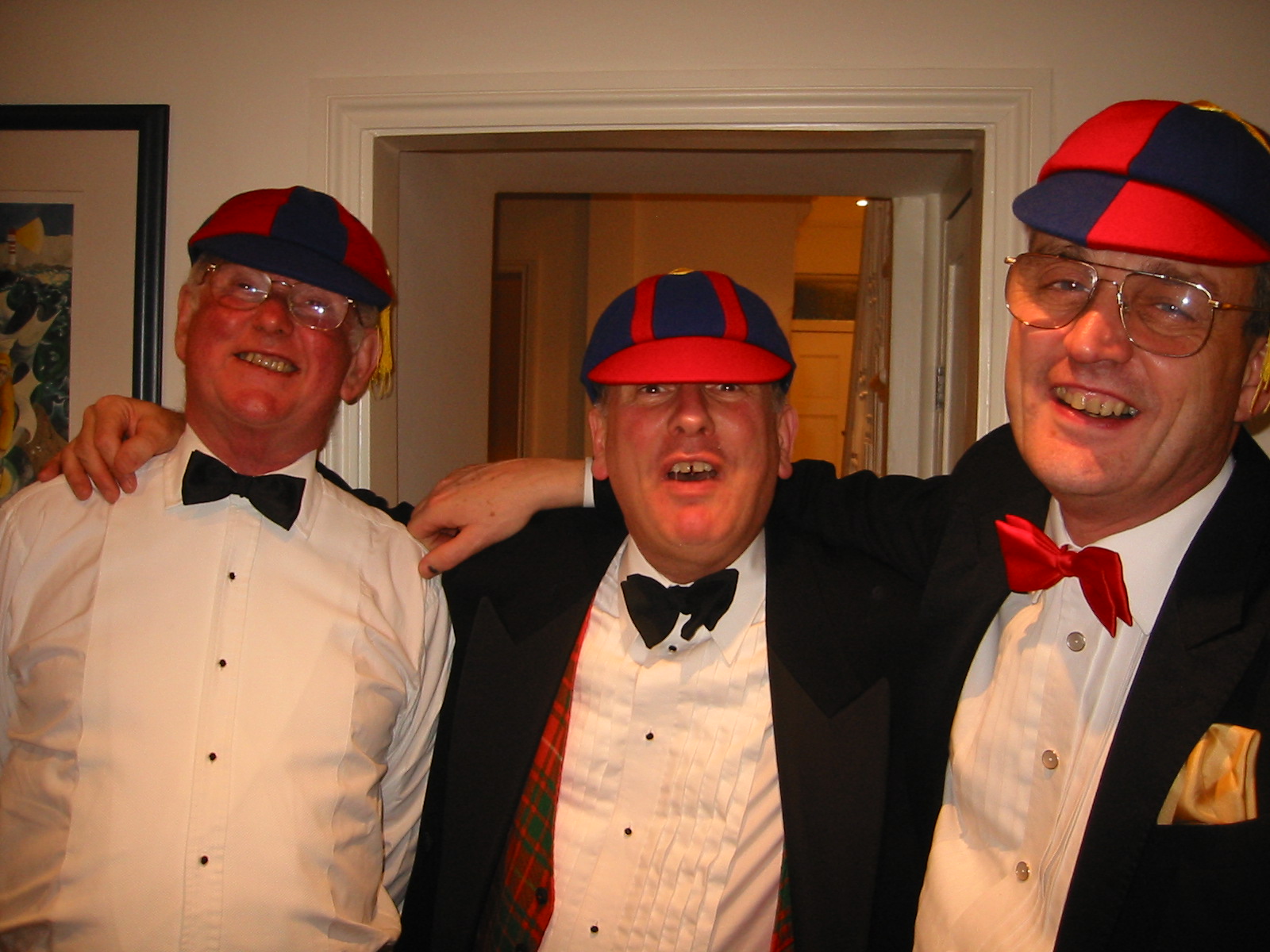
- The evidence mentioned in Rule 17, will include a photograph of the entrant at the event wearing his Tonsley Colours (not initially shown to the Panel of Judges), and a photograph of the event itself.
- Each Committee member can choose no more than three events to put to the Panel of Judges.
- The evidence mentioned in Rule 17, does not have to be submitted until the “Tonsley Day of Reckoning”.
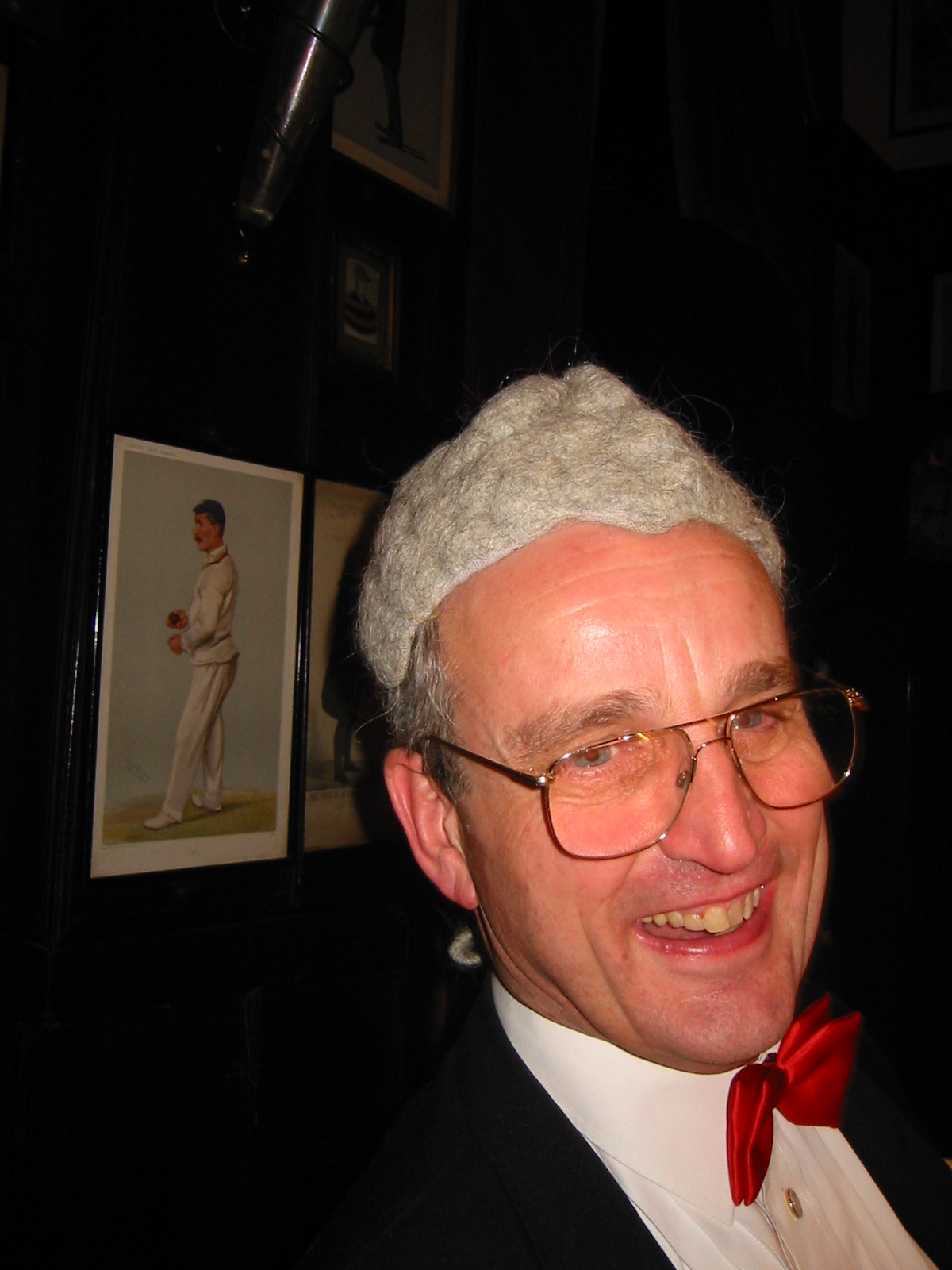
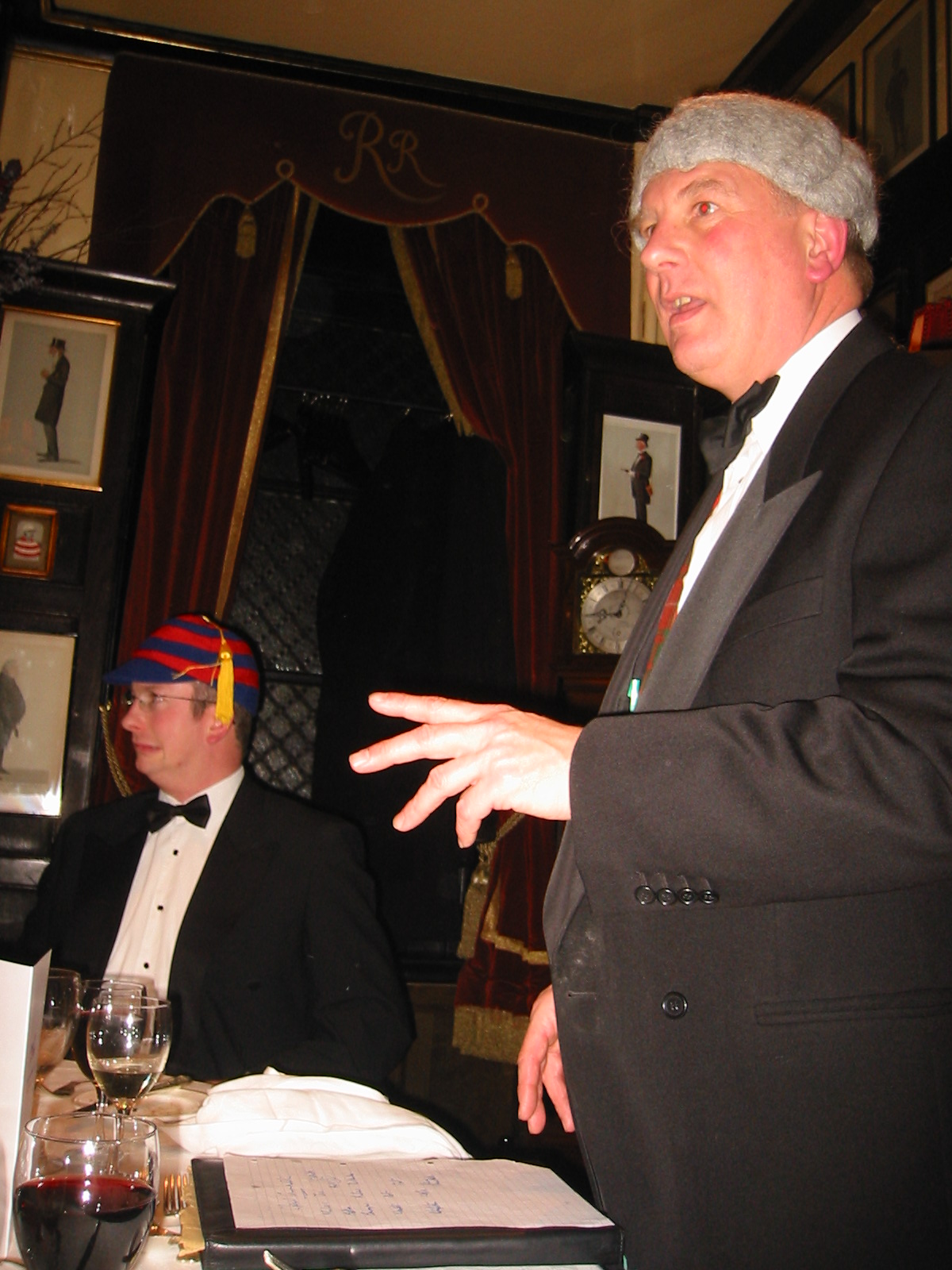
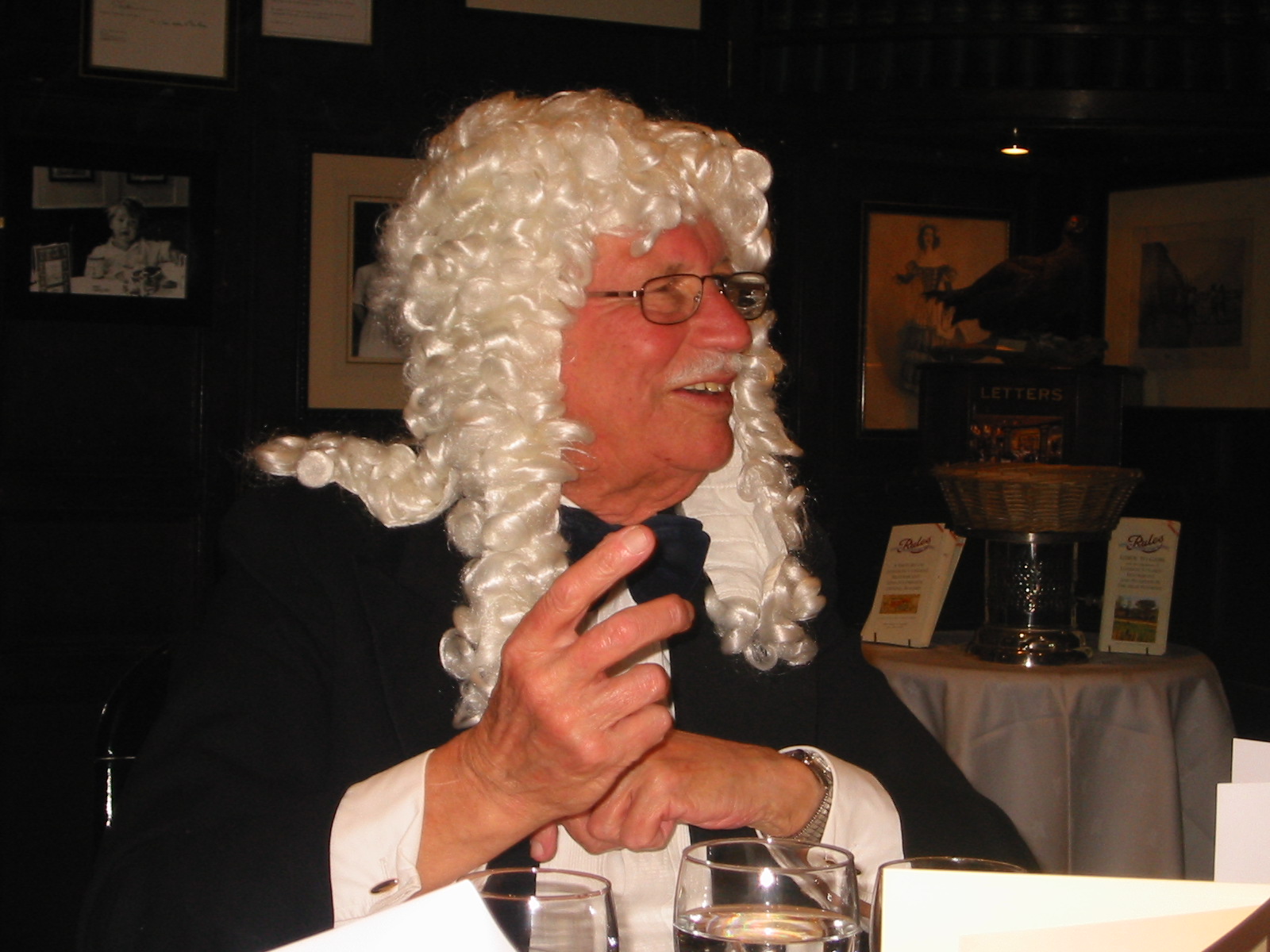
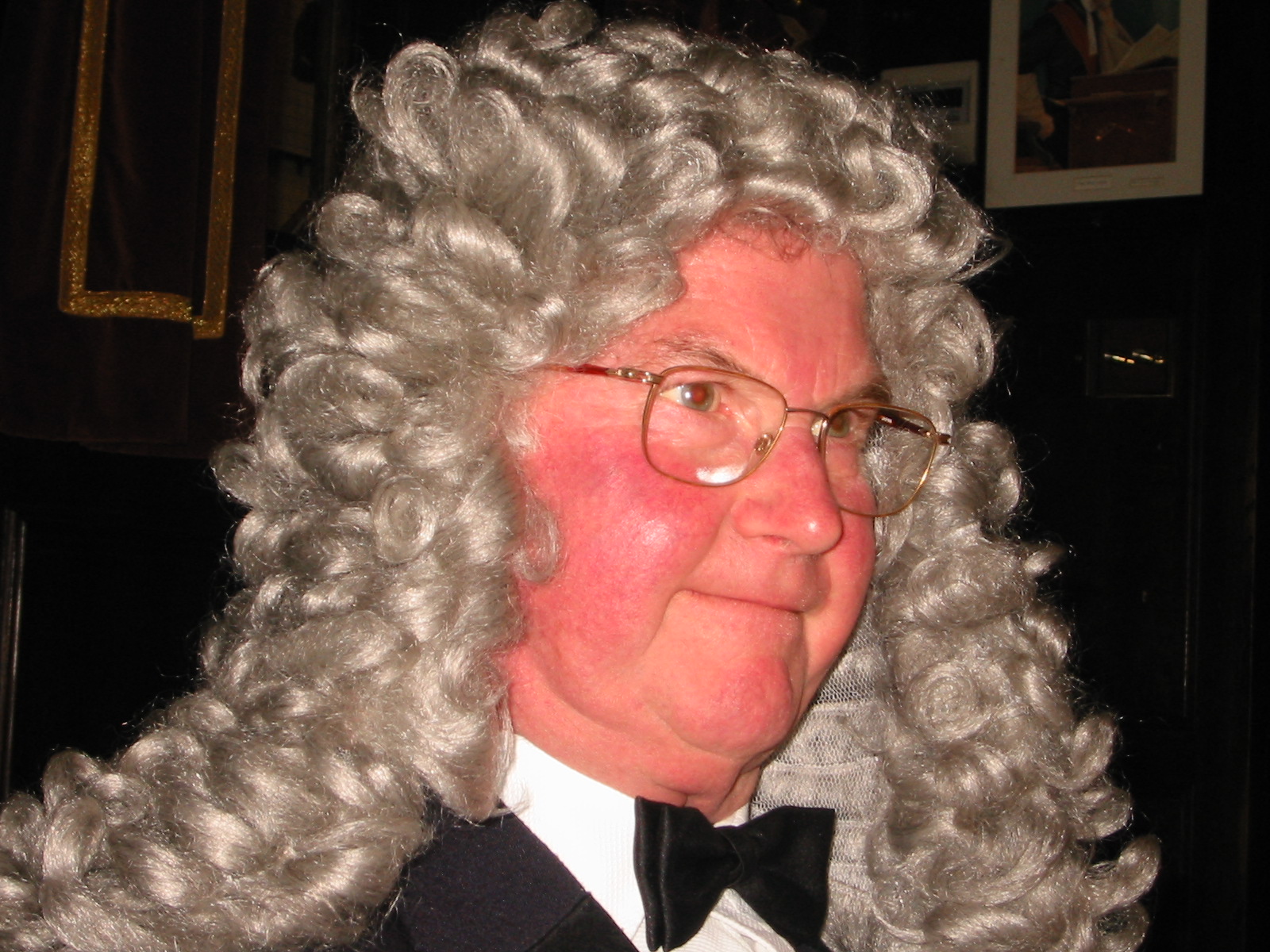
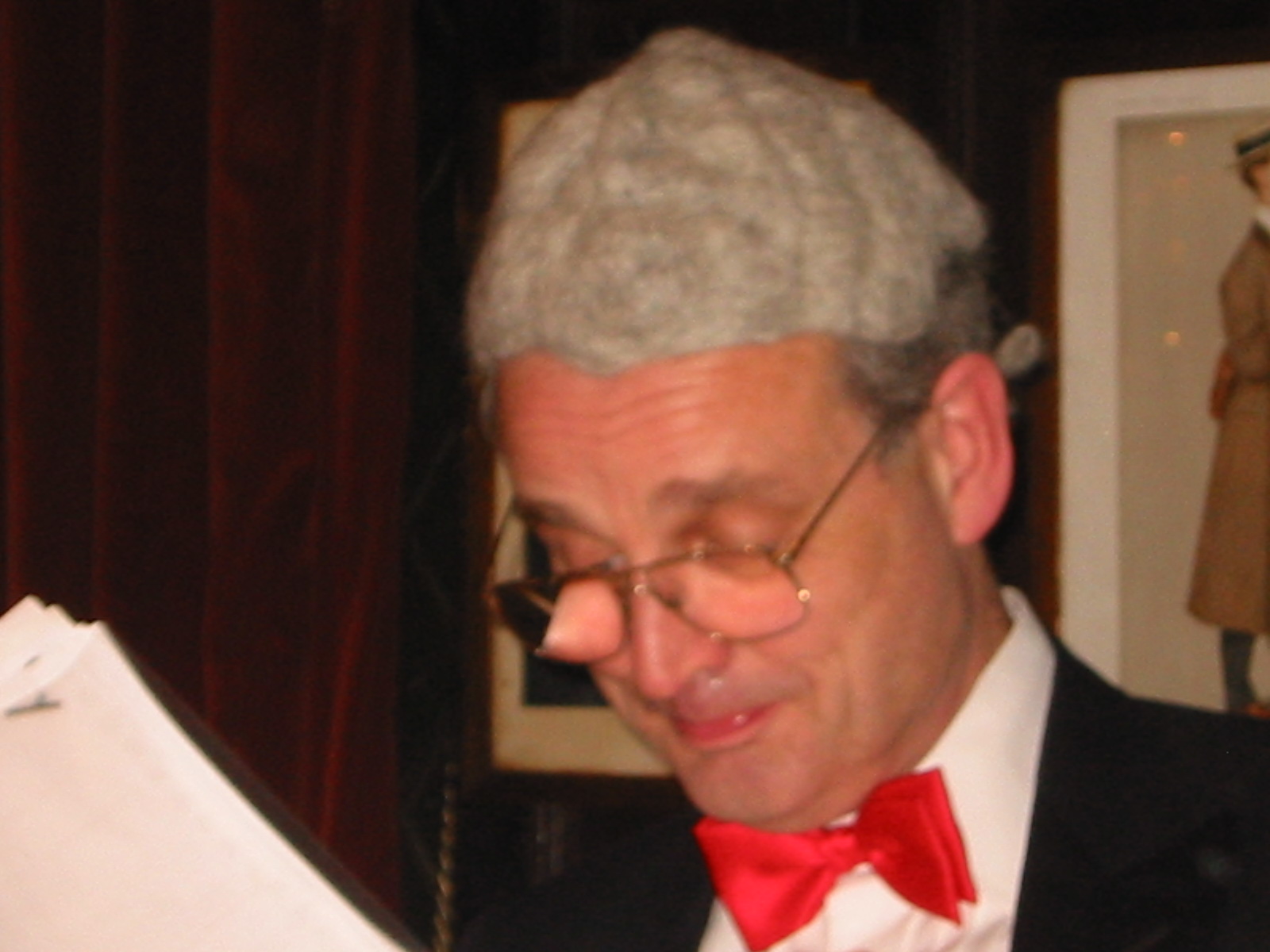
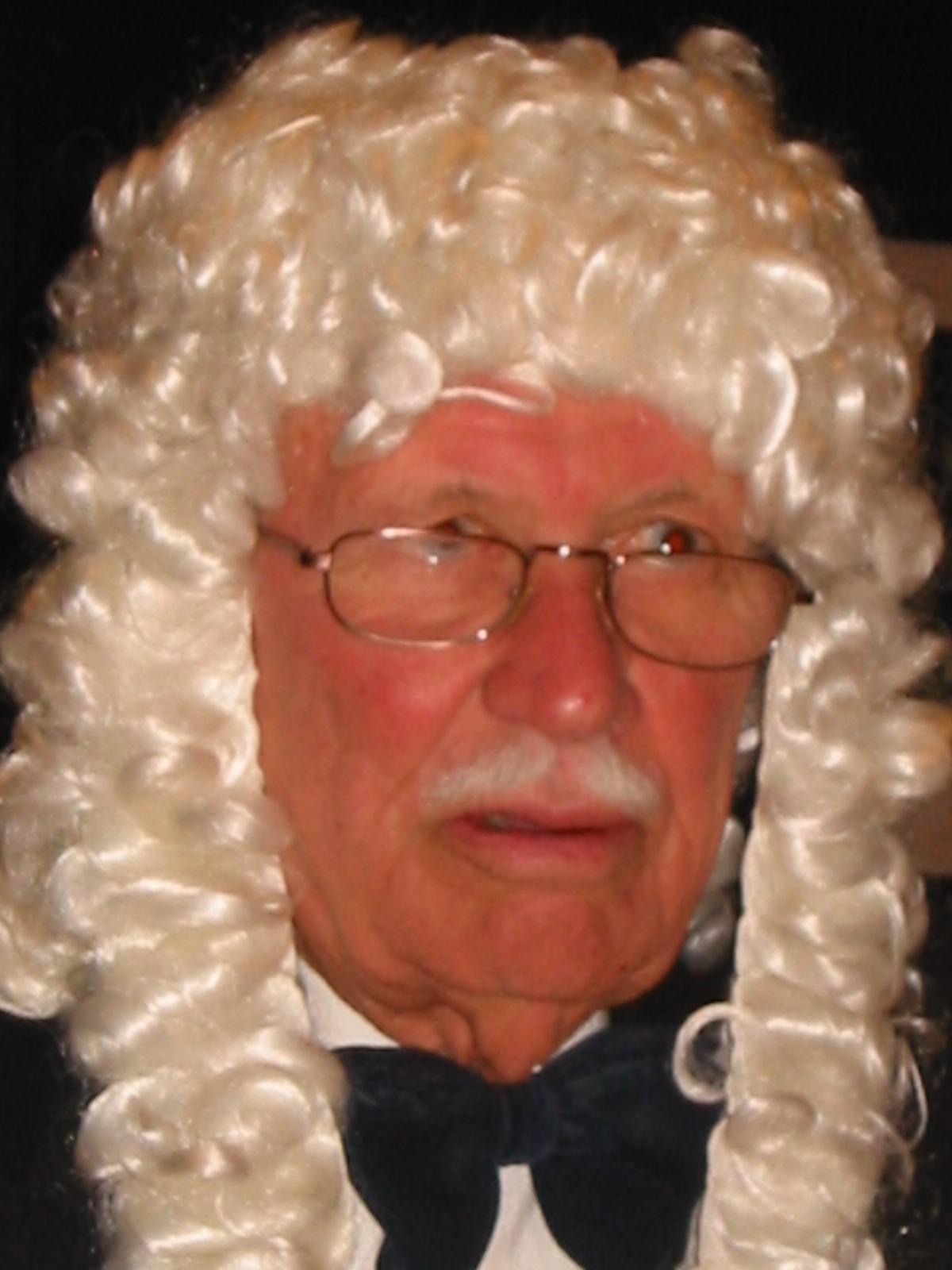
- Judges shall be present in correct attire, including the famous Tonsley Judge’s Wig.
- The Judges decision is final.
- The prize money shall be put towards the adrenaline pursuit of the winner’s choice.

Battle Marbles
Battle, East Sussex – 29th March 2002
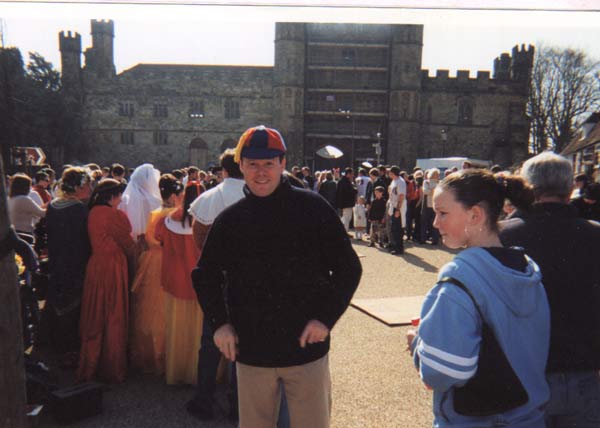
Good Friday and the Easter break signaled the real start to Operation Yelsnot and our first chance to witness the obscure, participating in the surreal and visiting the back of beyond in our quest for the weirdest sporting event of the year. “ it will not be in the easiest party I have ever been to, but I wouldn’t miss it for the world” as someone once said.
The British & World Marbles Championship
Tinsley Green, West Sussex – 29th March 2002
FINAL ENTRY
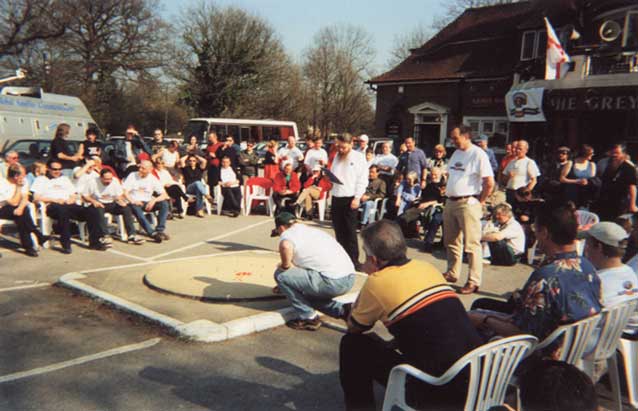
Anyone would think I was some sort of marbles aficionado! Fresh from Battle Marbles, I hot footed it to the site of the “Marble Massacre” in 1932, when the Black Horse at Hookwood first captured the award. Since then the competition has always been staged on Good Friday at the Greyhound pub in Tinsley Green. Over 50 teams attend and the event even attracts sponsorship from “Bombardier Beer” and television coverage from Sky.
The Hebden Bridge Annual Duck Race
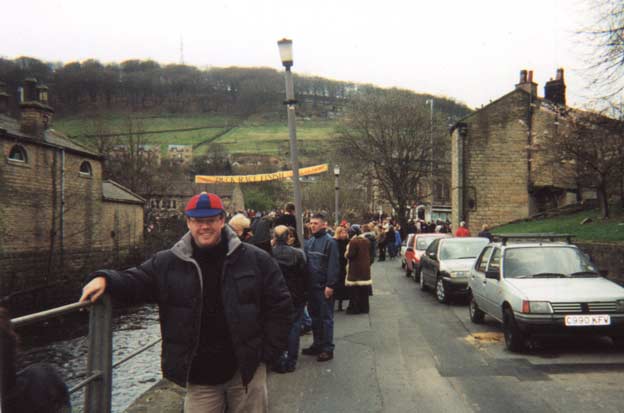
Hebden Bridge, West Yorkshire – 1st April 2002
Just how I got to Hebden Bridge is a long story, but on my arrival a lovely lady at the Hebden Bridge Tourist Office informed me that the race had yet to start and that if I was quick, Tonsley Events might even be able to enter as the ducks had yet to be released and a competitor could still be purchased. Having run to the start, I bought a plastic duck, gave it the same advice that my father had given me just before I swam the 100 metre crawl at school for the first time (namely to kick like hell!) and without further ado threw it in the refuse bin marked “Competitors”. What a way to prepare for the big race, poor thing!
The World Toe Wrestling Championship
Wetton, Staffordshire – 22nd June 2002
WINNER!
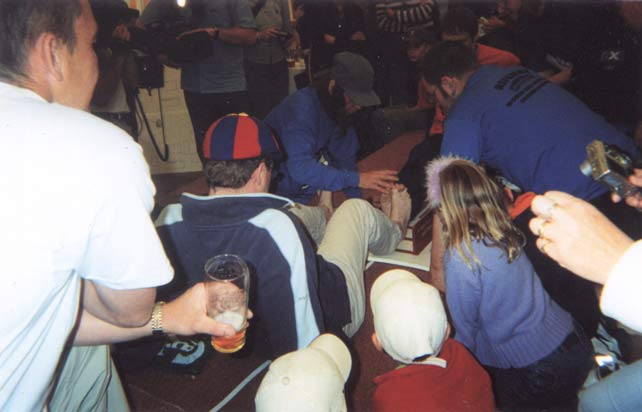
Bizarre! The sport was invented by the drinking regulars at the Ye Olde Royal Oak in 1974, in response to another poor British sporting summer. With the game originally only being played by the inhabitants of Wetton, regulars were particularly pleased with themselves as at last here was a game that the British were likely to dominate.
All this was to change however in 1977, when a one regular invited a visiting Canadian friend to enter. True to form, the Canadian promptly won, disappeared off home with the trophy and the pub decided to stop playing! Fortunately when the pub changed hands in 1990, the new landlord decided to resurrect the game and now it is open to competitors throughout the world.
In 1997, the sport first applied for Olympic recognition (which was declined), while soon after the Japanese were granted a licence to stage the first non UK national games.
The Annual Mountain Bike Bog Snorkelling Race
Llanwrtyd Wells, Wales – 13th July 2002
FINAL ENTRY
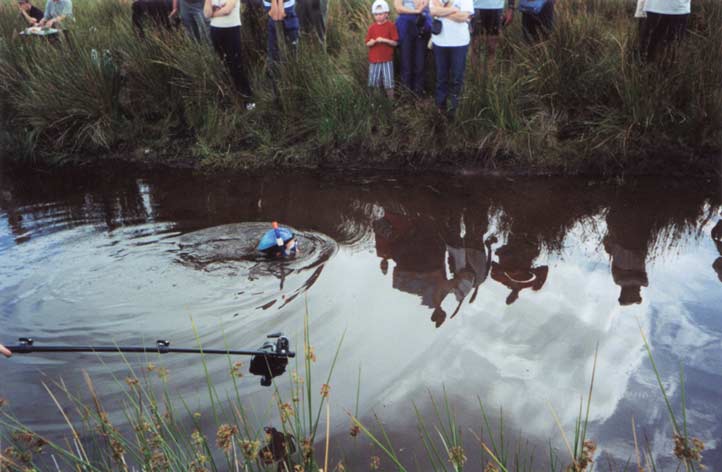
What yet to be explained part of a human being’s brain manages to link the pastime of mountain biking with the location of an old peat bog in the middle of the Brecon Beacons? And why decide that the peat bog should be 8 feet deep and full of water?
Riders start on dry land (well dry bog), position themselves on the bike and then cycle at speed into the trench. As they start to become submerged so the need for both the face mask and snorkel becomes apparent. Once in, and this is all against the clock, they have to navigate themselves down the bog, around a white post at the far end and then return back to the starting point. The person who does it quickest is deemed the winner.
The World Championship Woolsack Races
Tetbury, Gloucestershire – 3rd August 2002
VOID: RULE 11
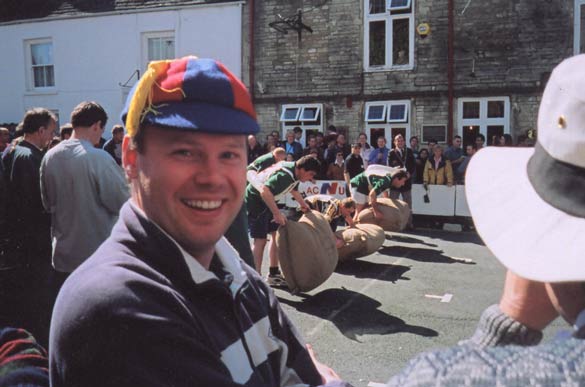
Amid the heady mix of the nationalistic pride that the Queen’s golden jubilee, the town of Tetbury ground to standstill as anticipation grew ahead of the 2002 running of the famous “Woolsack Race”. In essence, the race is very straightforward. Teams (made up either of 2 or 4 people) race against each other between two pubs, however the topography of the course (the hill has a gradient of 1 in 4) and the weight of the Woolsack (60 lbs) make it “somewhat” harder than it seems.
EVENT VOID under Rule 11 – Joe entered the same event!

Recruiting for King George
Stokesay Castle, Shropshire – 31st March 2002
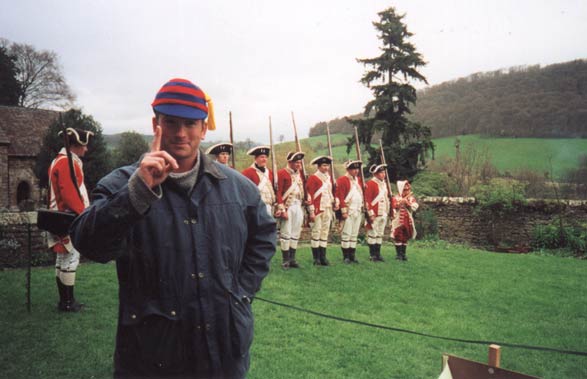
In the impressive fortifications of Stokesay Castle, Shropshire, I was transported back to the age and life of fife and drum. It was here that the opportunity to take the King’s shilling and discover about a soldier’s life at the Battle of Bunker Hill (1776) and other far-flung corners of the empire of King George was presented to me. However, the dash of the red coat, and flash of the musket fire of the 47th Regiment of Foot did none for my career aspirations and therefore I turned down the offer in lengthy pursuit of the Yelsnot challenge.
Hare Pie Scrambling and Bottle Kicking
Hallaton, Leicestershire – 1st April 2002
FINAL ENTRY
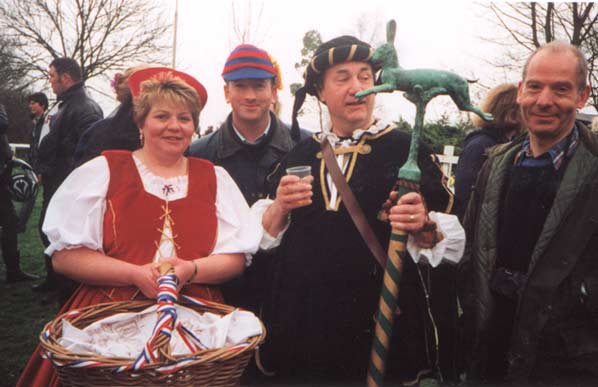
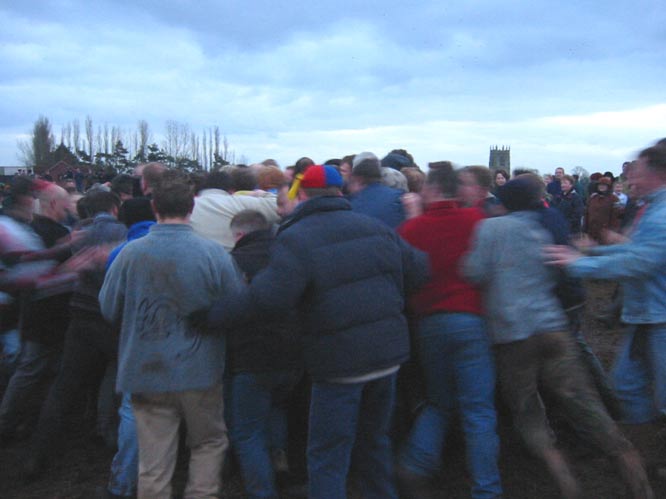
This seventeenth century custom is a contest between the Leicestershire villages of Hallaton and Medbourne. A large Hare Pie is presented to the rector to bless and distribute to the assembled crowds. Sacks containing the Pie, held at each end are swung to catapult the pieces of the pie into the air and the assembled crowd scramble madly for them. Immediately following this, the bottle (small wooden barrel) is thrown onto the ground and it signals the start of the contest. 75 people or more, struggle forwards and backwards in no clear pattern as each village tries to get the “Bottle” over the defined boundary of their own village. There are few rules and the giant scrum takes about 4hrs in total! Scrambling for a morsel of harey pie is one thing but participating in a game of bottle kicking with neither kicking nor a bottle?!
The British Grand Prix – Lawn Mower Racing
Billingshurst, Sussex – 4th May 2002
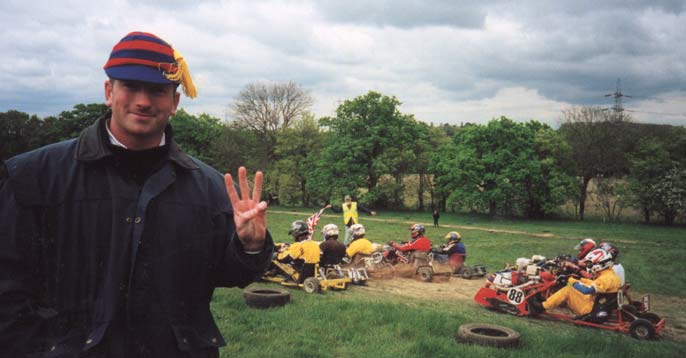
Formula One, Super Bikes or the WRC it was not but it dates back to when the world was young and beer was cheap (1973??). Four categories on show: Category 4, small four wheeled garden tractors – very much the heavyweight brigade, Category 3, a highly competitive class featuring many wheel driven domestic mowers, Category 2, somewhat more aggressive but being only an inch off the ground surface speed and aggression is a must for these roller driven mowers. Finally category 1 – certainly no less fierce but somewhat more sedate. The competitors sprint behind their handheld mowers for a one-lap four man relay team. Eccentric ‘petrol heads’ tinkering with garden equipment – a dangerous combo.
The Sheep Grand National
Telford, Shropshire – 5th May 2002
FINAL ENTRY
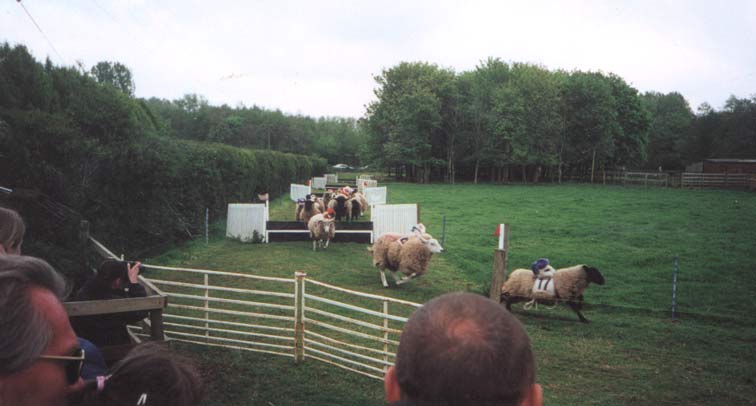
Day at the races – I tried to check the Racing Post and though the meeting did not feature, I was encouraged that the going was good to firm. On arrival, I found that the competitors were Blackface and Wensleydale! I had Tonsley Events sponsor a runner – “Henry Hotspur” and with their Jockeys saddled up they roamed around the start confidently. I could see 18″ high hurdles including “Spinners Chair”and “Fleecers Brook”. Then they were underway, 17 sheep cornered the bend and came into view and the crowd cheered they got into their stride and opened up down the back straight. The field rounded the corner and dipped at the tape. Was it Henry I thought, clasping my bookies ticket but alas, what I had assumed was muscle hiding under the thick fleece was a portly jumper with little pedigree. An extraordinary event of a sheer (excuse the pun) bizarre nature.
Cheese Rolling
Brockworth, Gloucestershire – 4th June 2002
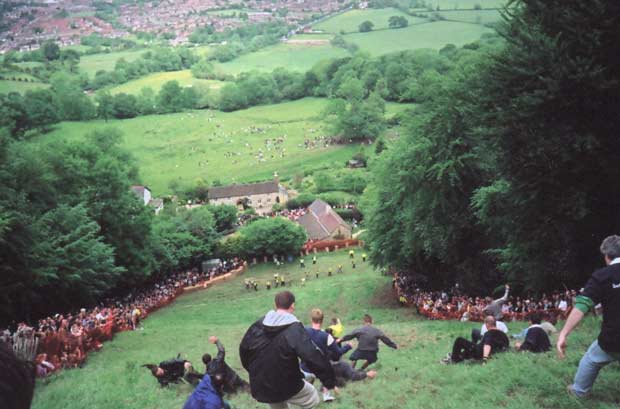
The feared Coopers Hill was rammed full of revellers gathering to witness one of the oldest customs dating back hundreds of years. The extraordinary folk hurl themselves down the hill, some breaking arms, and some with loss of blood. The reason, I hear you ask, is centred around a large round Double Gloucester cheese, which is hurled moments before the competitors launch down the slope/cliff for them to catch. Winners were awarded with it on their inevitable arrival in the first aid tent at the bottom of the hill. Well I was not sure whether the competitors were really sound in mind when they entered the race but they surely weren’t when they finished.
The World Championship Woolsack Races
Tetbury, Gloucestershire – 3rd August 2002
VOID: RULE 11
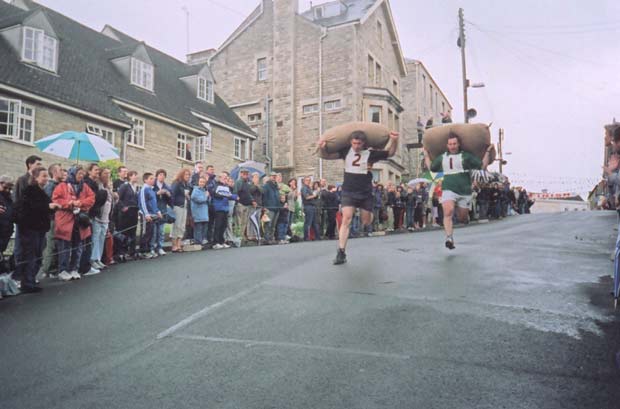
This World Championship has its origins dating back to the 1600s. This race involves carrying a 60lb sack of wool up and down the 1in4 Gumstool Hill between two pubs in this Cotswold town, a total distance of 280yds. At the gun, the individuals career off down the hill in full flight dangerously close to collapsing under their heavy loads to then pass over to their somewhat unfortunate colleagues who have now to do their leg in reverse – up the hill. The teams of four relay the sacks attempting to beat the world record time of 3mins 27.34 secs set by the Gurkhas. A somewhat masochistic and painful pass-time.
EVENT VOID under Rule 11 – Woolfy entered the same event!
The World Championship of Flounder Tramping
Palnackie, Scotland – 3rd August 2002
FINAL ENTRY
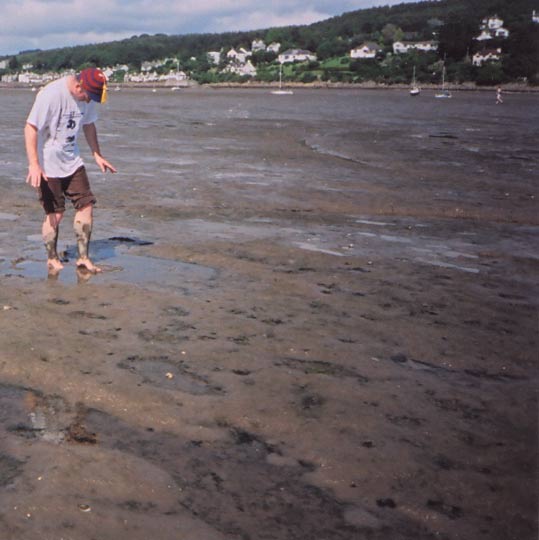
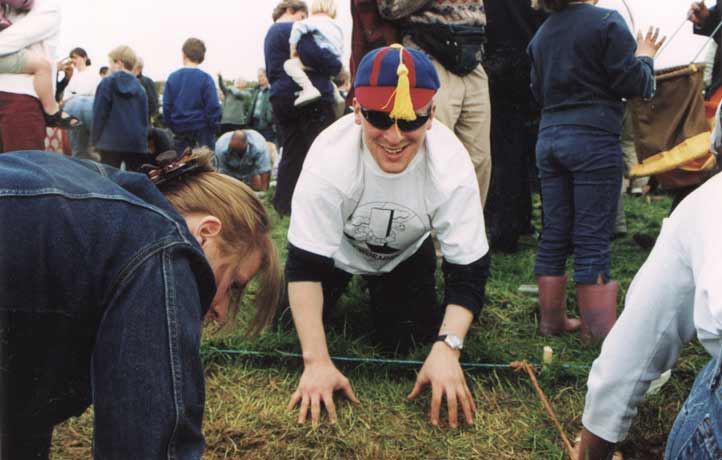
The tide was out in the Orr estuary and it was early August, a combination that spells… Flounders. Competitors for this extraordinary World Championships really are from all over the world. In shallow pools on the surface of the mud lie the flounders fish, hidden just below the surface. Tramping is a cross between Trampling and Trapping. The fish are not trampled on but just gently secured/trapped with the foot in order to then be picked up alive and put into the competitor’s catch bag. It is vital that at the weigh-in the fish are still alive or it will not count! I found none but others did and between 1300 -1600hrs the competition raged with approximately 100 people trudging around in the mud up to their waists and one person wearing a Tonsley colours cap in the process. Weird Fish!
EVENT VOID under Rule 11 – Woolfy entered the same event!
Snail Racing
New Galloway, Scotland – 4th August 2002
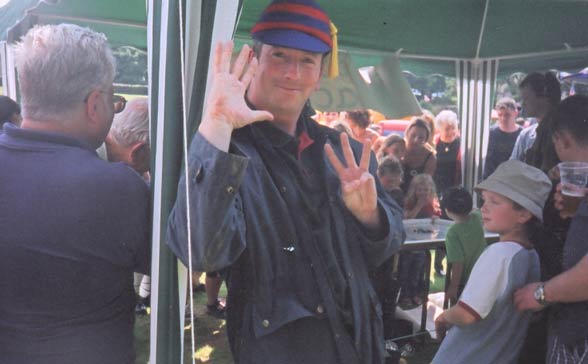
An official racetrack lures all walks of society and gamblers, race enthusiasts, animal welfare, the French and a heap of snails joined me. The snails, the competitors, were decked out with their own numbers and colours and were released simultaneously from the centre of a circular board once the bets have been placed and the ownership deals negotiated (at a fee) with the attendant bookkeeper. All 8 runners including Dicky, Neeps and Tonsley hurtled off but the first race was clearly won, by a short antennae, by Dicky as he managed to clear the line first and arrive at the pool of MacEwans Best at the end of the track – alcoholic Scottish Snails!
Tossin’ The Sheaf
New Galloway, Scotland – 4th August 2002
This contest born in Scotland, when harvesting was more primitive and the oats and barley were all tied in sheafs ready for stacking. Using a pitchfork, the farmers, had to pitch the sheafs high onto the big stacks or into hay barns. At the end of the harvest the workers would gather to see who was the better pitcher. The modern day contestants from farm hands to Olympic Gym members alike, hurl the sheafs using the pitchfork over the heads and over a bar which after each round was inched skyward. The winning height during this contest of brawn was 23.75 foot and won by a gargantuan contestant.
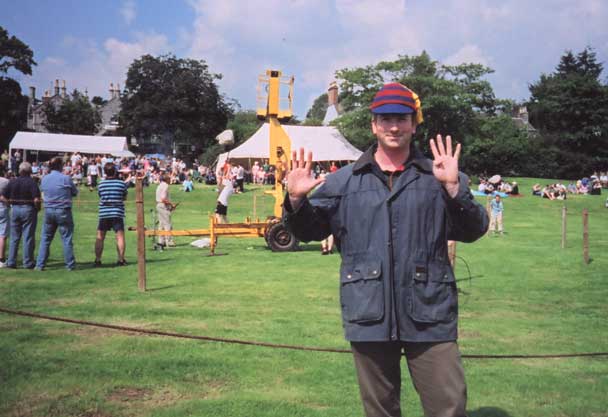
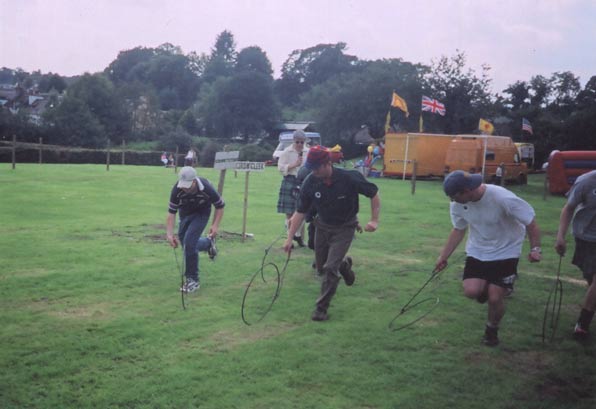
The World Championship of the “Gird ‘n’ Cleek”
New Galloway, Scotland – 4th August 2002
The World Championships of the “Gird ‘n’ Cleek”? Girds are an iron hoop about 2ft in diameter and the “Cleek” is the guiding and propulsion instrument attached. The objective is to propel the gird using your cleek whilst sprinting behind it around a 75yd circular track marked out on an uneven field. The Tonsley capped participant decided to enter and following two thrilling rounds and a semi final, lined up next to two kilted ex-World Champions. This was to have to be the cleek of my life to take on this field. The gun then went and to the music of the Benny Hill show I shot off and tucked in behind the leader. I thought all I had to do was to hit the front around the final bend and the World Championship was mine…and I did…but then my cleek steering went to pot and I hobbled back in third.. So close…but watch me next year.
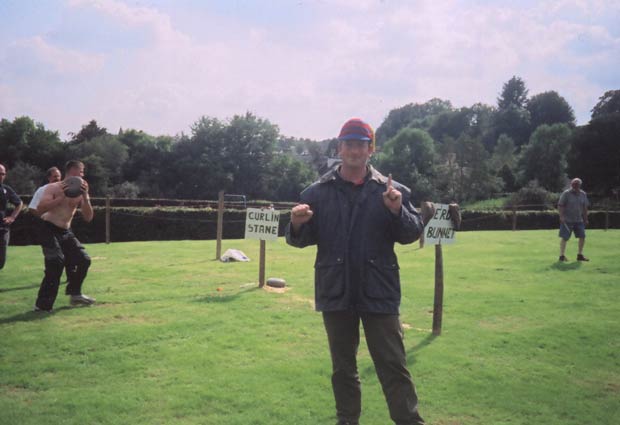
Hurlin’ the Curlin’ Stane
New Galloway, Scotland – 4th August 2002
…and I thought the Sheaf Tossers were big but these boys made the others look lightweight. Curling Stones are, of course, used on the ice rinks for the Scottish invention of the game Curling, known in Scotland as “the roarin’ game”. So with a little less brushing, the handles taken off, the giants go to play marbles with them and hurl them as far as they can. It was with three hurls each that the winner struck the 21 foot mark and collected the prize booty, a haggis. The second prize was a Cloottie Dumpling and the third a Scotch Pie. The big guys clearly needed feeding up.
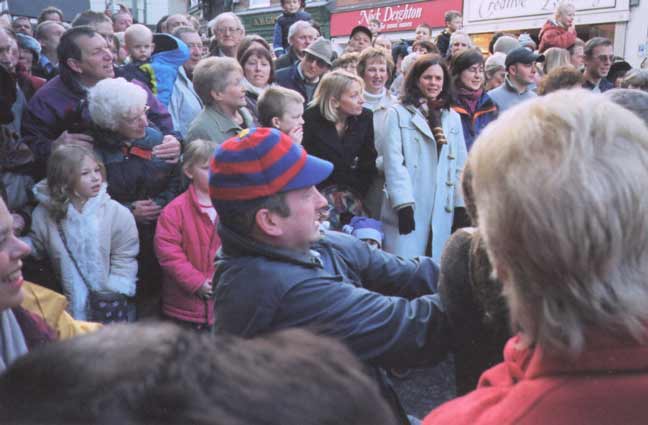
Boxing Day Pull
Ludlow, Shropshire – 26th December 2002
The Police cordoned off the road between the two old coaching inns in Ludlow. A huge rope was then brought out and fed from the back of the Bull across the road to the back of the Feathers. Man folk (and some more hardy women folk) then found their positions and took up the rope. At the front of the Feathers rope were the regulars, the brothers grim, front line men, shoulder to shoulder – the Bruces.
“Take the strain!” the crowd hushed, “Heave!” the crowd erupted. The rope and those attached, lolled up and down like a restless ocean. But alas it was the Bull that was to triumph and we went down 2-0 for another year.
The Maldon Mud Race
Maldon, Essex – 29th December 2002
On the off, the 150 athletes crashed headlong into the river and began wading through the freezing water with the quickest hitting a solid mud wall on the opposite bank. However by the time the twelfth wildebeest had arrived, the bank, and the flats beyond, were well broken up and the going, at best, slow. The rest resorted to crawling on all fours around the course in what could only be described as a quagmire of Somme-like proportions. After half an hour of crawling, with sheer exhaustion, the competitors once more entered the river for the return crossing and to the finish line. Deepest winter, driving rain, thigh deep mud, racing on all fours and with 3,000 people laughing at you – no thanks.
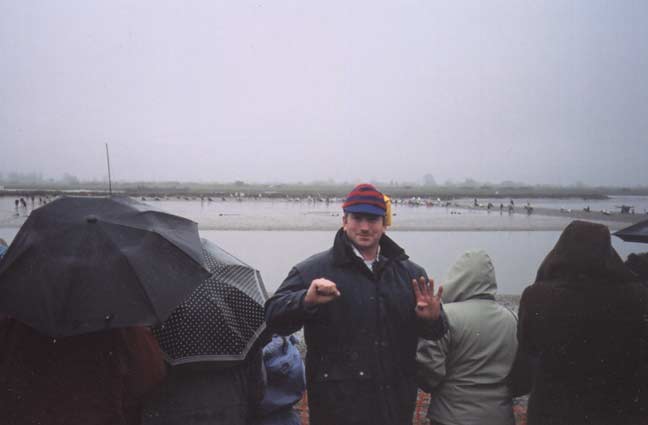
UK Tough Guy Competition
Wolverhampton, West Midlands – 26th January 2003
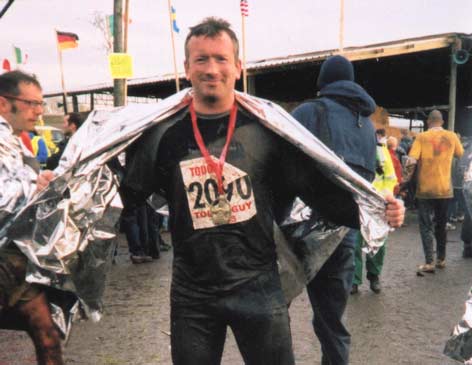
Around 3,000 joined me for the 2003 challenge of the UK Tough Guy Competition. The challenge included 10 mile cross country run, electrified walls, underwater tunnels, barbed wire and stretches of burning stubble but what really made the event so totally obscure were the hundreds that dressed either as infantrymen from Rorke’s Drift or their Zulu warrior counterpart in leopard skins! However, draped in a foil blanket and with a large medallion around my neck I had staggered over the line in 808th. This was madness on a massive scale but one, which I can now proudly say I came, saw and conquered the killing fields.

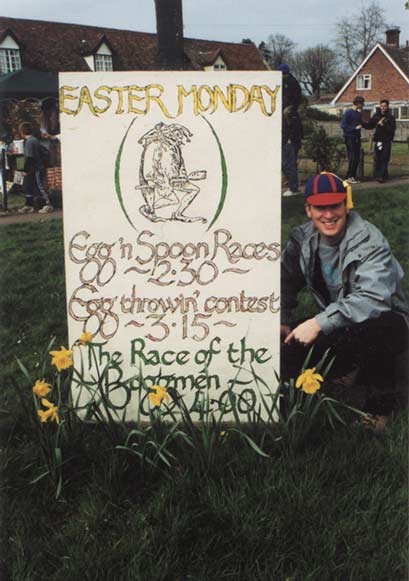
Egg Throwing
Great Finborough, East Anglia – 1st April 2002
FINAL ENTRY
Competitive in almost every thing the East Anglians do, the egg throwing contest at Great Finborough is certainly no exception. Each team consists of 2 people who face each other. Between them is a rope about 20 ft high. One member then proceeds to throw a raw egg to his/her team mate over the rope. If the team mate successfully catches it on the other side without it breaking, then both team members take a step backwards. The team that manages to throw and catch the egg without it smashing from the furthest distance is the winner.
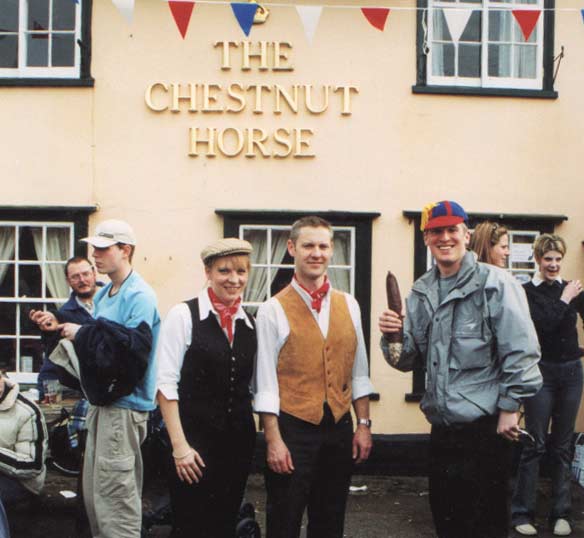
Race of the Boggmen
Great Finborough, East Anglia – 1st April 2002
FINAL ENTRY
Every year at Easter, the Chestnut Horse hosts the famous Finborough Race of the Boggmen. Dating back to 1897, when it was traditional for sowing to start around the East period, each farmer hired a team of 6 ‘min’. The team that Joseph John Hatton hired for Boyton Hall fell out of favour after a drunken brawl on Good Friday. The ‘min’ were sacked and word soon got out that more men were needed and on Easter Monday a large number of ‘min’ set out from Boyton Hall. Meanwhile, Joseph John had re-employed the original team. But all the ‘min’ appeared for work. To resolve this problem James Boggis from Oulton, suggested that the contract be thrown out of the window and the first ‘min’ to get it across the threshold of the local public house won the job.
This event is re-enacted each year in period costume, although many would argue it is more like a cross-country run followed by a huge pub brawl, none-the-less a highly enjoyable afternoon.
The Annual International Festival of Worm Charming
Blackawton, Devon – 5th May 2002
FINAL ENTRY
Worm charming is a skill perfected in the rural west-country, a skill that reflects all the ideals of ‘true’ and ‘just’ country folk – perseverance, patience, cunning, but above all stupidity to name just a few. After a small village parade the ‘Tonsley Trappers’ lined up a strong but inexperienced side. Each worm charming team has a ‘Charmer’, ‘Catcher’ and ‘Counter’ all of whom have crucial roles in the team. After ‘Worming Up’ (which involved preparing the ground for charming) we then had 15 minutes to coax as many worms out of the ground as possible, a variety of skills were used including dancing, singing, patting, juicing and jumping. Although the ‘Tonsley Trappers’ did not win the competition, the team wriggled ahead of the pack.

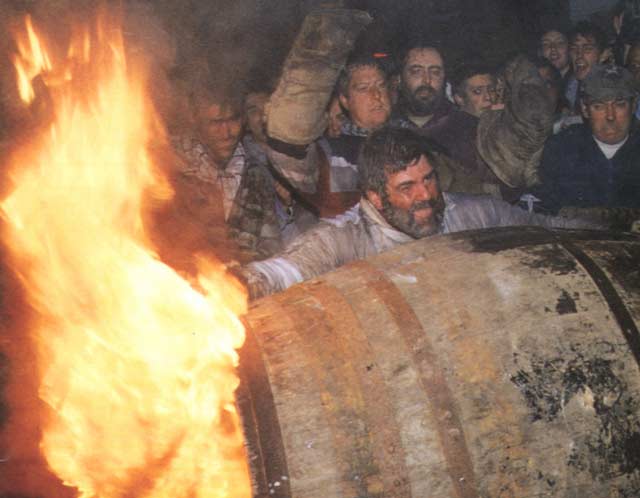
Tar Barrell Racing
Ottery St Mary, Devon – 5th November 2002
FINAL ENTRY
We left London for the 3 hour drive to Exeter after work one Tuesday afternoon to witness this event and we returned to be in bed by 1am! That was pretty extreme in itself on reflection at breakfast the next morning! But the BBC once described this as the fourth most extreme sport in the World (after three of America’s craziest creations and just before Finland’s “World Wife Carrying Championships”!). The annual event dates back several hundred years when spectators were often seriously injured by the teams from the village’s pubs racing their tar-lined barrels through the village square on their shoulders with aggressive flames roaring out of the open end. Not a lot has changed, as we discovered when we were sent hurtling to the floor numerous times.
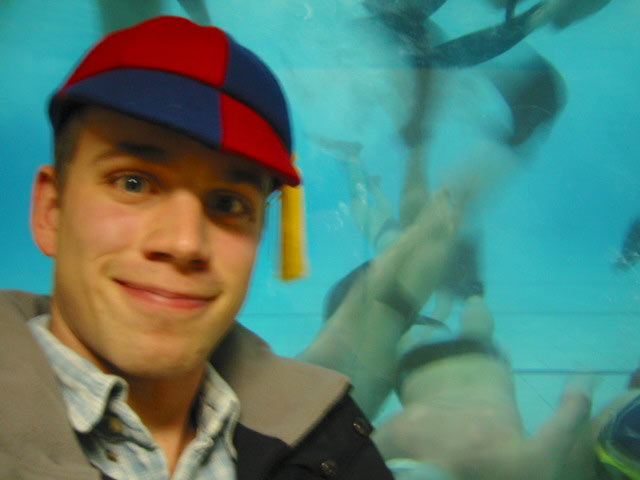
Underwater Hockey European Championships
Crystal Palace, London – 16th November 2002
Anyone would think I was some sort of marbles aficionado! Fresh from Battle Marbles, I hot footed it to the site of the “Marble Massacre” in 1932, when the Black Horse at Hookwood first captured the award. Since then the competition has always been staged on Good Friday at the Greyhound pub in Tinsley Green. Over 50 teams attend and the event even attracts sponsorship from “Bombardier Beer” and television coverage from Sky.
Sami Annual Reindeer Herding
200 miles north of the Arctic Circle, Sweden – 20th December 2002
FINAL ENTRY
Just how I got to Hebden Bridge is a long story, but on my arrival a lovely lady at the Hebden Bridge Tourist Office informed me that the race had yet to start and that if I was quick, Tonsley Events might even be able to enter as the ducks had yet to be released and a competitor could still be purchased. Having run to the start, I bought a plastic duck, gave it the same advice that my father had given me just before I swam the 100 metre crawl at school for the first time (namely to kick like hell!) and without further ado threw it in the refuse bin marked “Competitors”. What a way to prepare for the big race, poor thing!
The Haxey Hood Game
Haxey, Yorkshire – 6th January 2003
FINAL ENTRY
Bizarre! The sport was invented by the drinking regulars at the Ye Olde Royal Oak in 1974, in response to another poor British sporting summer. With the game originally only being played by the inhabitants of Wetton, regulars were particularly pleased with themselves as at last here was a game that the British were likely to dominate.
All this was to change however in 1977, when a one regular invited a visiting Canadian friend to enter. True to form, the Canadian promptly won, disappeared off home with the trophy and the pub decided to stop playing! Fortunately when the pub changed hands in 1990, the new landlord decided to resurrect the game and now it is open to competitors throughout the world.
In 1997, the sport first applied for Olympic recognition (which was declined), while soon after the Japanese were granted a licence to stage the first non UK national games.

Day of Reckoning
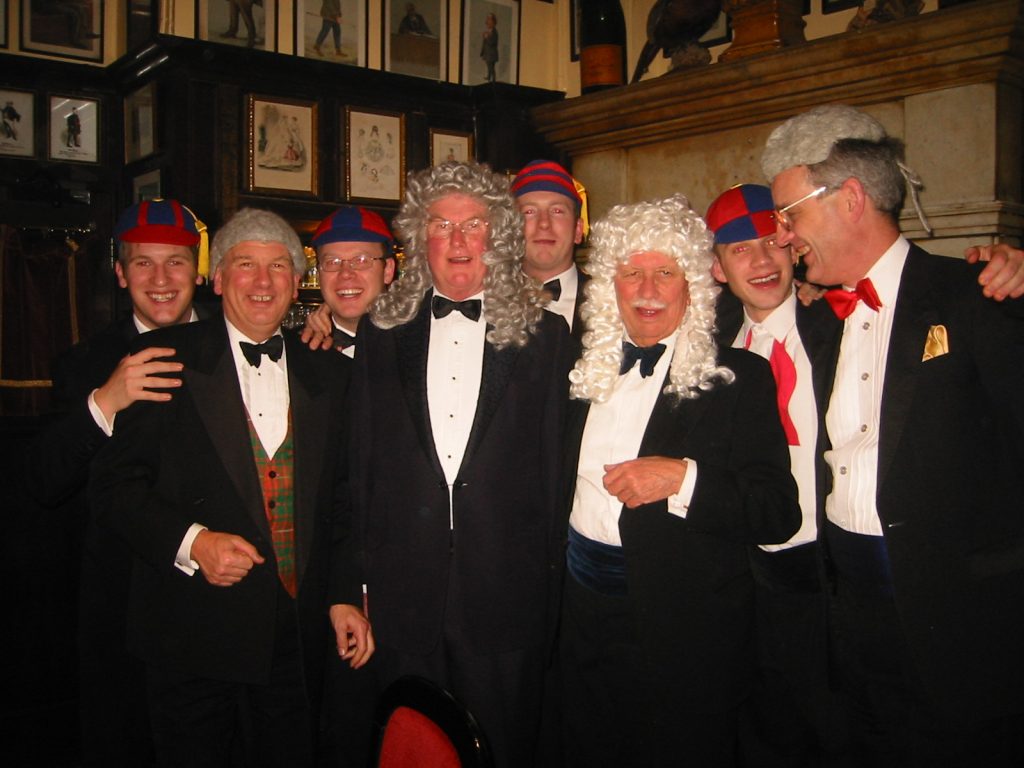
The Challenge was the brainchild of the four of Tonsley crew during an alcohol-fuelled evening in the Tonsley. The objective was simple: to find the weirdest sporting event in a year and attend it. The judging… perhaps not so simple.
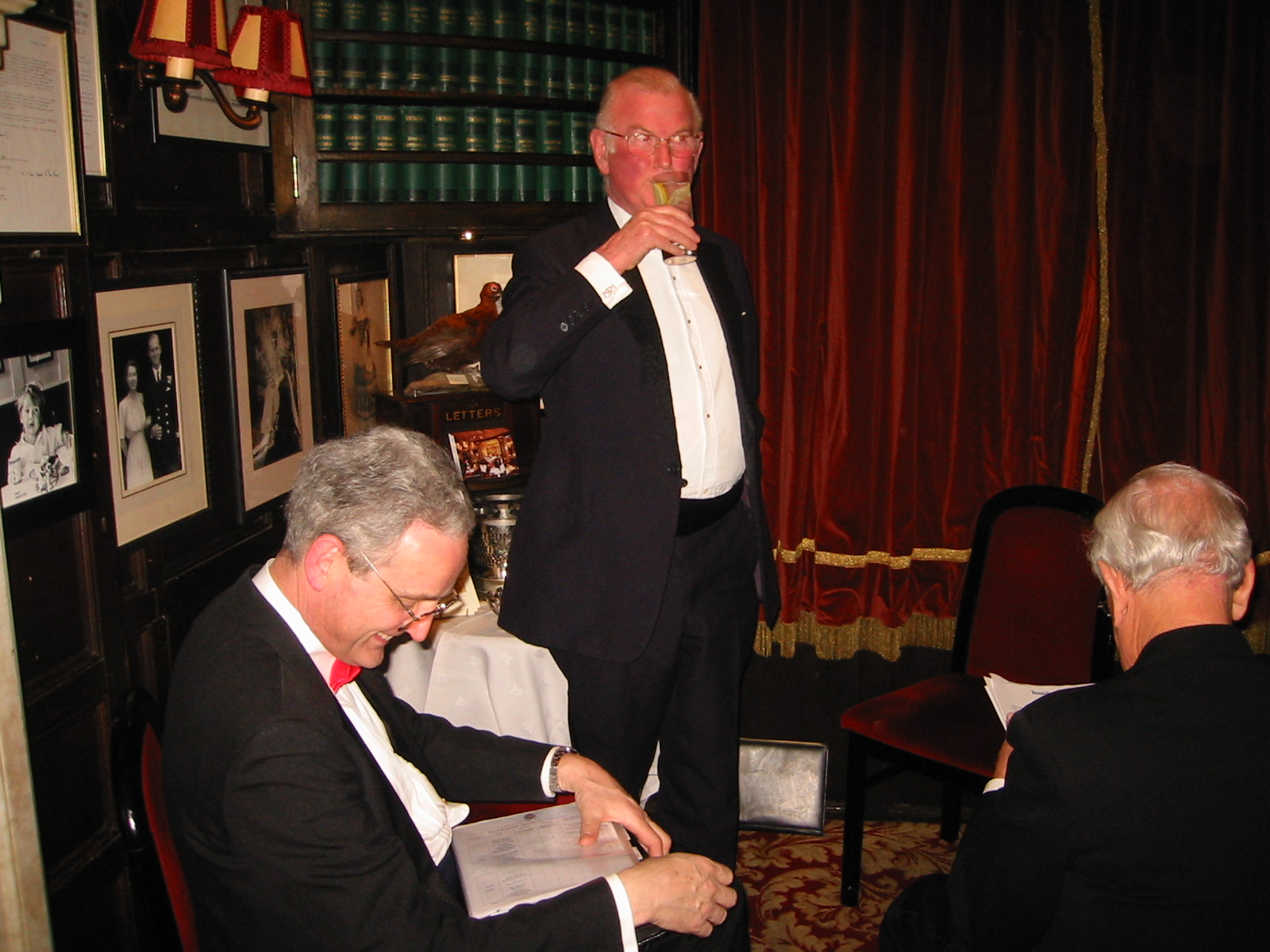
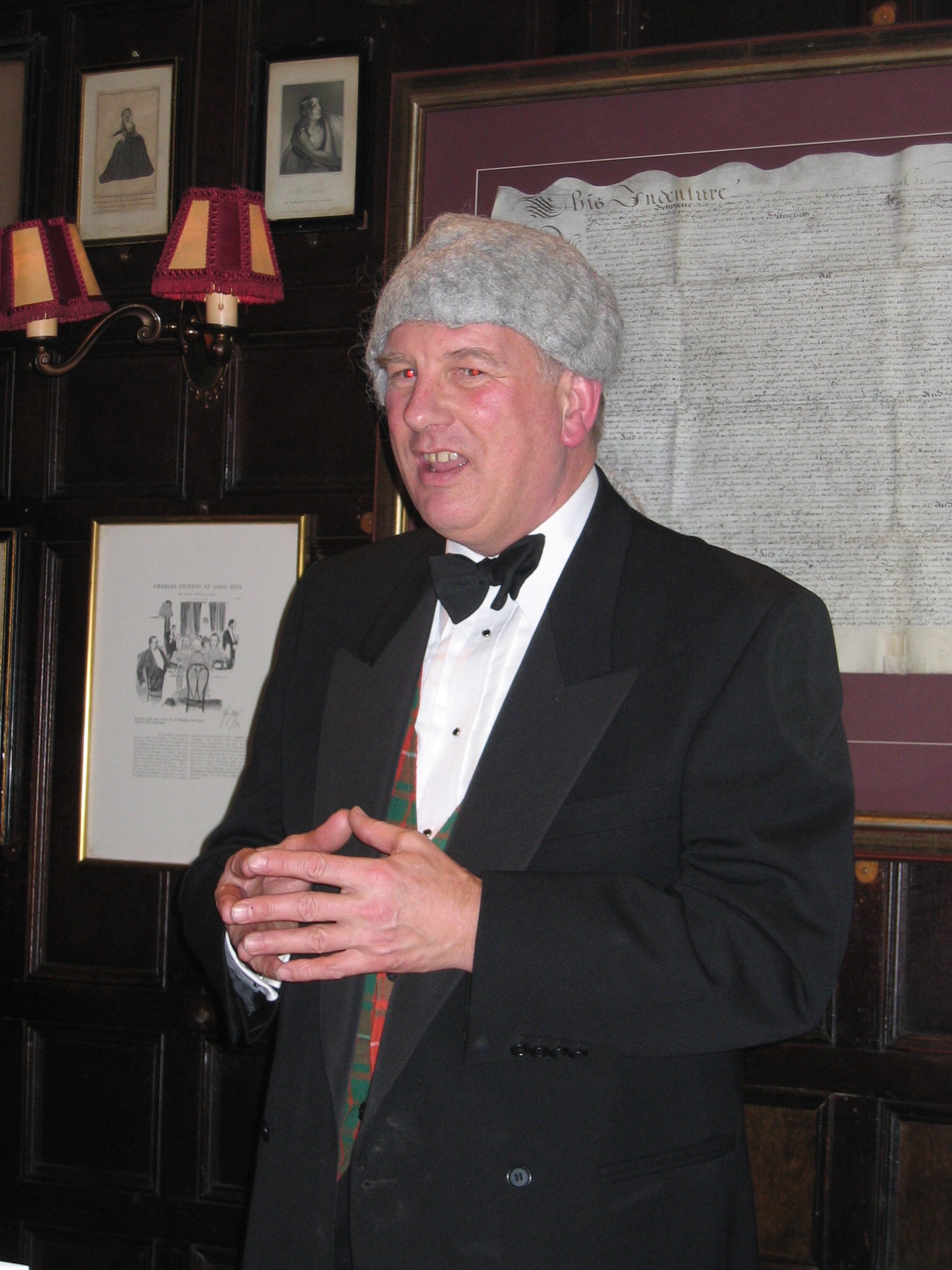
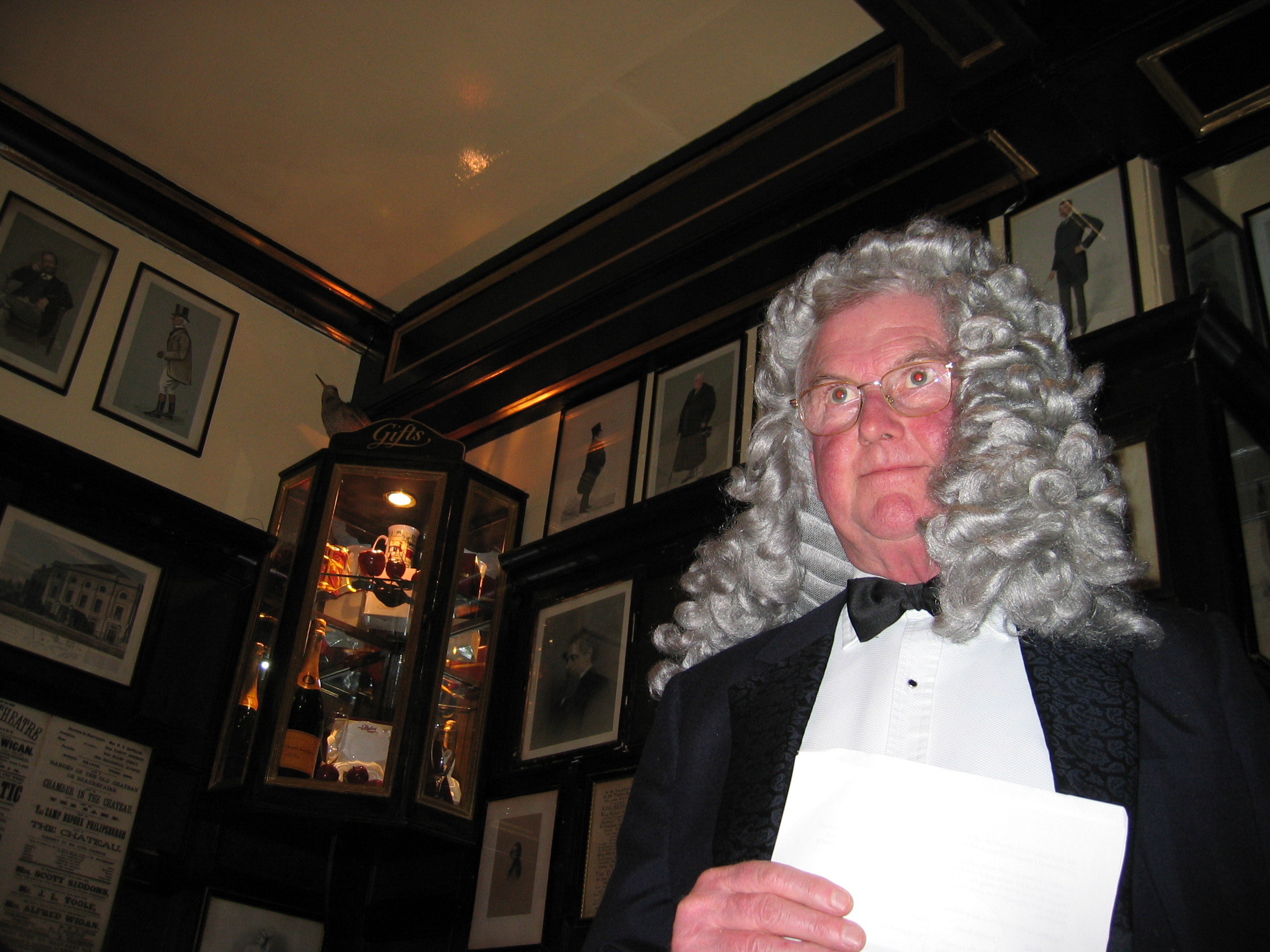
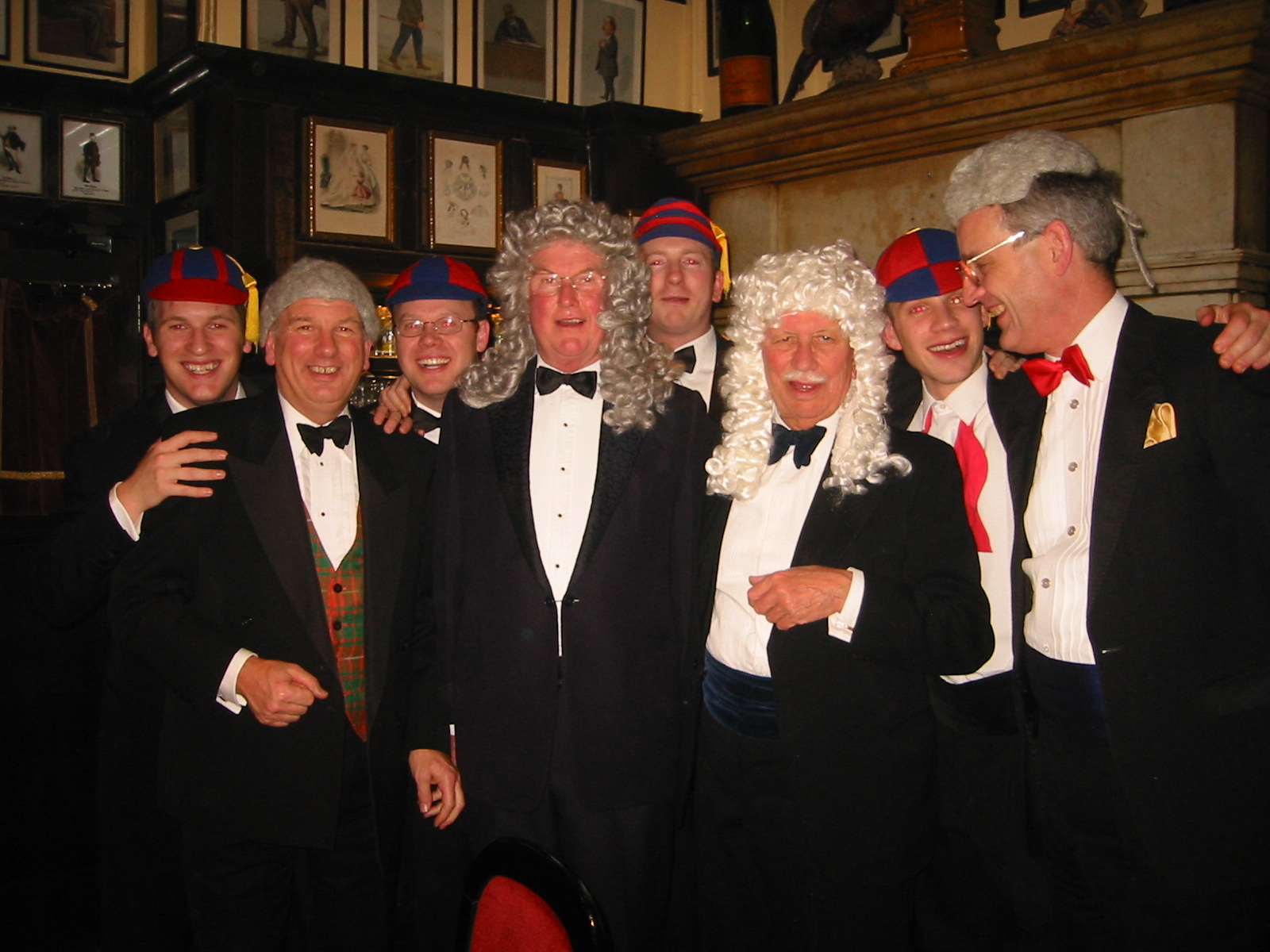
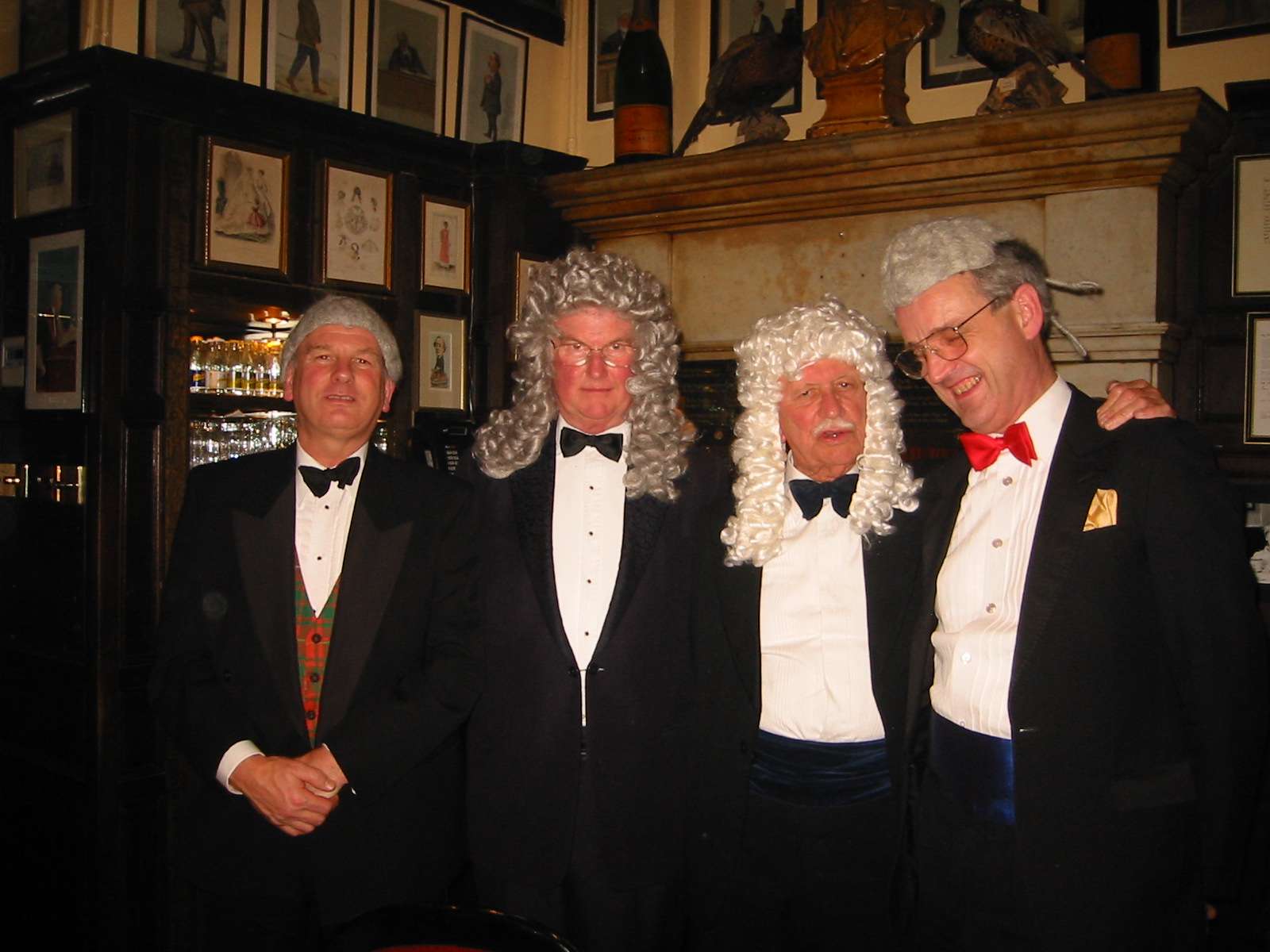
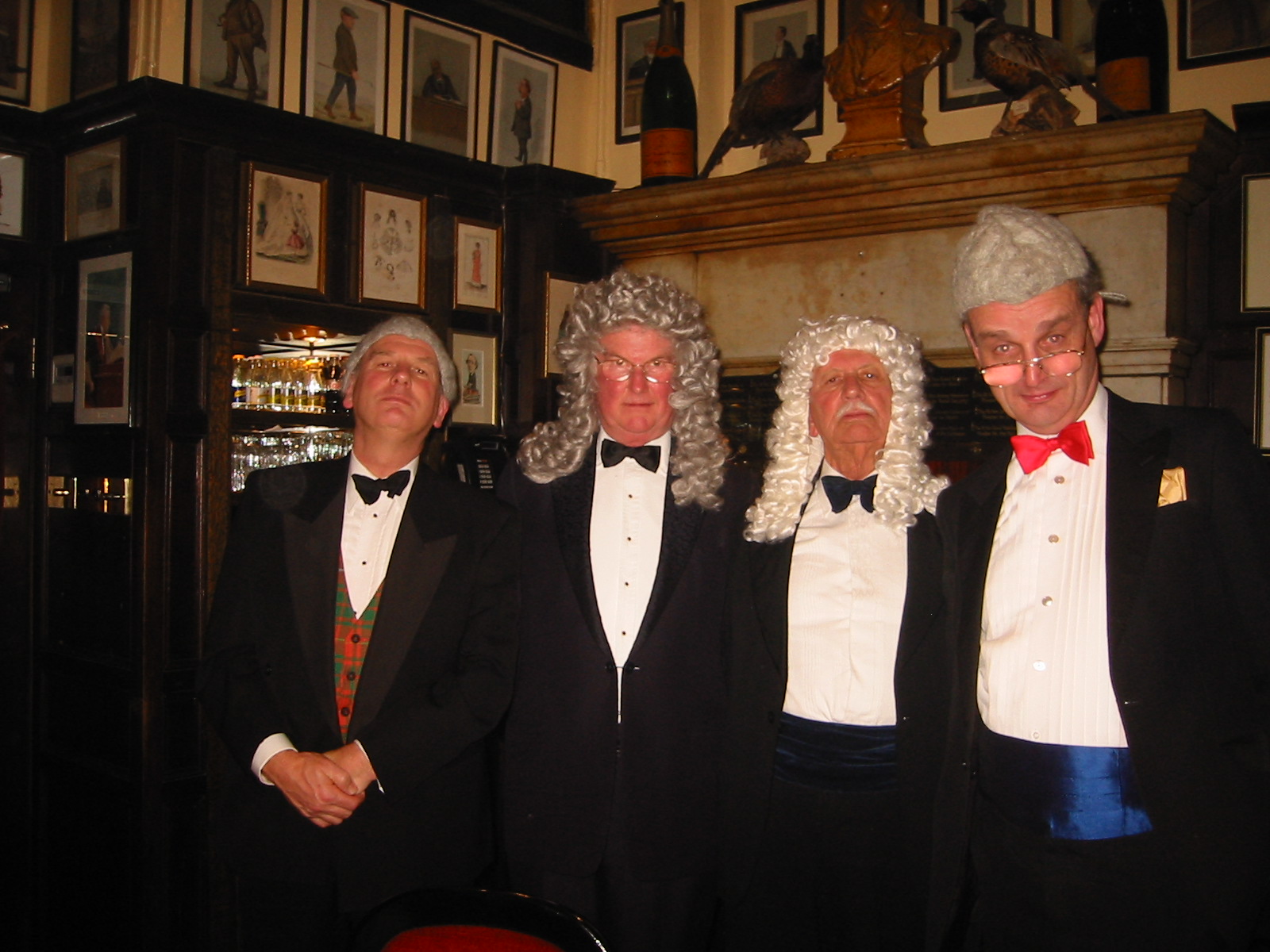
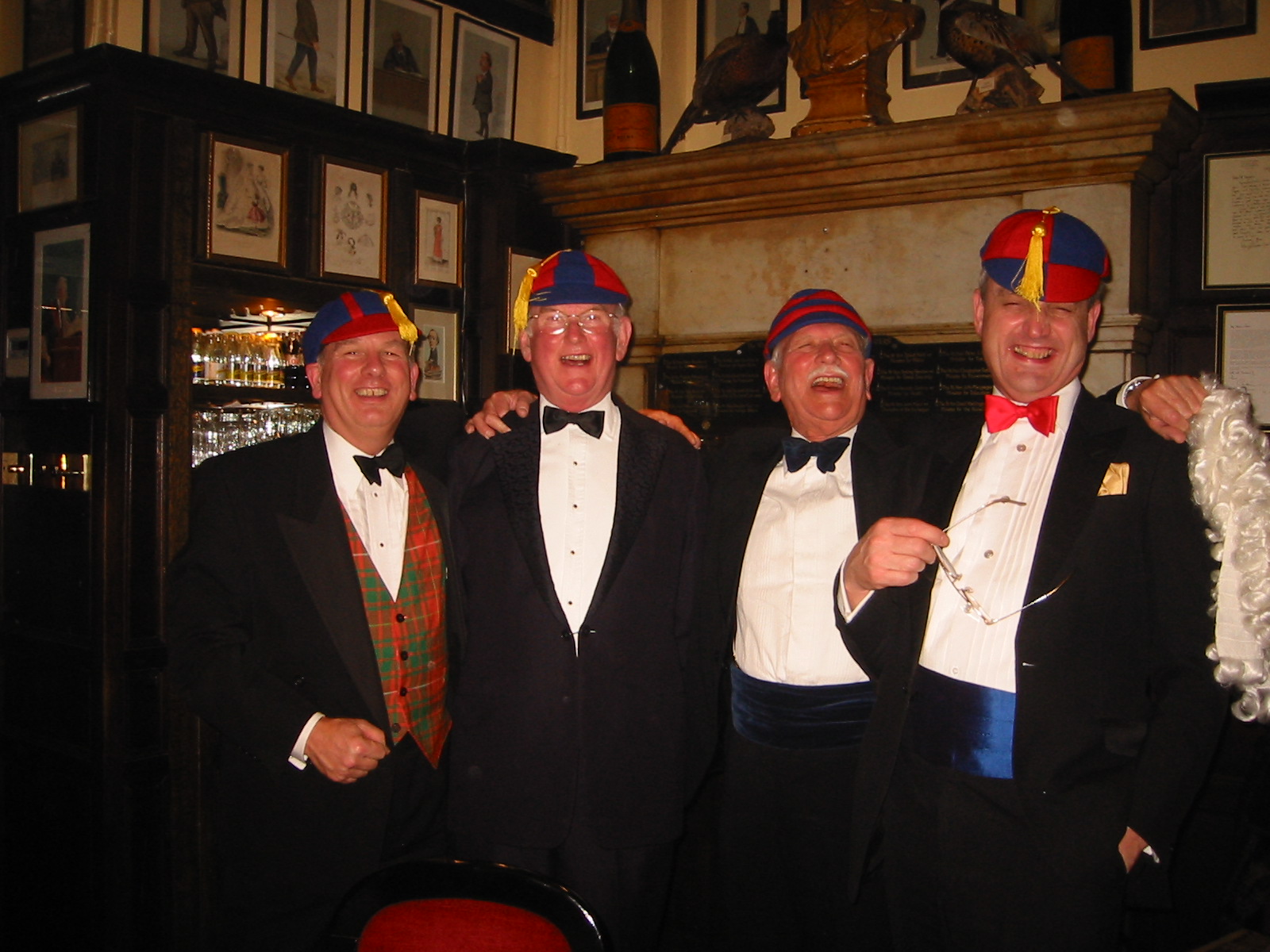
Following the year long quest, invitations went out around the UK to the fathers of the Yelsnot crew: Lord Chief Justice John Woolf (Foreman), Judge Dick Bruce, Judge John Flood, and Judge Robert Bruce.
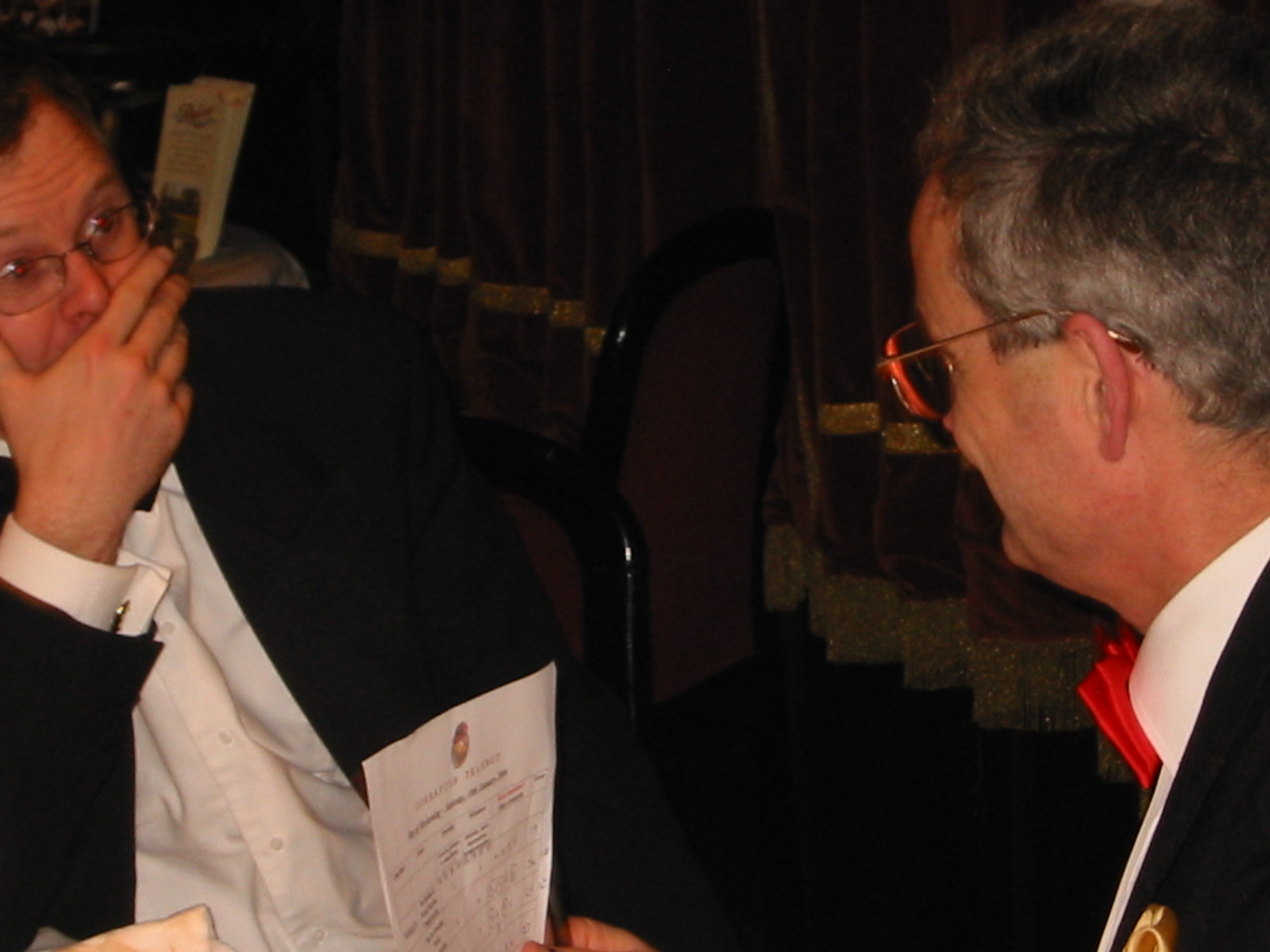
Having been sent the three entries from each competitor in advance, the judges met earlier in the evening and were left to debate their final decision upstairs at “The Porterhouse” pub on Maiden Street.
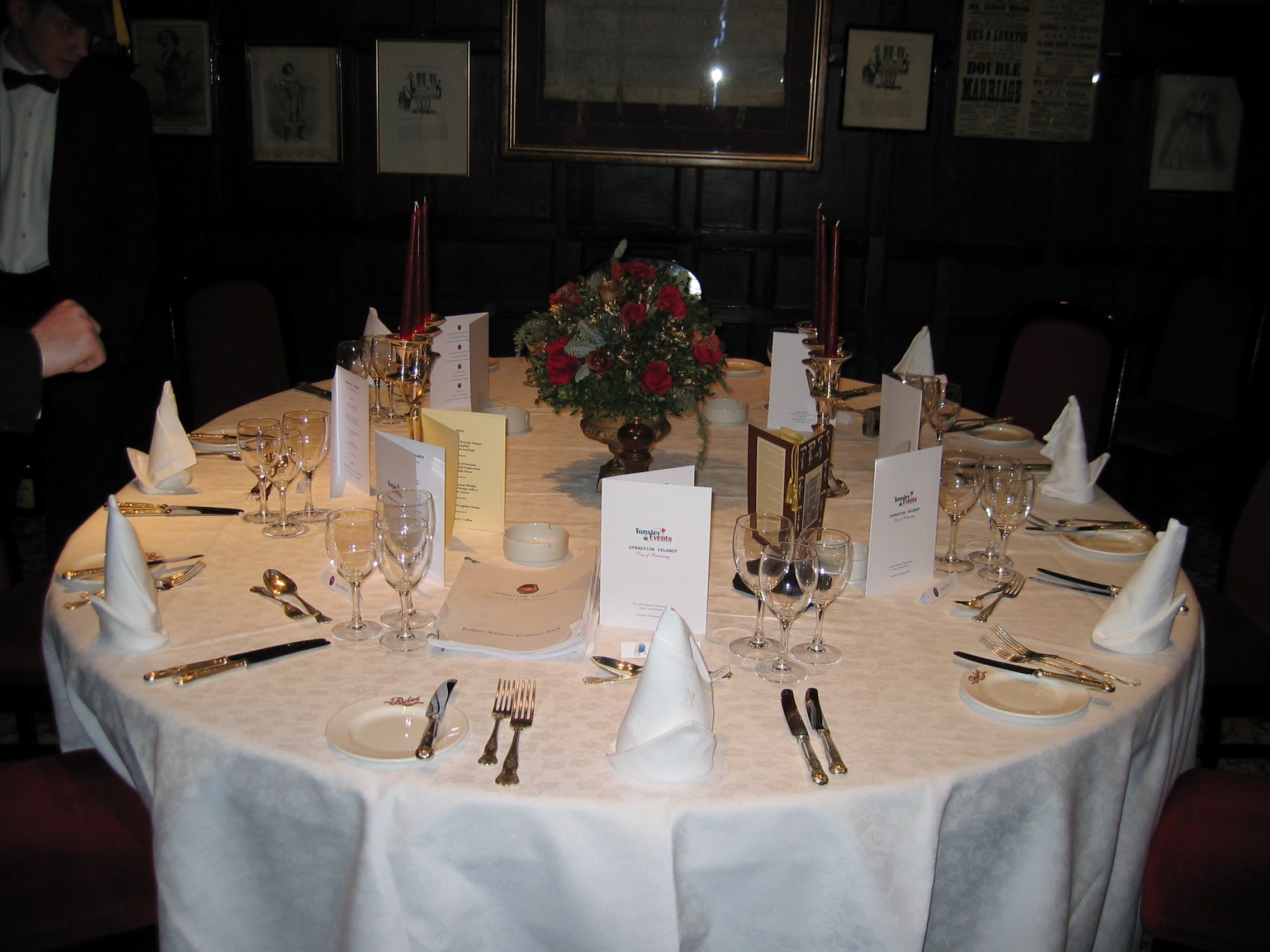
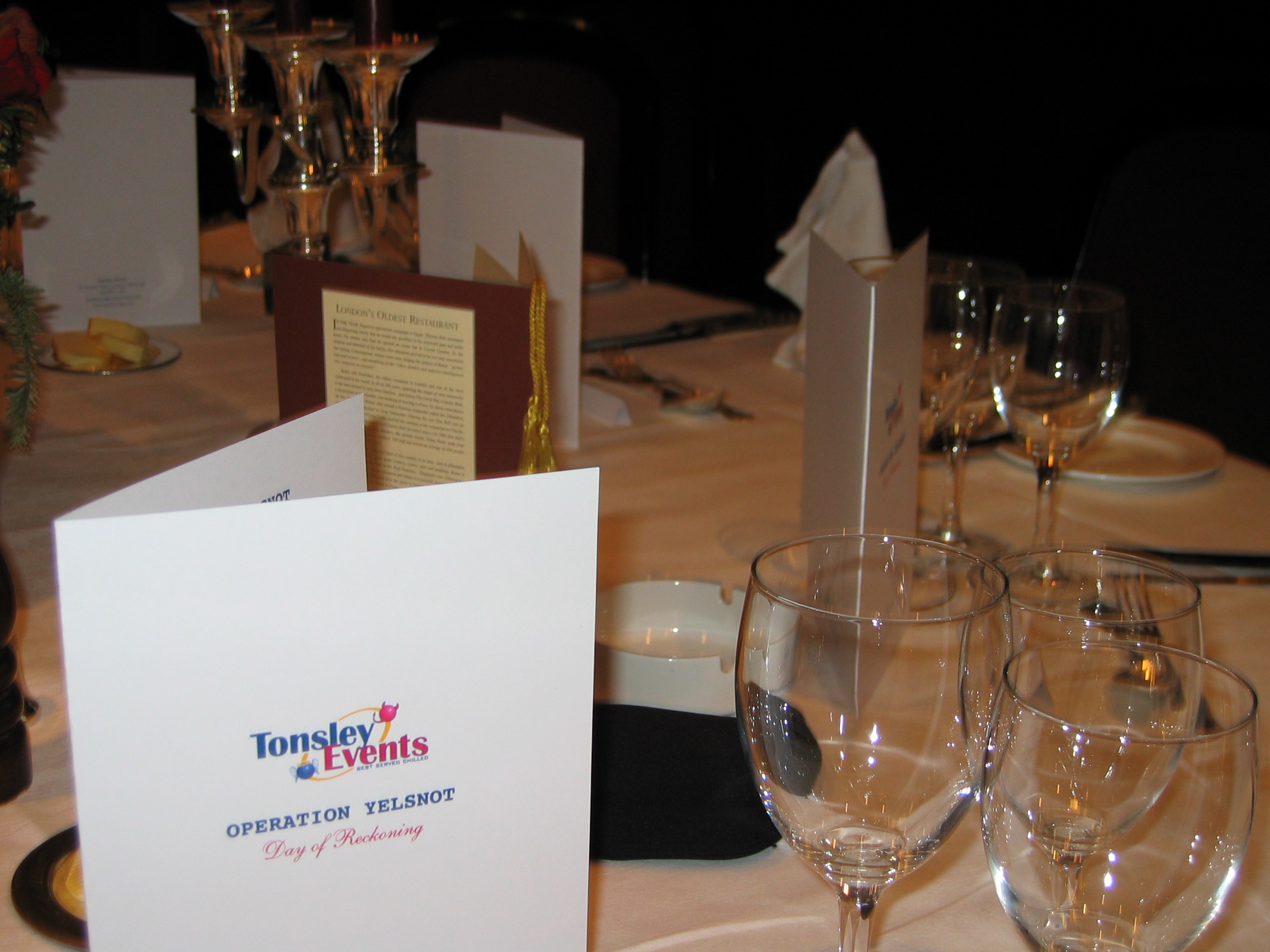
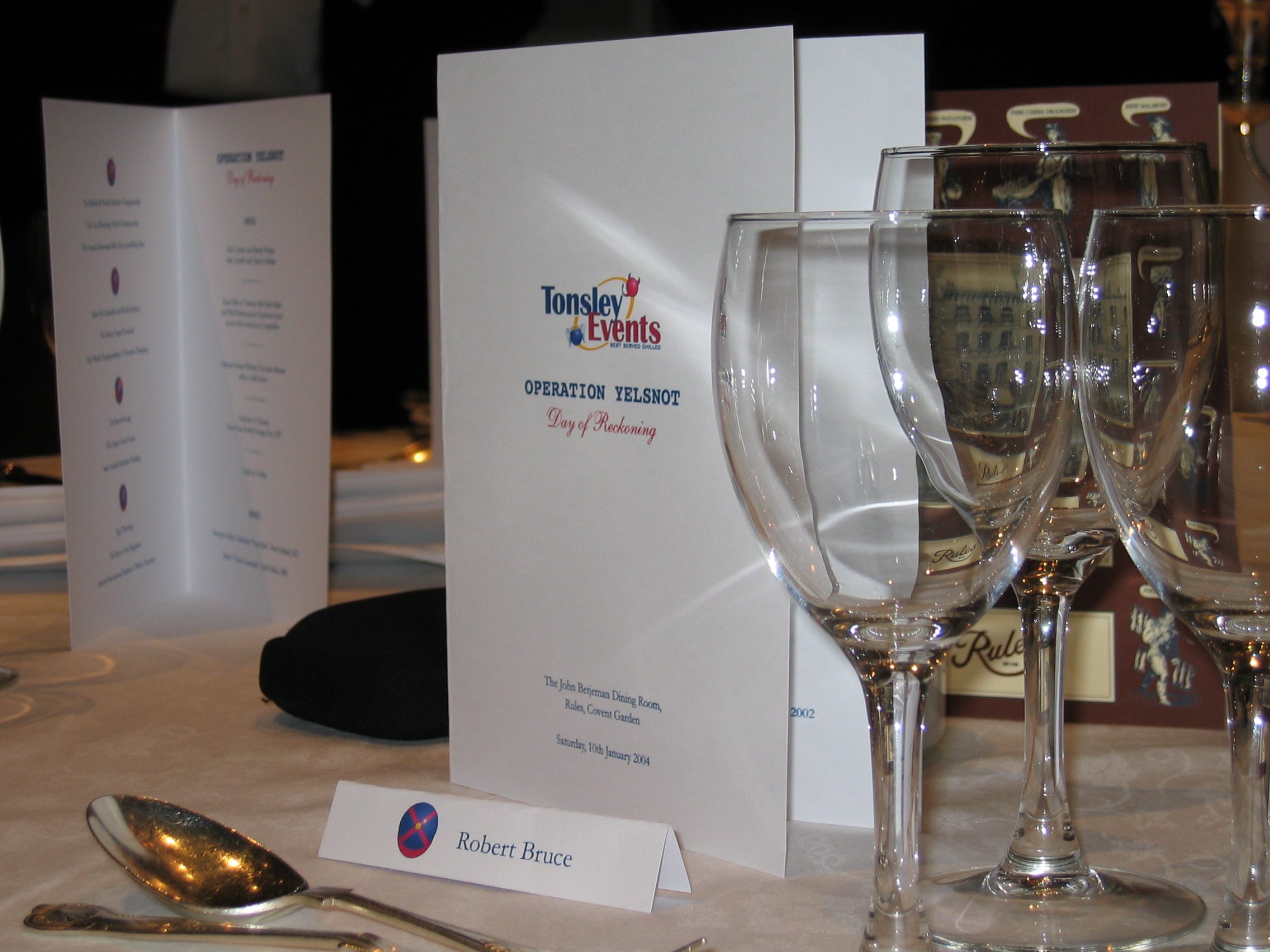
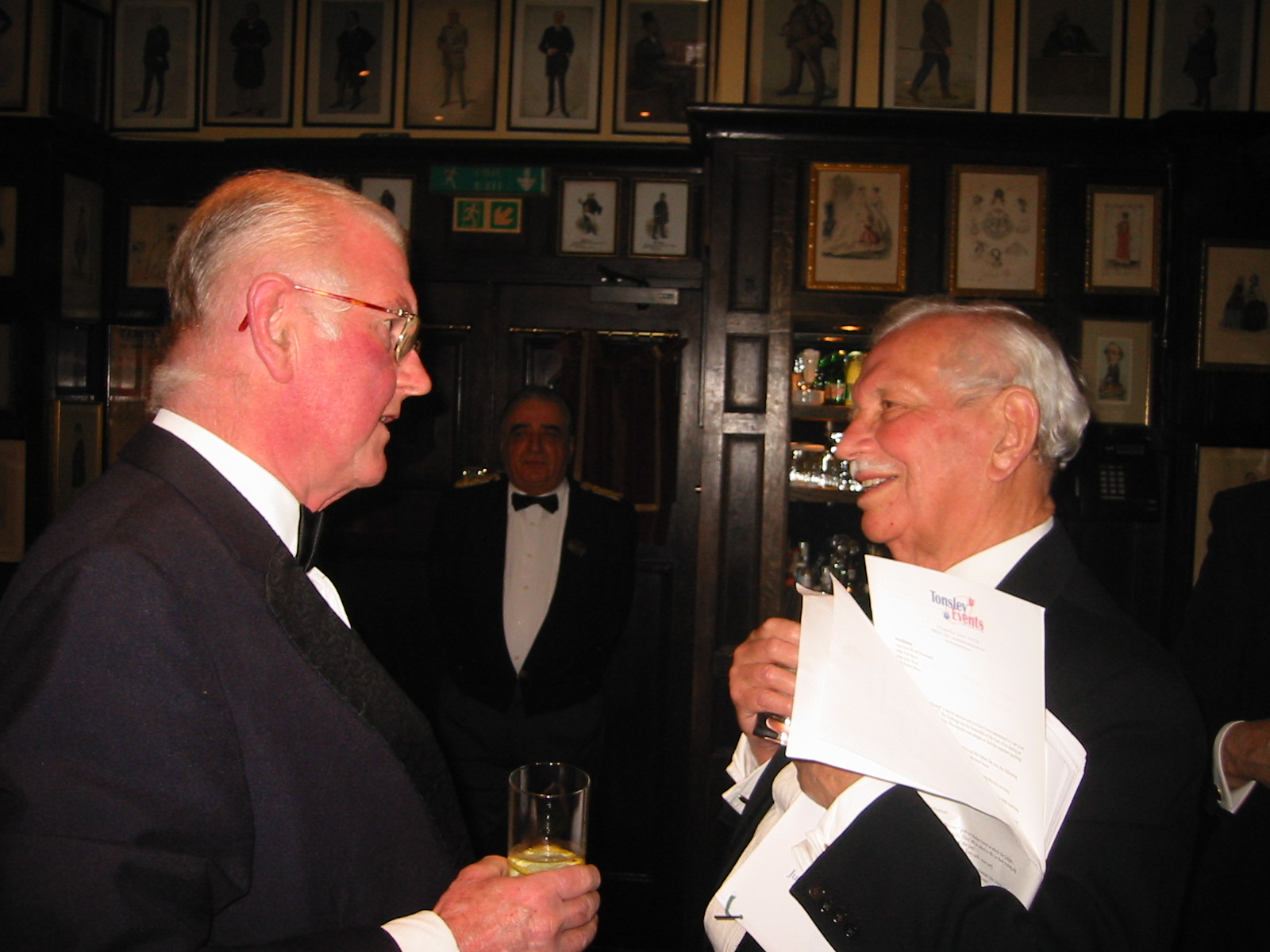
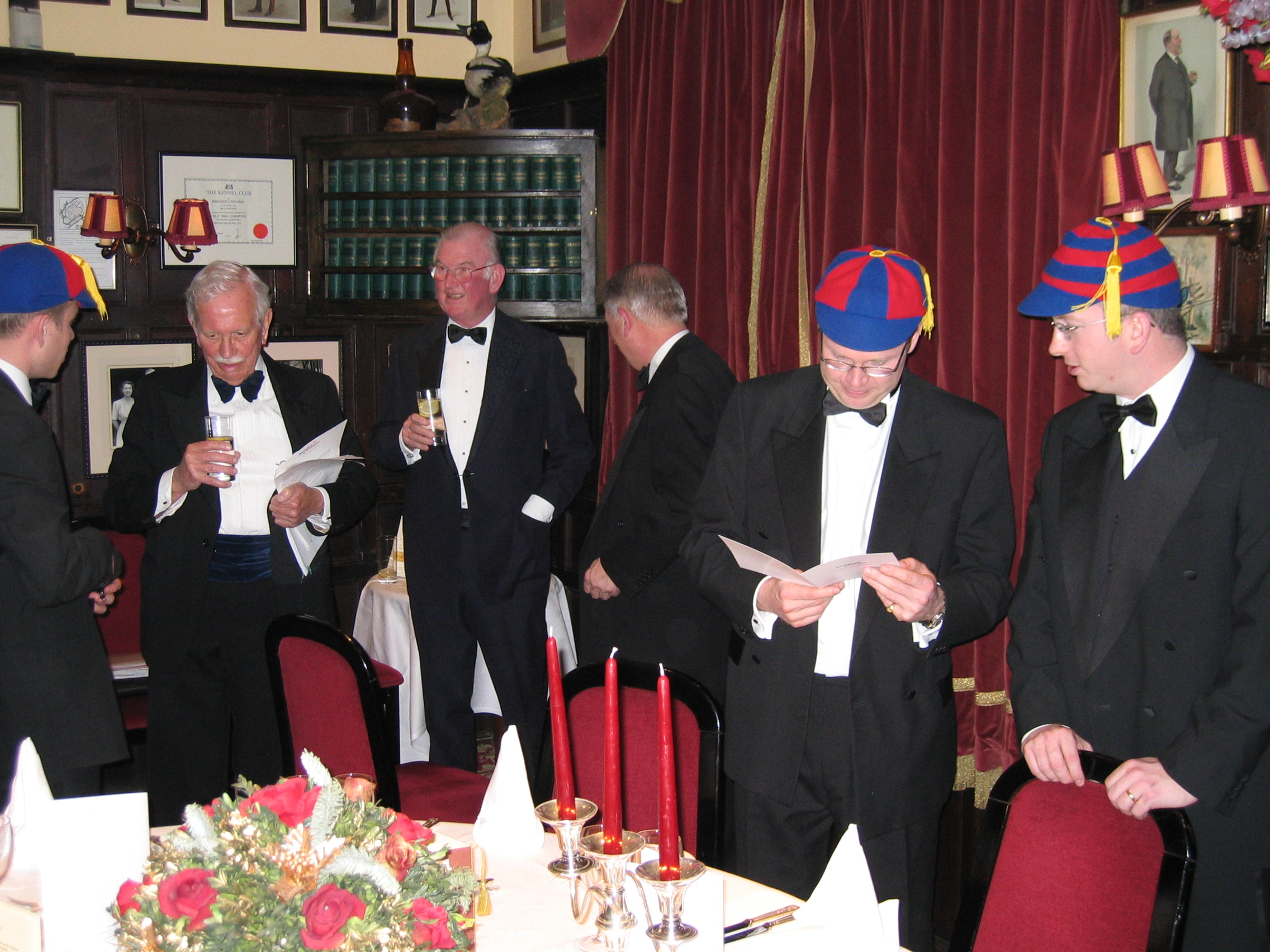
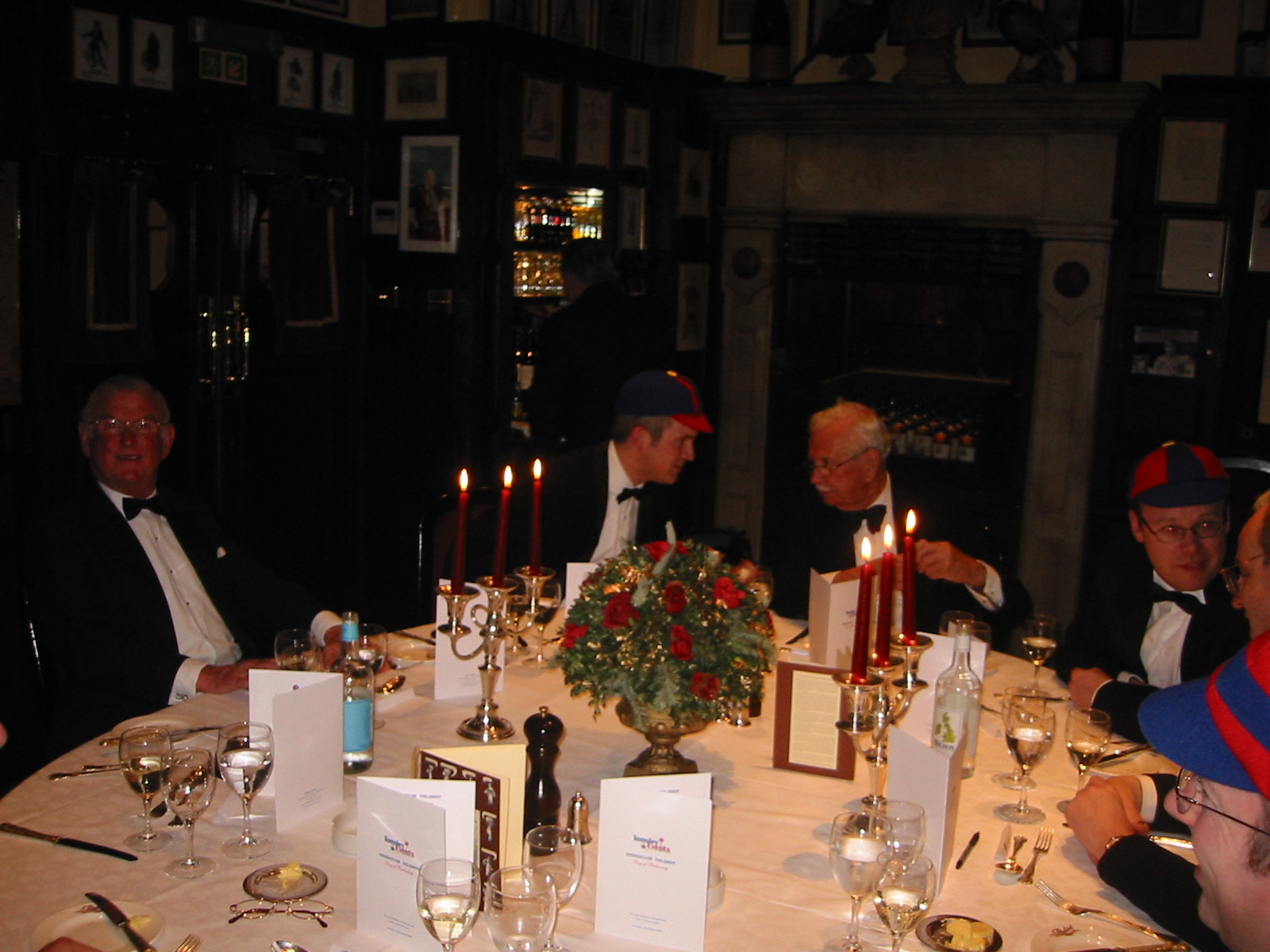
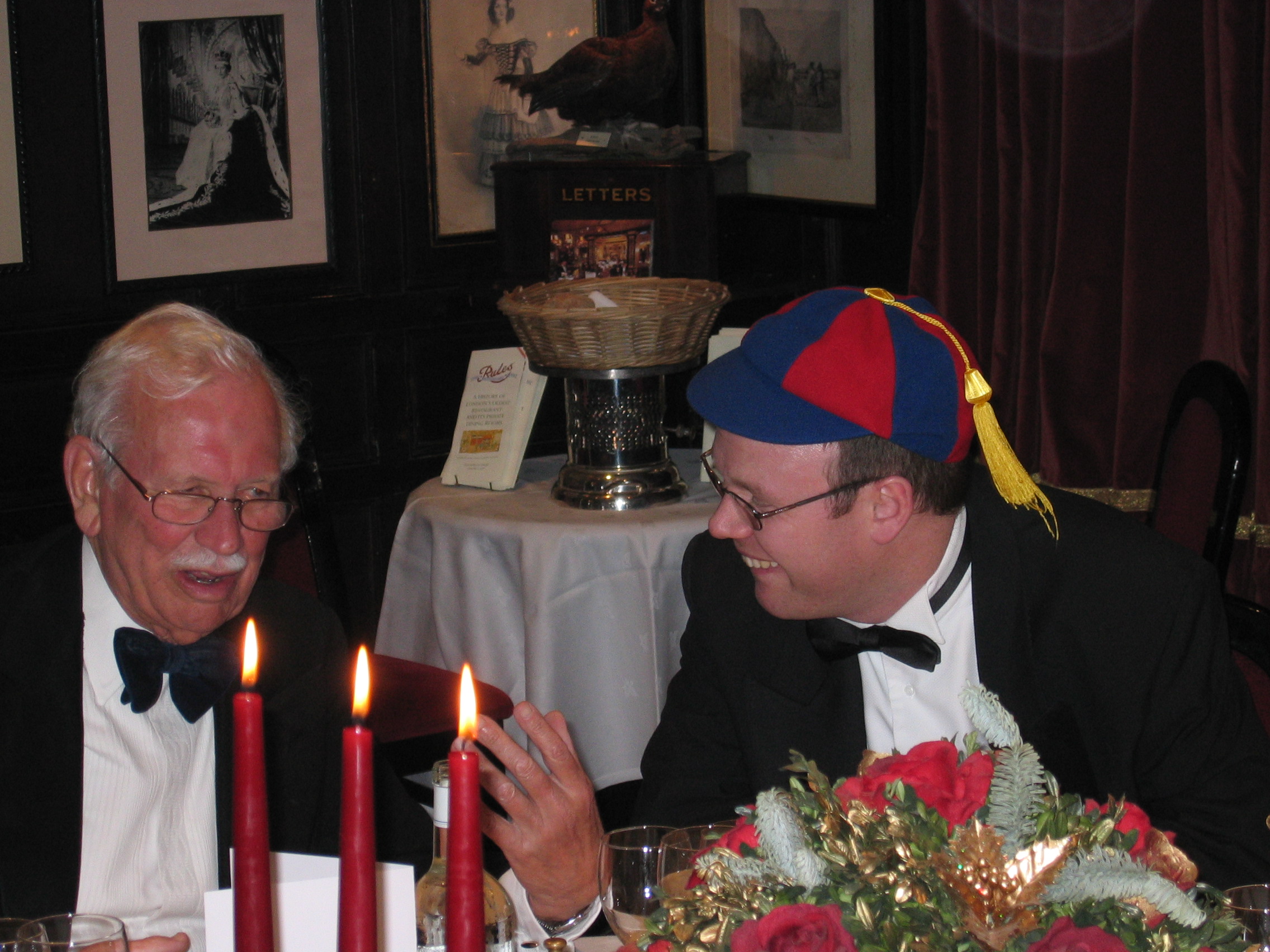
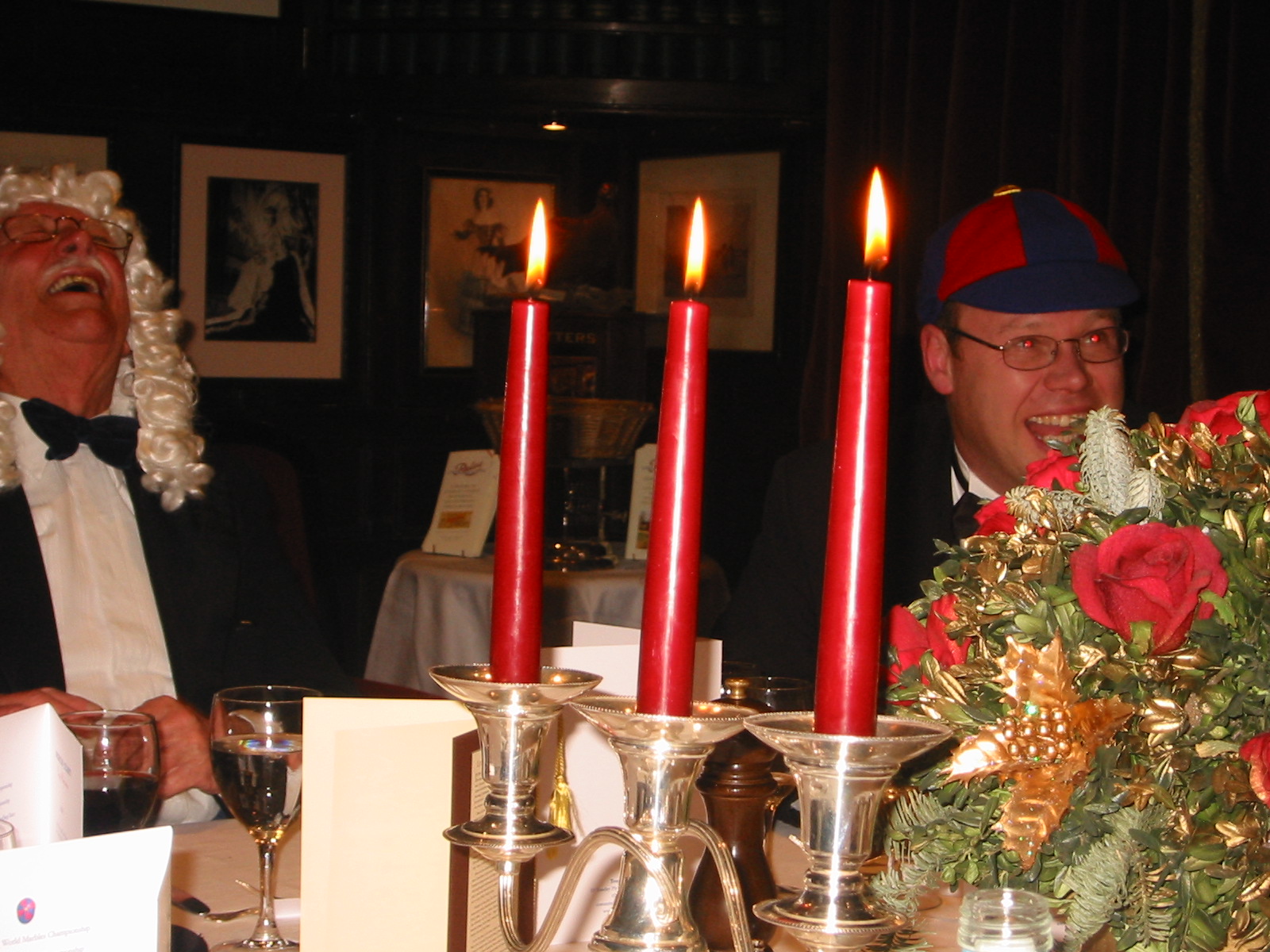
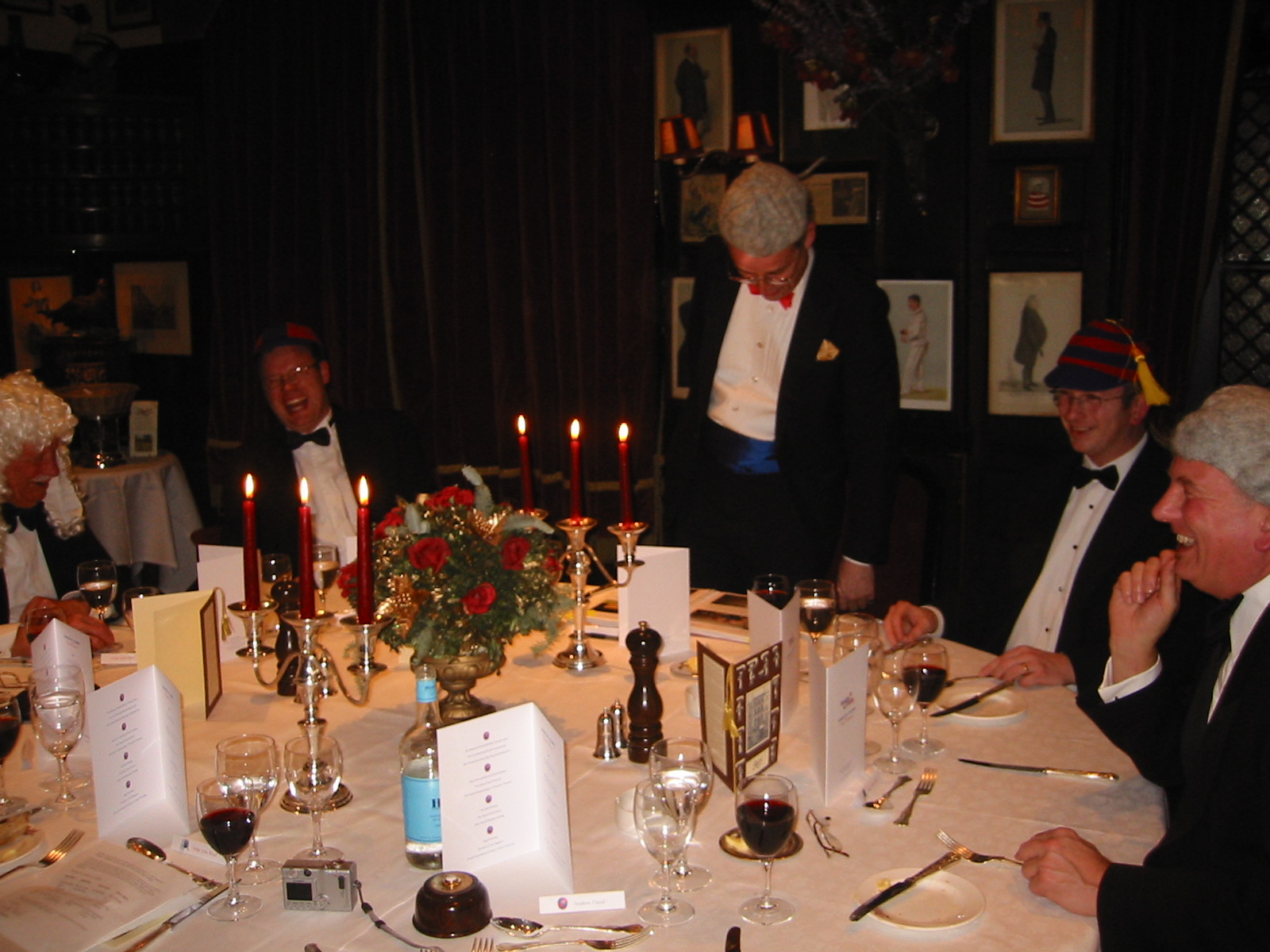
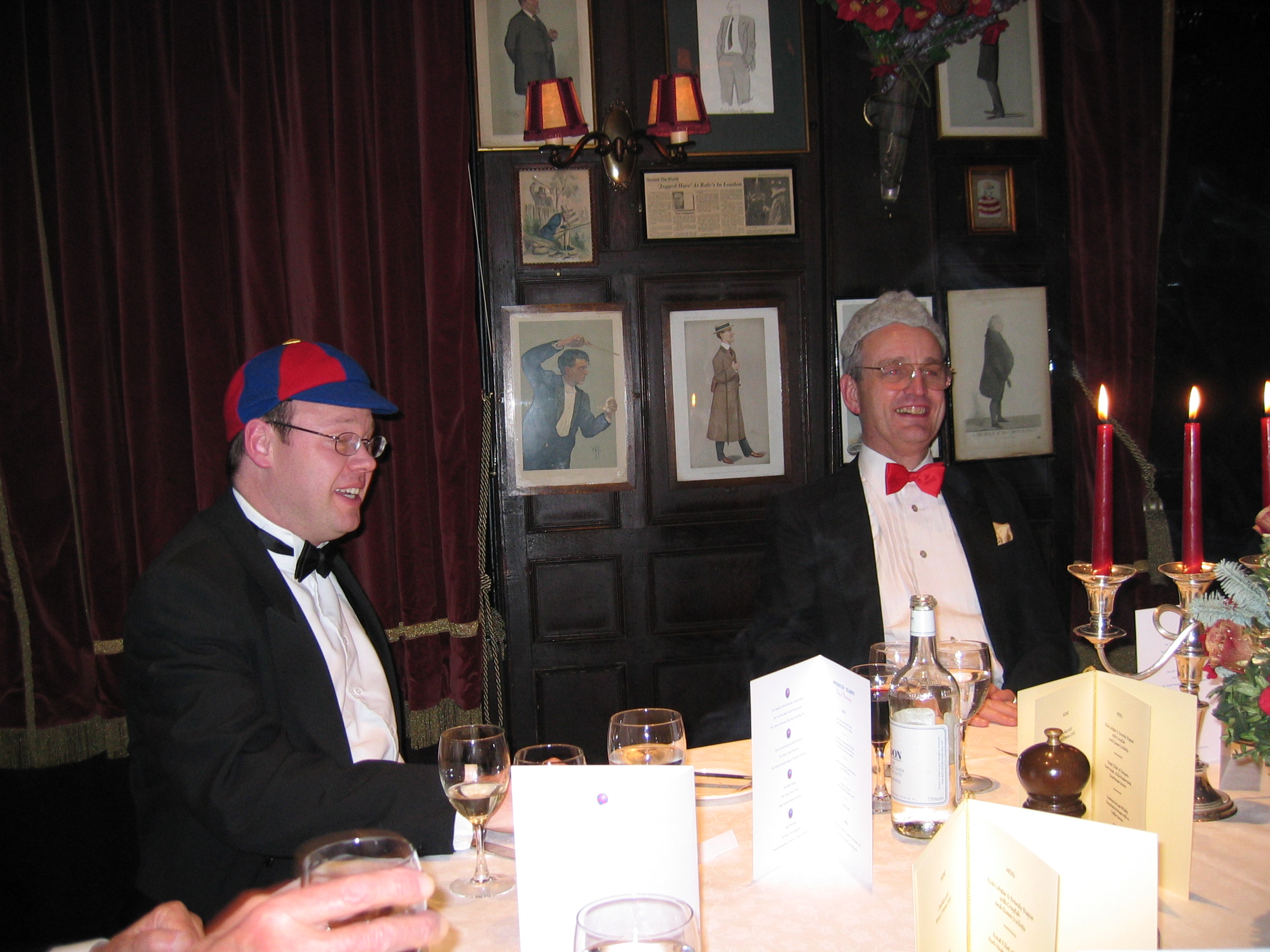
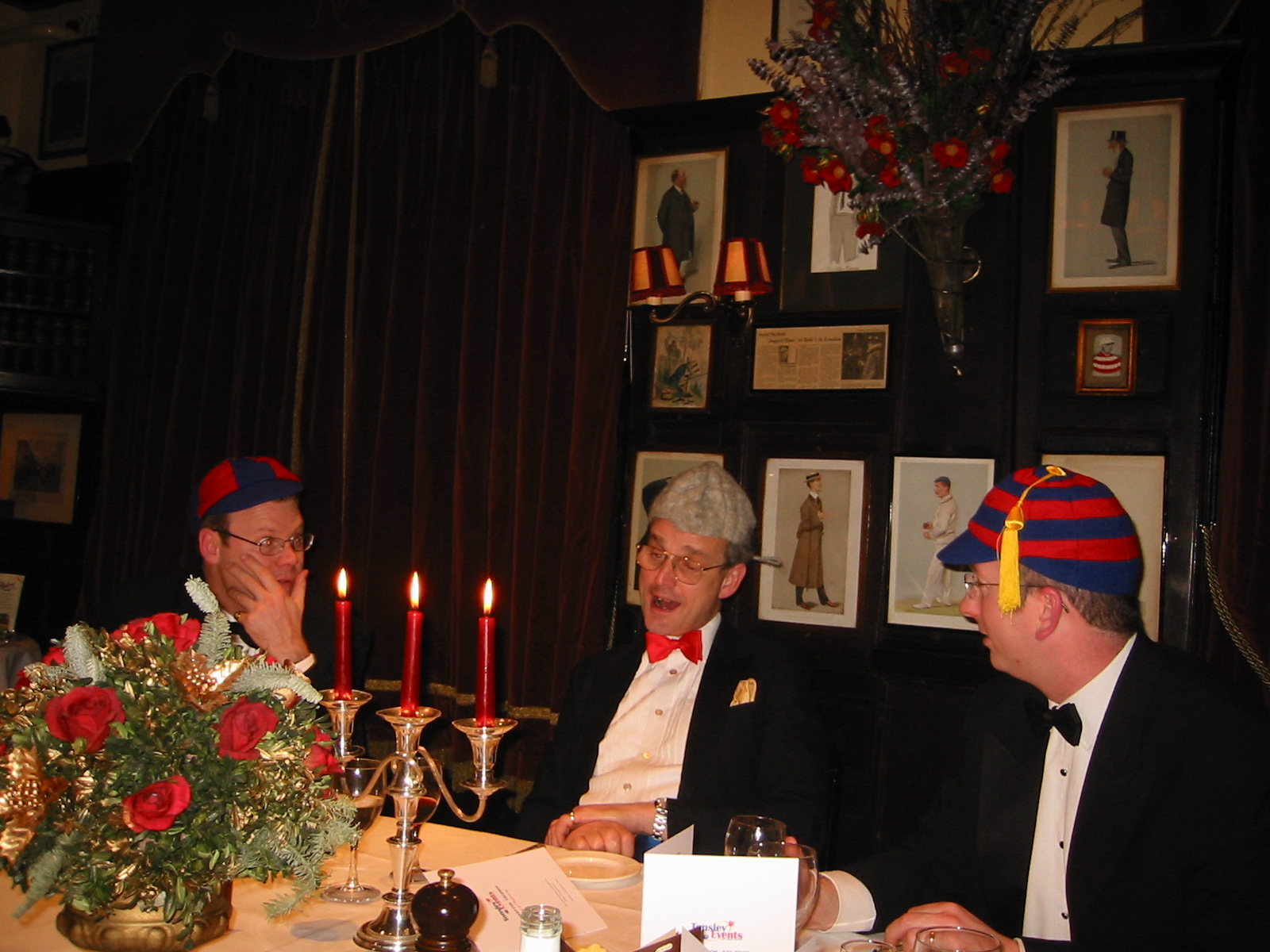
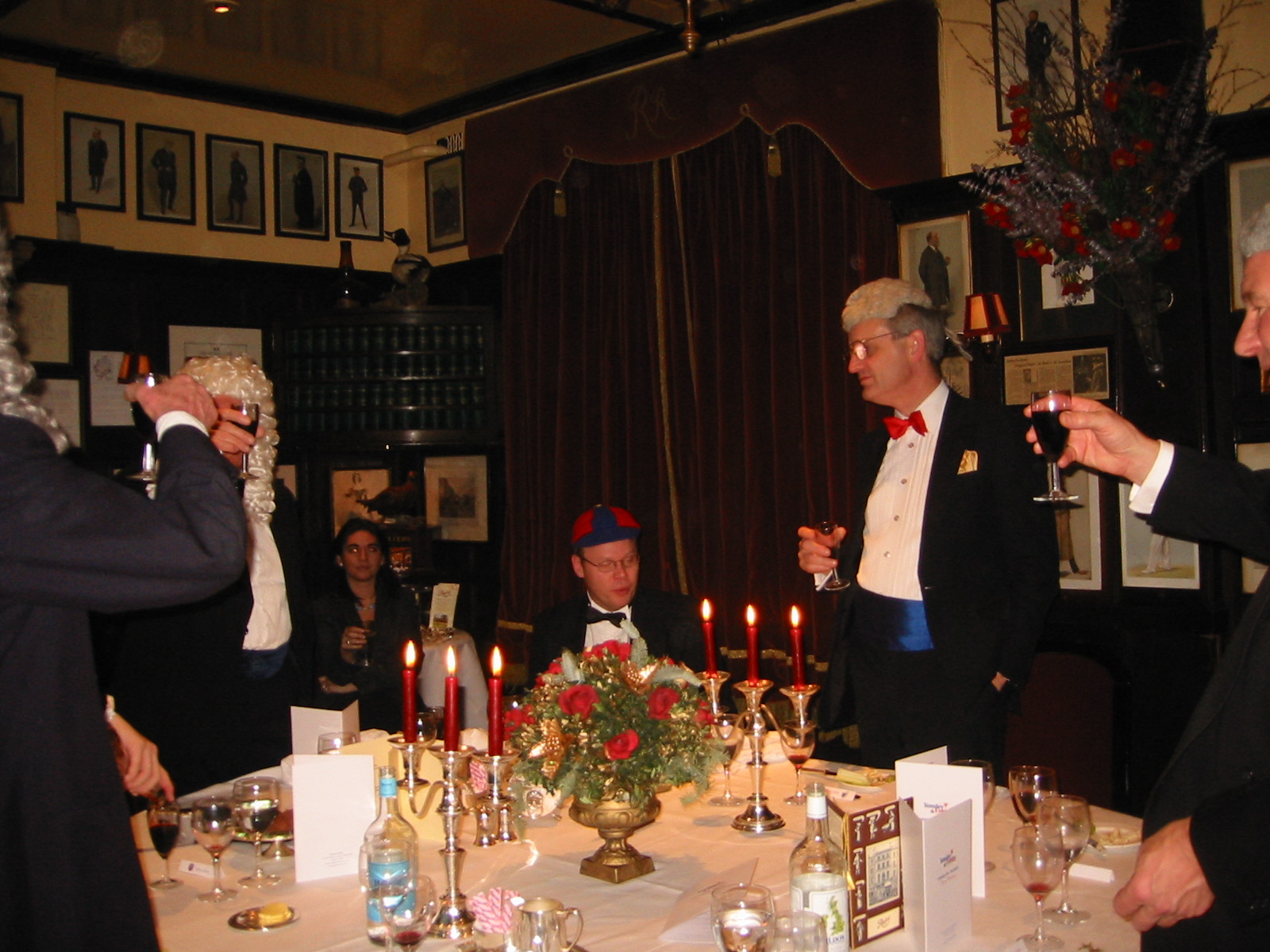
The actual announcement of the judge’s decision was to take place over dinner in the John Betjeman Dining Room, a private room steeped in history upstairs in Rules of Covent Garden, the oldest restaurant in London.
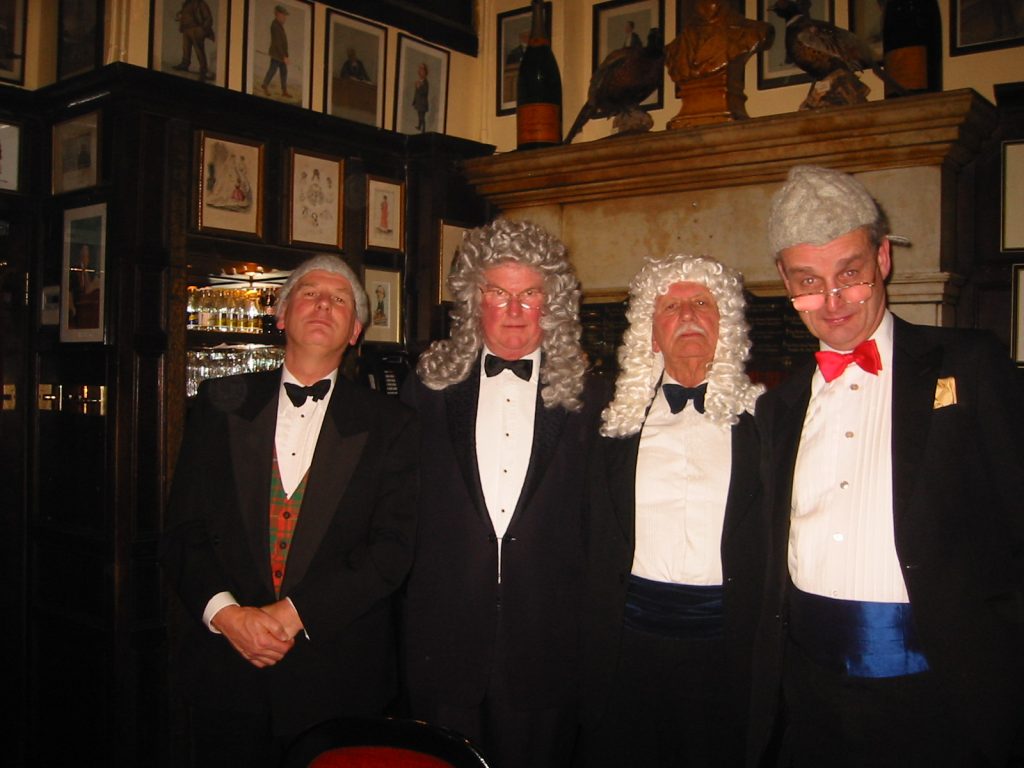
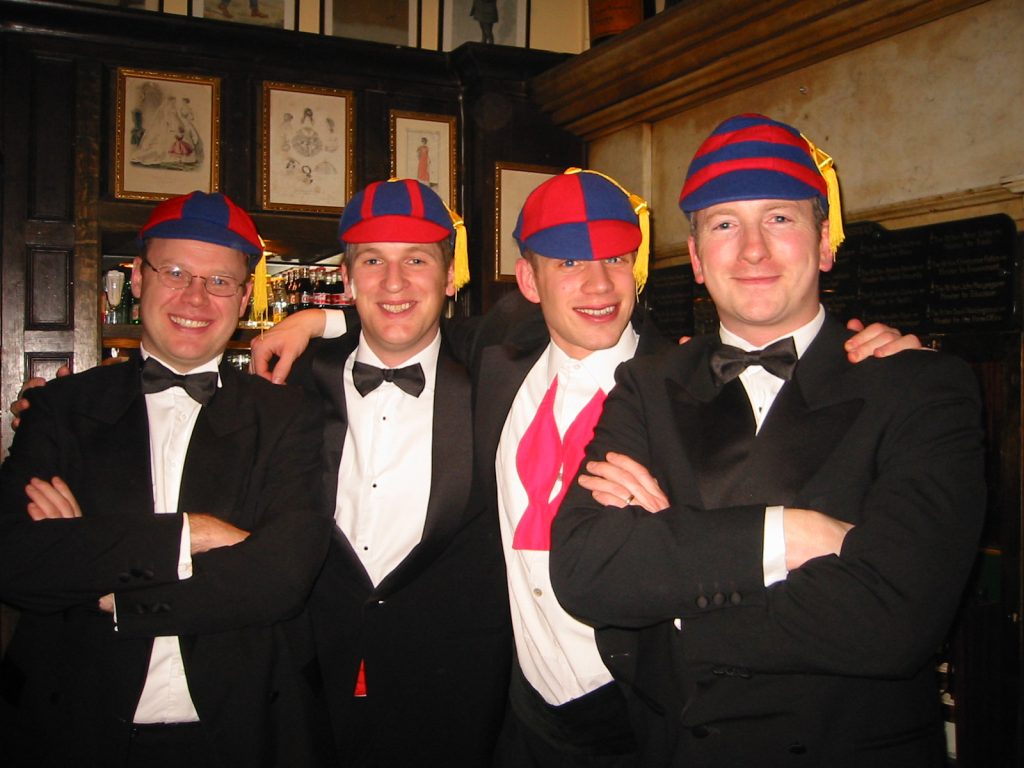
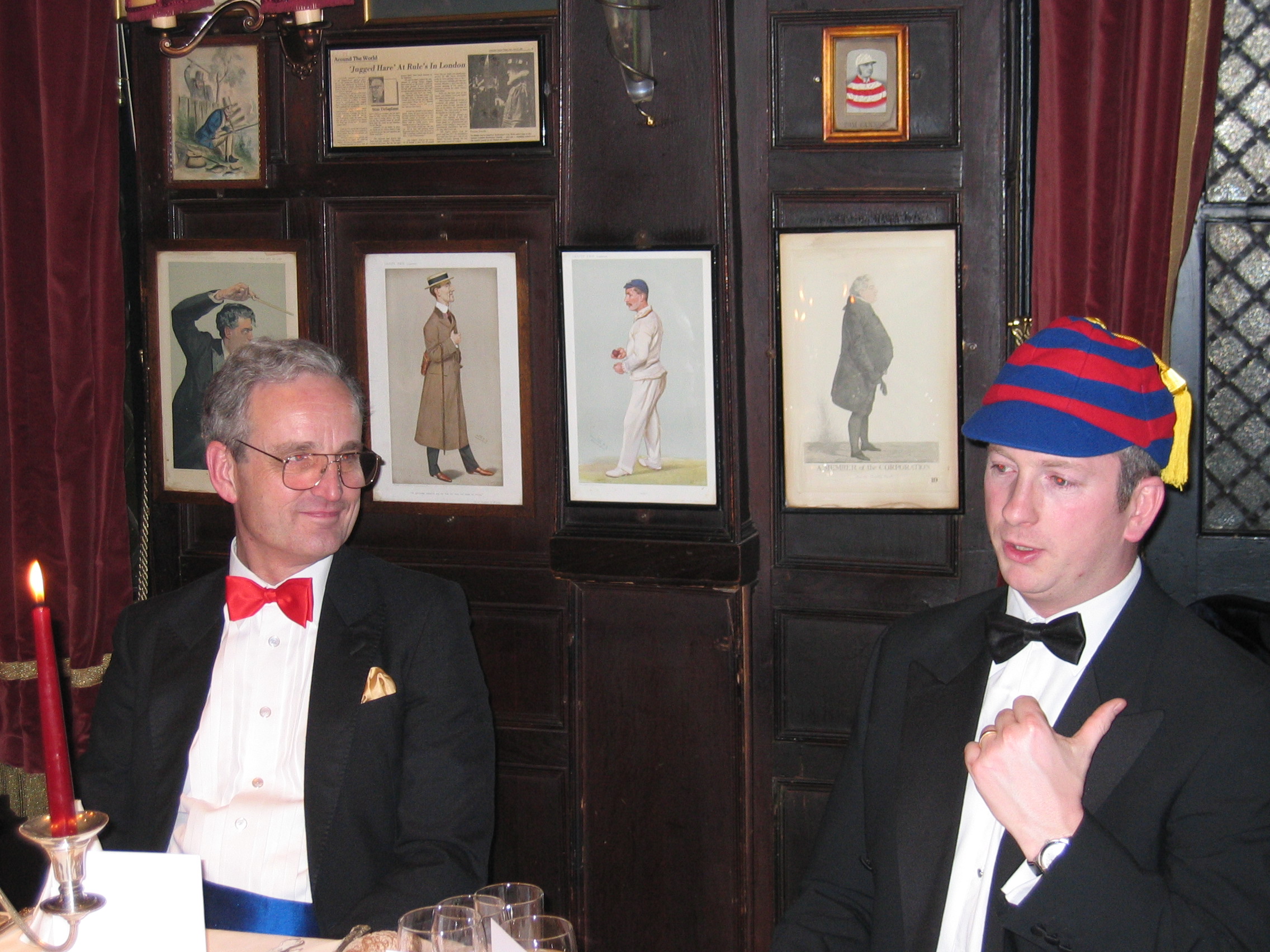
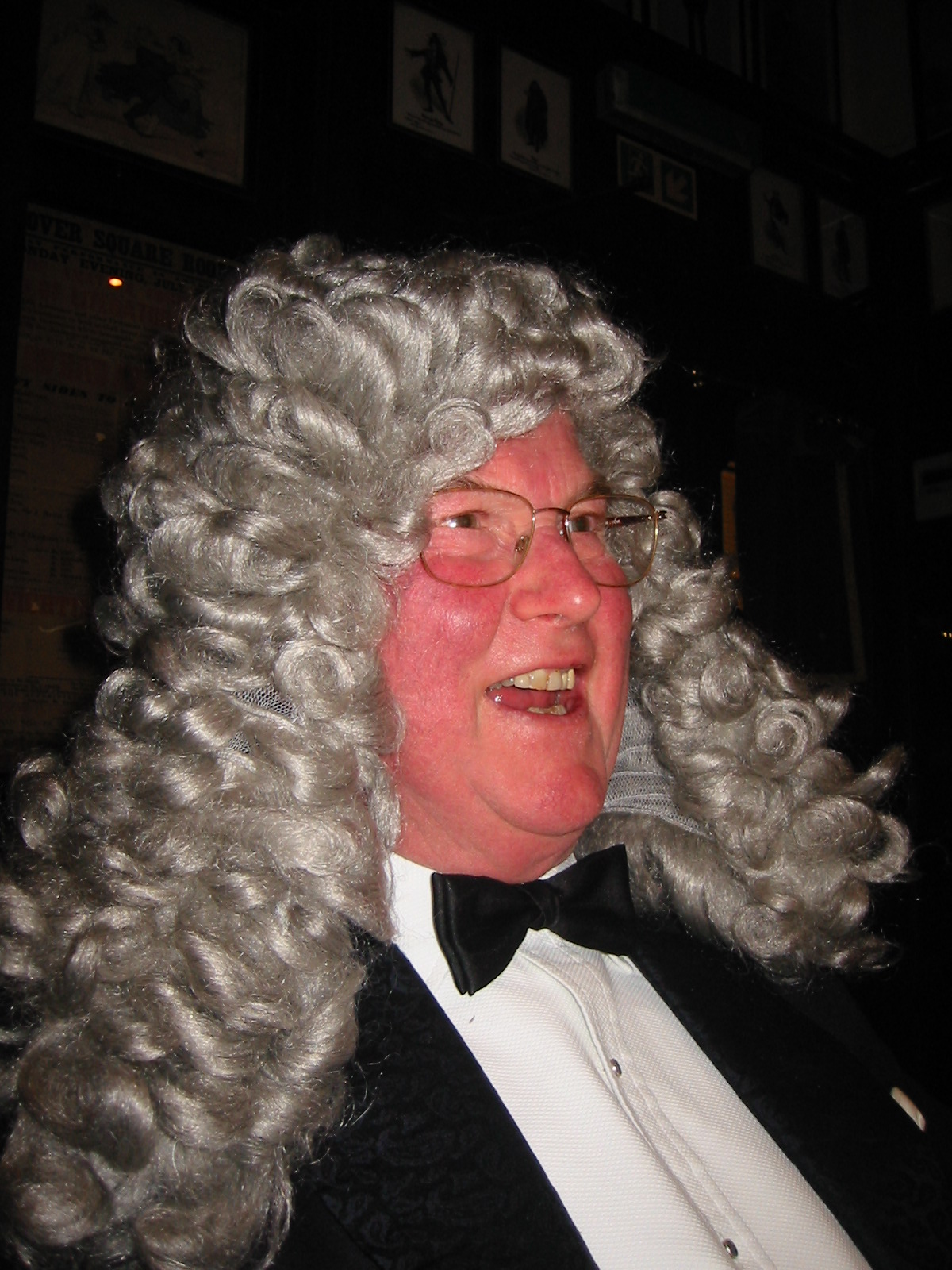
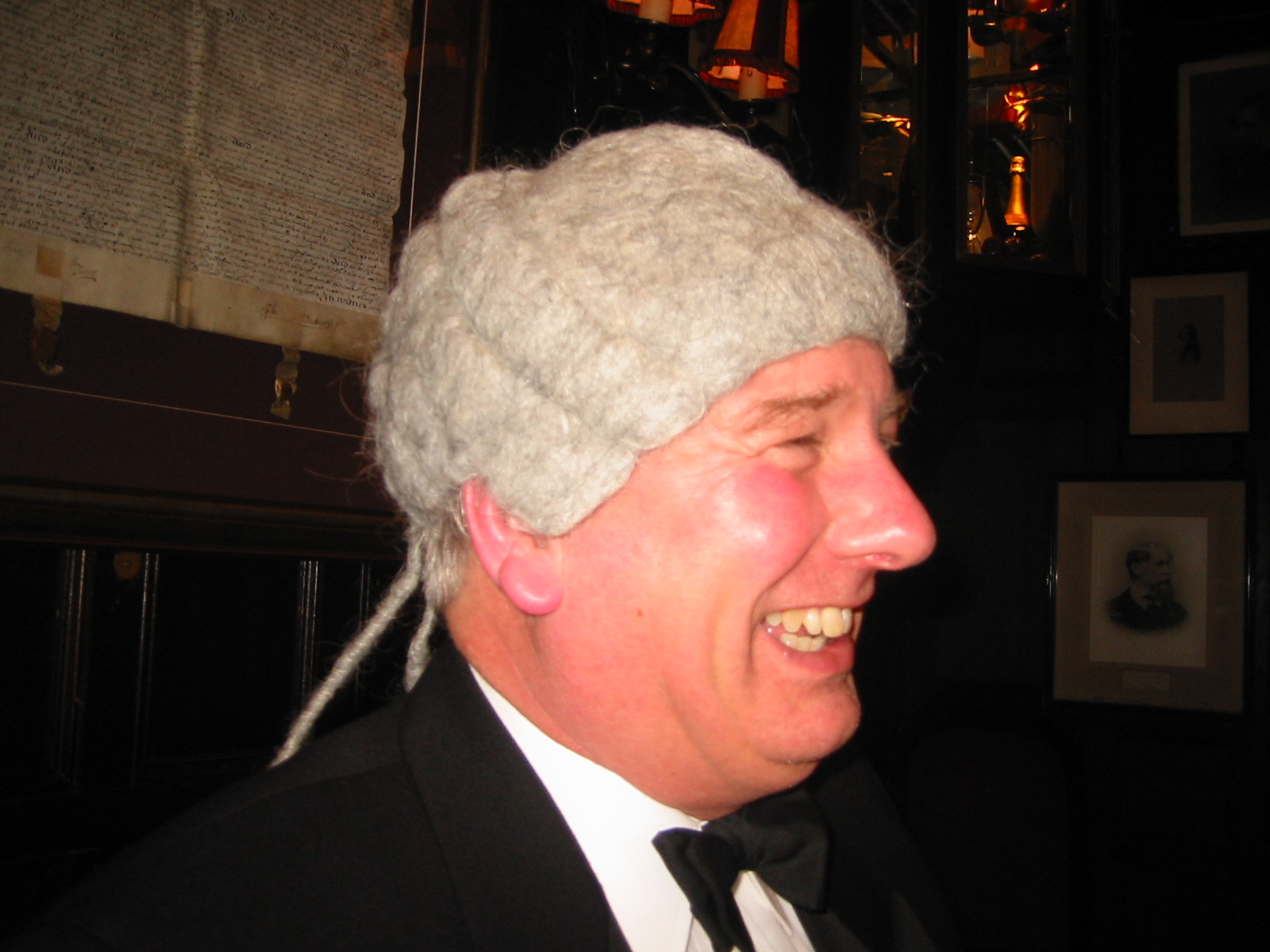
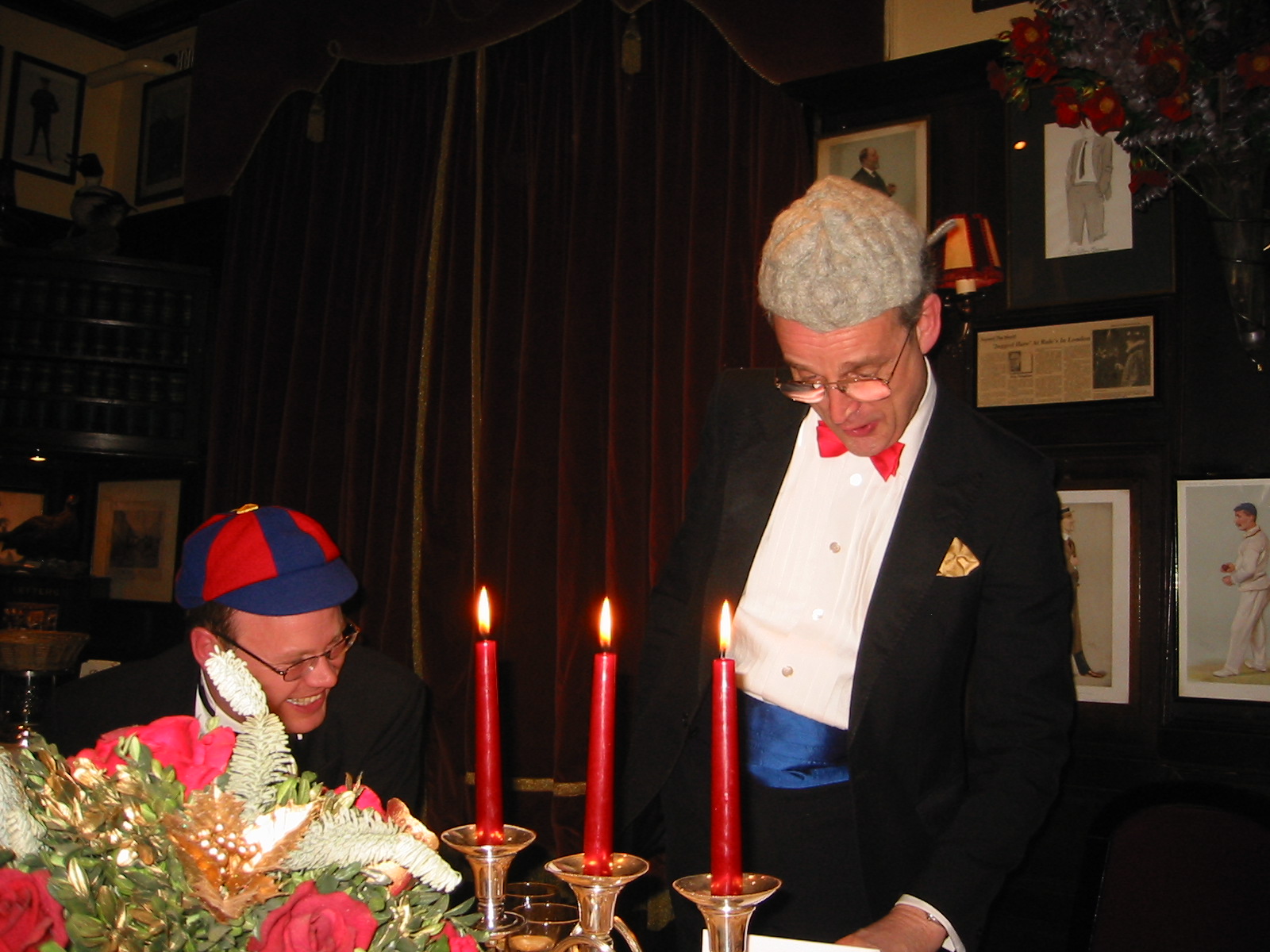
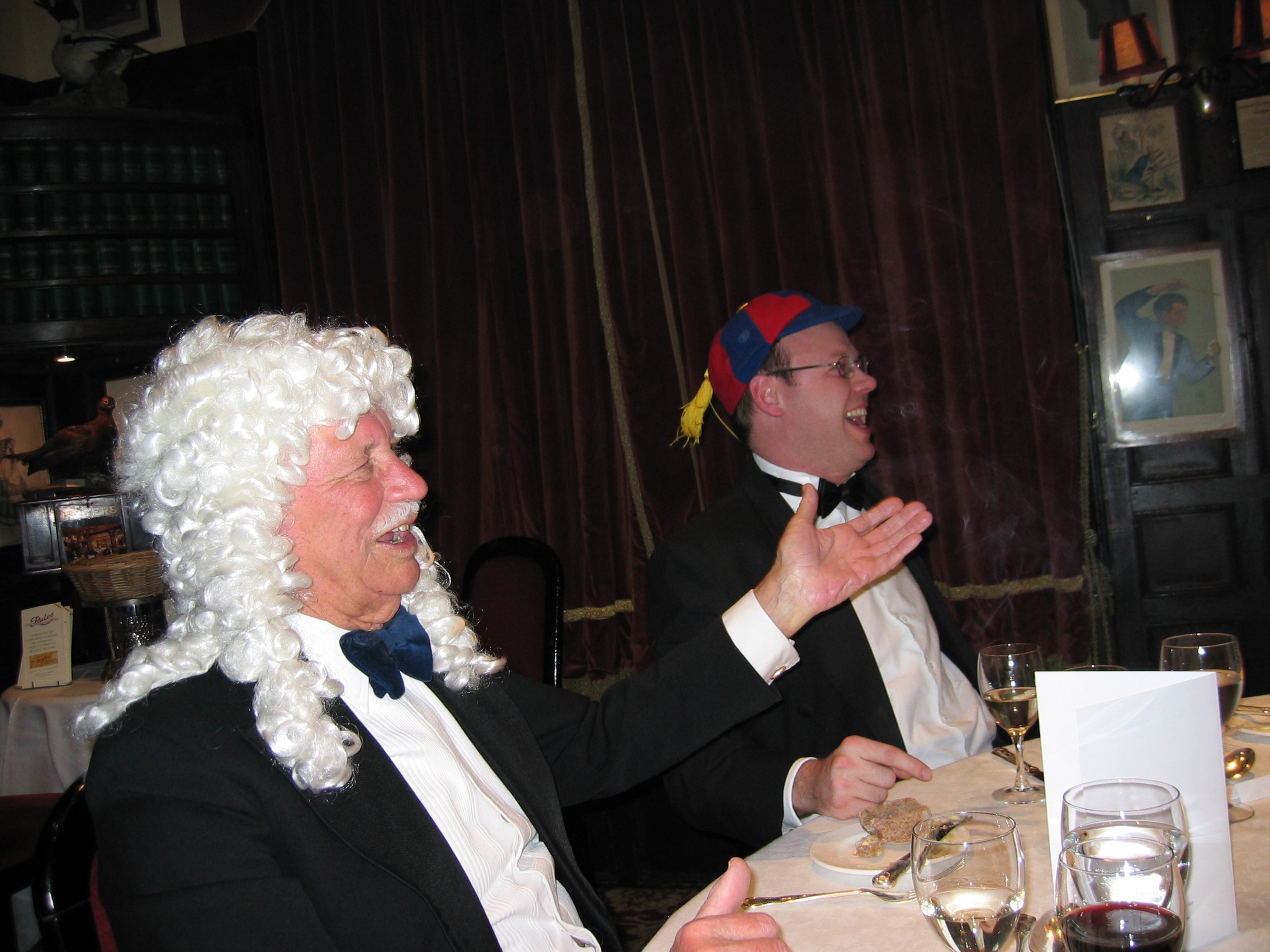
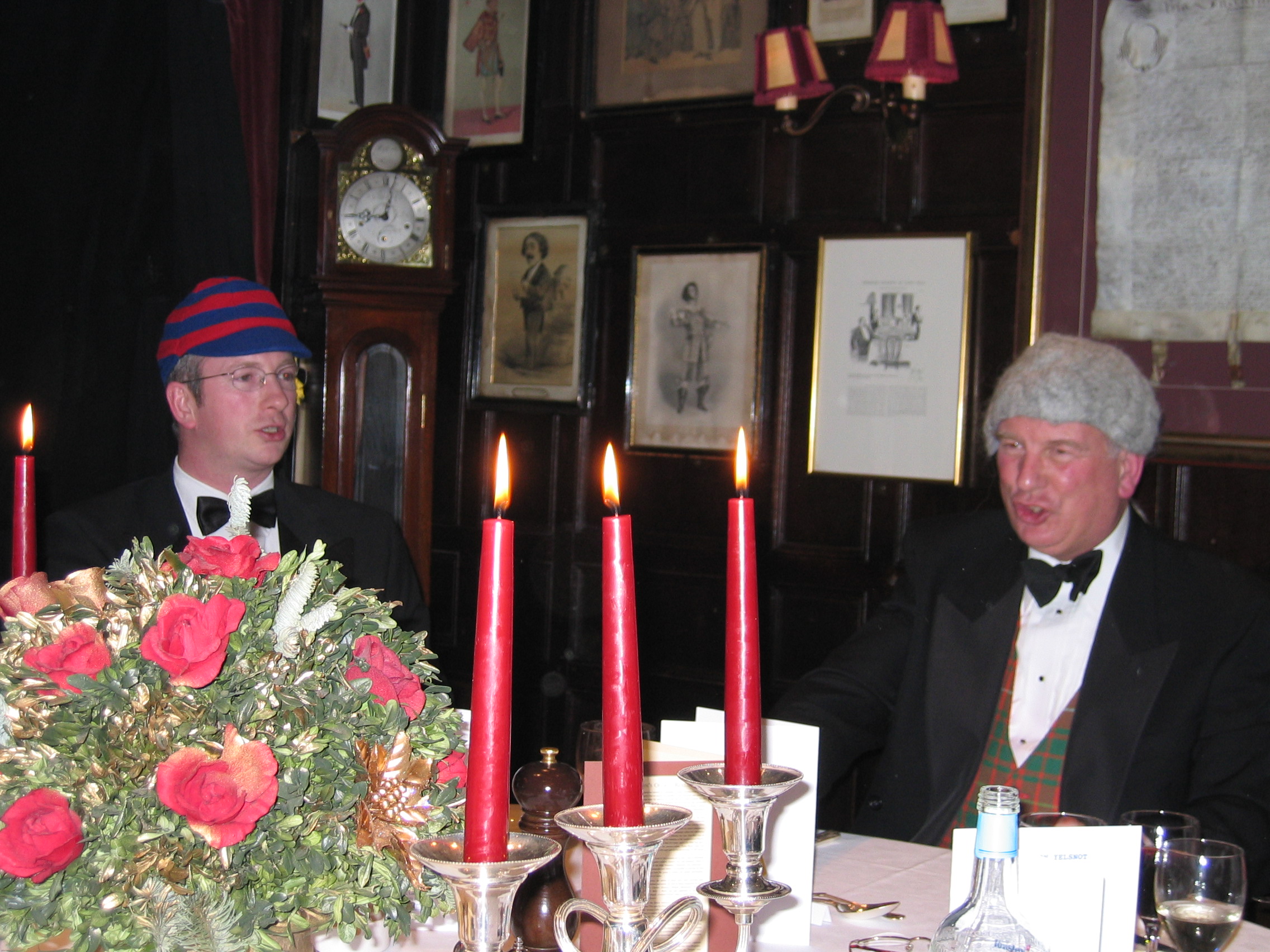
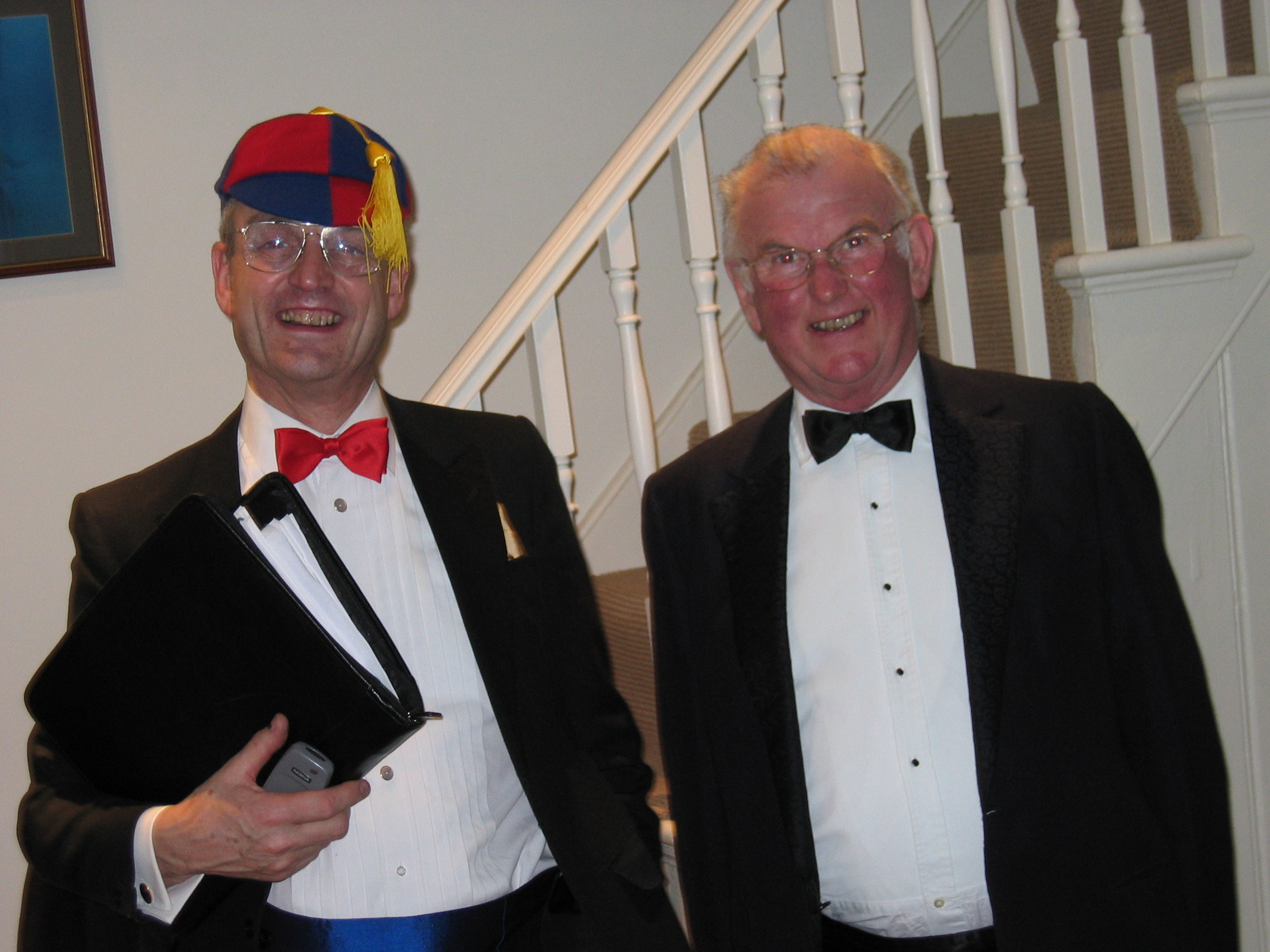
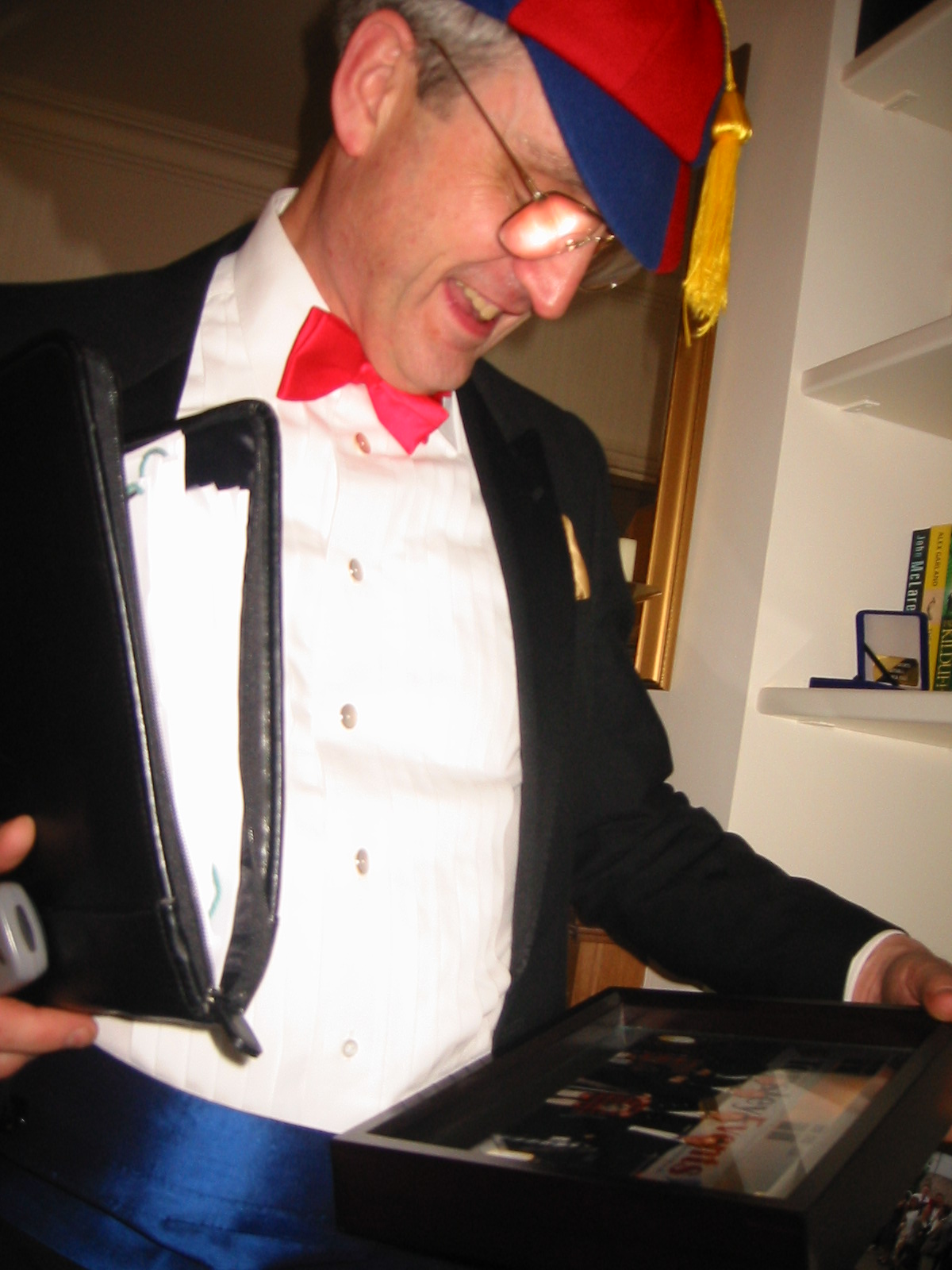
The dress code was black tie which befitted the dark wood panelled room housing a fine round mahogany table. We were still short of one thing and after we had seen off the Lobster and Crayfish starter, a waiter appeared with a 48″ covered silver salver only to reveal to the judges their correct attire for the remainder of the evening – the Tonsley Wigs!
A thoroughly enjoyable and memorable evening continued with a variety of inputs from all the judges, some very good food and too much fine wine. Here’s the fabulous menu.
The Judges’ final decision was declared by Lord Chief Justice John Woolf as follows:





And so it was… the end of a year of dashing around the country in secrecy, mixing it with beardy weirdies and wearing a school boy cap at any opportunity! £100 from each of the runners up was to pass to the winner and to be spent thereafter on an adrenalin sport.